GST reform – go big Modiji, let the bizmen breathe

This post is published on behalf of Yajnavalkya – Medium

————————————————————————————-

A GST terror story

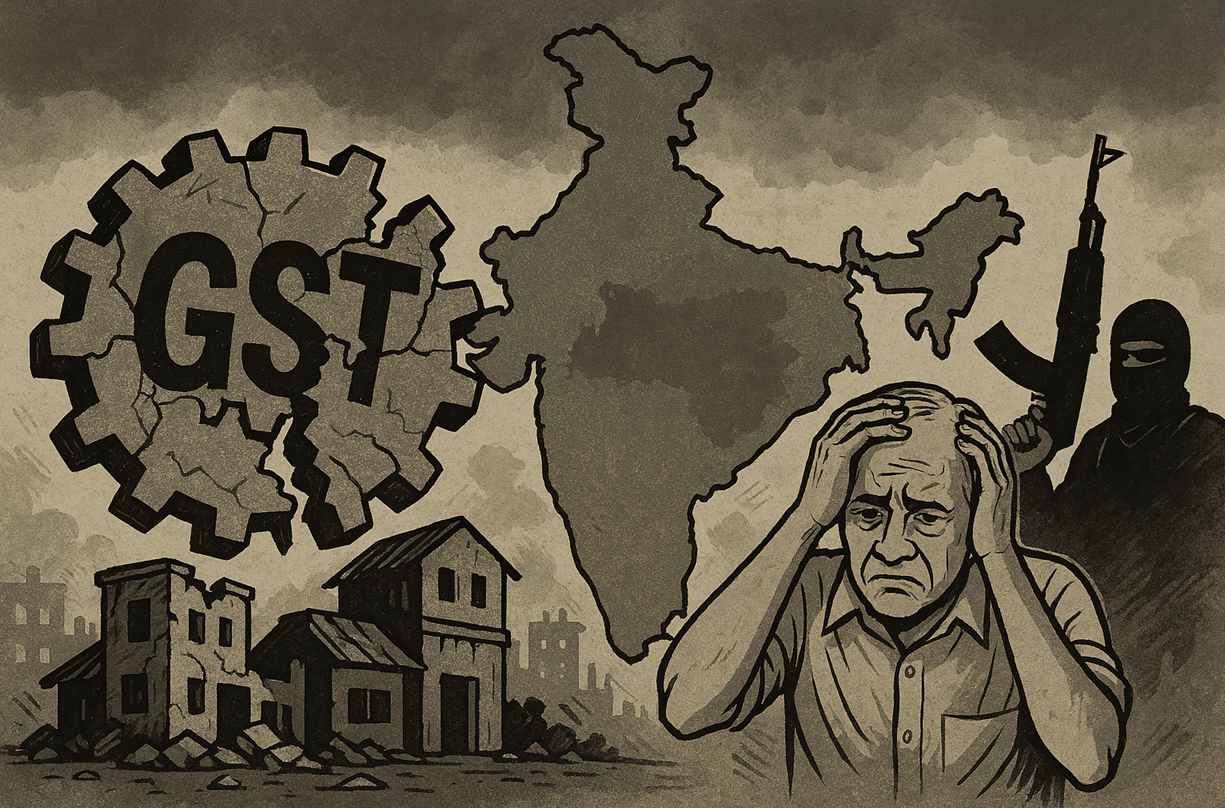
Modi has announced during his Independence Day speech that he would be going for sweeping reforms of GST by Diwali. The central piece of the reform would be reducing the number of rates from 4 to 2. A lot of people – both experts and non-experts – have been advocating a single/dual rate regime as a magic bullet for the GST mess.

But is it? Let me start by narrating a GST horror story. Some GST basics first: GST is a value-added tax. Assuming a product has 10% tax, Manufacturer A sells the product to wholesaler B for Rs. 1000 (pre-tax). B pays A Rs.1000 + Rs. 100. B then sells the goods to Retailer C for Rs. 1050 (pre-tax) and C pays B Rs. 1050+Rs. 105. Now since B has already paid Rs. 100 as tax to A, he is required to deposit only Rs.5 to the exchequer. The Rs.100 that he paid the manufacturer is termed as ‘Input Tax Credit’ or ITC.

There are some elaborate ways of defrauding the system of taxes involving ITC which is also facilitated by loopholes in the tax filing process – discussing that would require a 5000-word post, so I will desist. But for those interested, you can read up about bill trading. One of the ways in which the system combats this menace which potentially causes trillions in tax losses, is Rule 86-A, which empowers the taxman to block ITC of any businessman if he has ā€œreasonable causeā€ to believe that the ITC was fraudulently availed.

Ok, now on to the story. A few months back, a bunch of businessmen operating in the steel sector in my city – including one of my personal acquaintances – were slapped with notices under this rule, blocking ITC aggregating to Rs.60 million, for transactions related to the period 2021 to 2024. The stated reason – Supplier X from whom these people had purchased goods (and taken ITC credit) was declared to be “non-existent” and hence all those purchase transactions were fake. But here is the thing – the supplier was very much “existing” during the said period. There was concrete evidence of the same – power bills for the factory running into tens of millions, his GST filings, company annual returns, income tax returns and so on. The supplier had closed down his business in early 2025, not in small part due to the pain of GST terror and compliance burden. The panicked recipients of the notices went to meet the taxman, taking along the supplier and with all the aforementioned evidence. The taxman was unmoved. So next they moved to the court but the latter dismissed the petition asking them to exhaust the appeals process via the department first. Before filing an appeal, 20% of the blocked ITC needs to be deposited. The legal costs in this case would have added another couple of million Rupees. Having figured out that legal process was not worth the effort, the group sent a message to the taxman requesting a deal. Initial demand-Rs.12 million. After lots of hard bargaining, it was finally settled for Rs.8 million.. Continue reading GST reform – go big Modiji, let the bizmen breathe

Come Fly with me to Far Bombay

I. Bombay: Between Beauty and Brutality
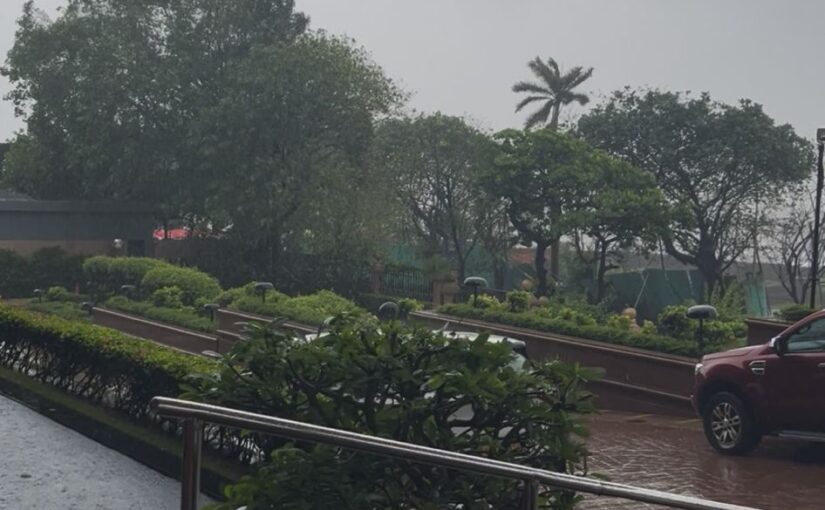
I’m writing from Bombay, where the monsoon floods are overwhelming; visually and viscerally. The rain hammers the city with a kind of sublime fury. From certain vantage points, it’s breathtaking. But it’s also undeniably brutal for those without scenic surroundings or structural shelter. It’s a reminder that Indian beauty is often doubled with burden.

II. Burden Burst: The Commentariat Awakens
Lately on Brown Pundits, I’ve noticed a revival. Old voices returning, new ones emerging, and many ideas worth engaging. But some themes have worn thin; for instance I’m in broad agreement with Indosaurus & I don’t want to waste too much breath on Audrey Truschke. And frankly, Aurangzeb is not a hill I want to die on. In fact, perhaps one of the key misreadings by Muslims in the subcontinent was turning every ideological disagreement into a hill to die on. Maybe it began with QeA-Jinnah and the Great Allama but it ossified into a pattern. Everything became a matter of principle, rather than pragmatism.

III. Concession Is Not Compromise
Compromise is seen as weakness, but I’m more interested in the capacity to concede especially when history clearly shows you’re wrong. The Mughals installed a two-tier system, subordinating Hindus and even native Muslims. Contrast that with the Suri dynasty, particularly Sher Shah Suri, who in just two decades built the Grand Trunk Road and reshaped governance without the alienation that marked the Mughals. If Hindutva attacked the Suri legacy, I’d call it pure bigotry. Sher Shah ruled with the land, not over it. Continue reading Come Fly with me to Far Bombay

Open Thread: Rasam, Stray Dogs, and the Battle Over India’s Story

Life in Chennai has been calm. For breakfast I have rasam. It is a superfood: light, hot, and full of spice. Indian food is the only cuisine where I could be vegetarian. I know Persians who try. I feel sorry for them. No meat, no masala, no spice. There is only so much hummus one can eat.

But calm at the table contrasts with what I read in the news. The Delhi order to remove stray dogs is disturbing. I cannot look at the pictures of the removals.

Across the Trans-Wagah line, another current runs. The Pakistan Cricket Board may change its revenue-sharing with players. A small story, yet it speaks of a larger one: Pakistan may gain small tactical wins by tying its path as the flexible adversary to India. But for the top ten percent of its economy, the block is clear. They cannot flow into India’s success. They remain tied to Western patrons.

Meanwhile, old arguments are stirred again. Audrey Truschke has been active with fresh claims on Aurangzeb. The same week, Kabir wrote that Western philosophy outweighs Dharmic wisdom, and that Greek thought shaped Buddhism (I can’t remember if it was him). I wonder who first wrote this propaganda. It is damaging, and it lingers.

India’s stories stretch from the taste of rasam to the fate of stray dogs, from cricket boards to Aurangzeb’s ghost, from Kabir to the Greeks. Each is part of the same struggle: who owns the narrative of Bharat, and how it is told.

Links:

To the Dutch, a German Shepherd holds more worth: https://www.instagram.com/reel/DNYEoQForz2/?igsh=MTVrZW1kZW94NHdieQ==

Serial Killing at a Famous Karnataka Temple: https://youtube.com/shorts/YexL_ASaGqE?si=mQ-Kdj6jSMzNPrAx

Could be Social Media Frenzy: https://www.thehindu.com/news/national/karnataka/dharmasthala-burial-case-political-temperature-soars-as-no-major-recovery-after-digging-17-spots/article69937387.ece

Not one Football: https://youtube.com/shorts/DR8SFCTCaoQ?si=tut2ymQB3EcDHTY6

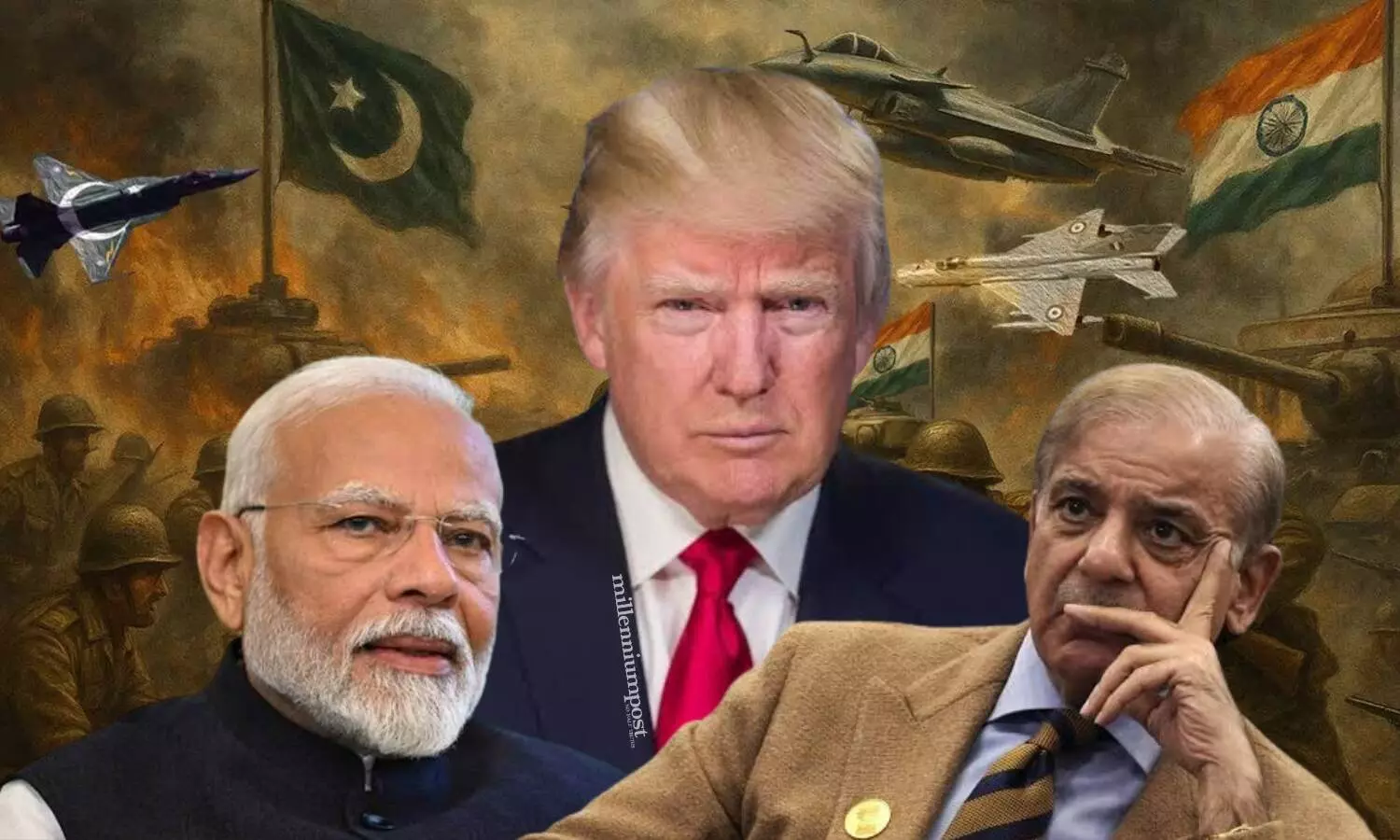
USA, India, Pakistan.. an eternal prickly braid

Trump makes U-turn, says 2 leaders of India-Pak 'decided' to stop conflict

Since the 1990s, Western powers (aka the USA and it’s vassals) have been building up a relationship with India that paints India as a fellow liberal Democracy (and a possible future partner against the new enemy bloc led by China). Beyond these propagandistic talking points, there is supposed to be real convergence on some big things: Demographics, slowly laid economic foundations and baseline cultural strengths combine to make India a rising economy; At a time when birth rates are below replacement in the first world, there is going to be no bigger source of labor or talent. If businesses have to “derisk” from china, they have southeast Asia and India as the natural targets. If other Asian countries are to resist total Chinese hegemony, there is no way to do that without Indian help. And so on.

Throughout this period there have been many prickly issues between the partners (eg a recurring complaint from India that the West supports Pakistan, which sends terrorists into India; on the other hand there is a recurring Pakistani complaint that the USA does not pay enough and (especially in the last decade) is too willing to accept India as the regional hegemon; and well justified complaints from everyone that India is too protectionist) but the public diplomacy has remained positive and feelgood for the most part. All that started to change somewhere in May 2025 and it has been rapidly downhill in the last one month as Trump has publicly attacked India for being protectionist, accused it of being a dead economy, and completely ignored Indian “sensitivities” about Pakistan.

Until now, Indian officialdom has tried to stay sober and avoid inflammatory responses, but they have also resisted the choice (already taken as the path of least resistance by UK, EU and Japan) of massaging Donald’s massive ego and nominating him for some Nobel prizes to get past any personal hurdles. But of course India’s social media army has no such hesitation and on that front the bonhomie of the last few years has completely evaporated, with Indian nationalists and White Nationalists (let us not be coy and recognize that MAGA is a White nationalist movement at heart) going at it hammer and tongs.

So what is going on? and why? and what happens next?Ā I have no inside information, so I am perfectly placed to make some general comments and then ask better informed people to tell me why I am wrong. Here goes: Continue reading USA, India, Pakistan.. an eternal prickly braid

Browncast: Trump, Tariffs, Hurt Feelings, and India..

Another Browncast is up. You can listen onĀ Libsyn,Ā Apple,Ā Spotify, andĀ StitcherĀ (and a variety of other platforms). Probably the easiest way to keep up the podcast since we don’t have a regular schedule is toĀ subscribeĀ to one of the links above!

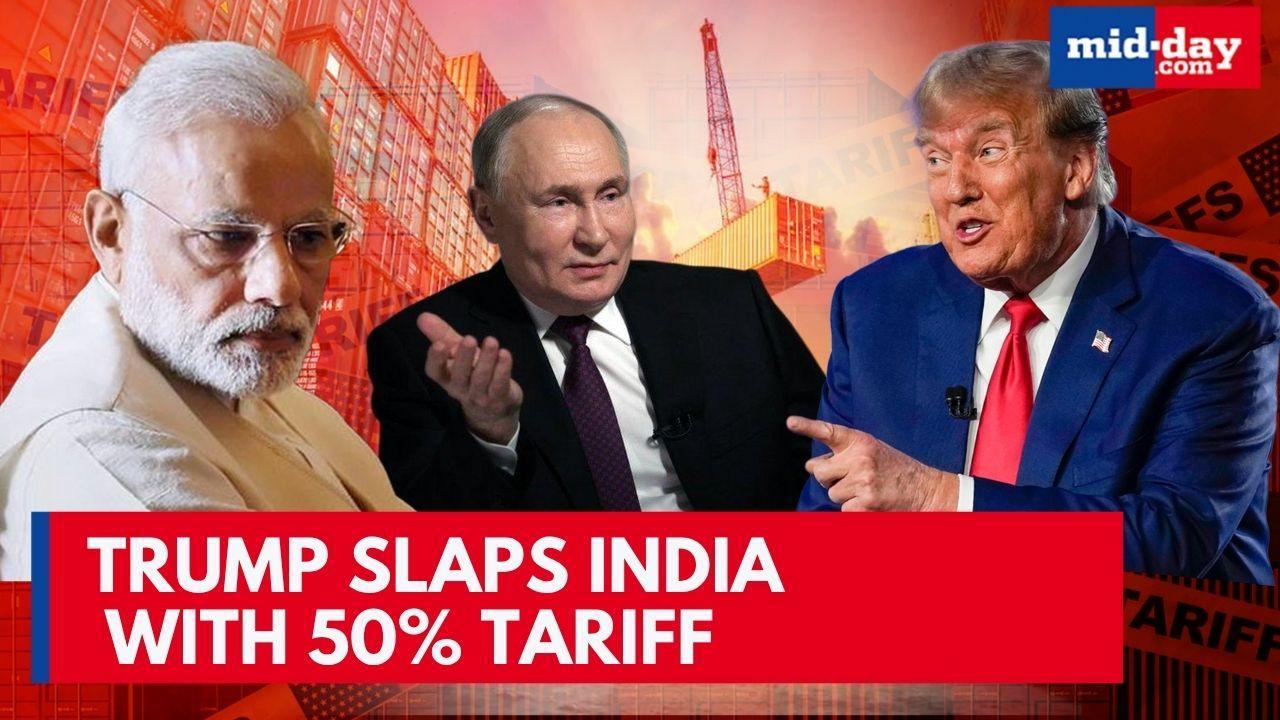
In this episode I talk to Kushal Mehra (Host of the Carvaka podcast) and regular Brownpundit Amey Chaugle about the tariff kerfuffle… the public (and on Trump’s side, frequently intemperate) war of words between the USA and India that is partly about India’s protectionist tariff regime but maybe mostly about other things (such as Donald’s ego and his desire to get that Nobel Peace Prize)..
Dig in and add your comments. We too don’t know exactly why this is going on and where it will end..Ā  šŸ™‚

Trump Imposes Total 50% Tariff On Indian Goods, India Hits Back

Why Indian English Loves Long Sentences

If China endured a century of humiliation, India has lived through a thousand years of it. Invasions and exploitation left it poor in wealth but rich in culture; intricate, adaptive, and resilient. That depth shows in Desi English, which often favours long, ornate sentences over plain ones.

This habit echoes Persian’s former role in the subcontinent: a prestige language whose mastery signalled rank. Even Ghalib’s vast Persian verse drew less love than his Urdu. In India, Persian was the colonial language of power; today, English plays that part.

In Iran, Persian changes fast. Slang, borrowed terms, and foreign tones reshape it so quickly that many in their forties struggle with teenage speech. My own Persian, kept alive in Kuwait and India, is closer to Shirazi and Tehrani standards than to the language my ancestors spoke. I’m self-conscious with Iranians, but with diaspora Persians, I speak freely; we share a looser, accented form of speech. Continue reading Why Indian English Loves Long Sentences

Madhuri is stronger than the Ambanis

In the name of Pakistan, which is a beautiful poetic name, ā€œLand of the Pureā€, lies the tragedy of pathological purity. It is an addendum to the desire to stay pure. To remain untainted. But purity, when pursued absolutely, becomes brittle.

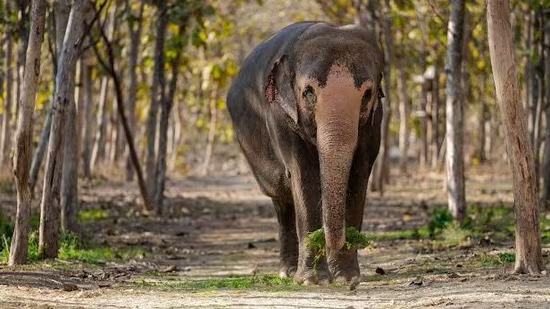
Madhuri Mahadevi

The Ambanis recently relocated Elephant Madhuri from Kolhapur’s Jain Math to the Vantara rehab centre, citing health concerns. But the move, though framed as rescue, triggered emotional protests, political pushback, and a national debate over animal welfare vs. sacred tradition.

Why did it explode? Because Madhuri wasn’t just a creature in need of savin; she was a living deity to those who loved her. Her departure wasn’t a routine animal welfare decision. It was a rupture in India’s civilizational relationship to the divine in nature. One of the most remarkable aspects of Hinduism is its seamless veneration of the natural world. The river is a mother. The cow, a guardian. The elephant, divine.

Few religions integrate reverence for nature into daily life with such tenderness and theological consistency. This story, of an elephant, a corporate empire, and a temple, speaks to a larger tension in India today: Who gets to define care? And when does ā€œrescueā€ become removal? Continue reading Madhuri is stronger than the Ambanis

Ghosts of 1947

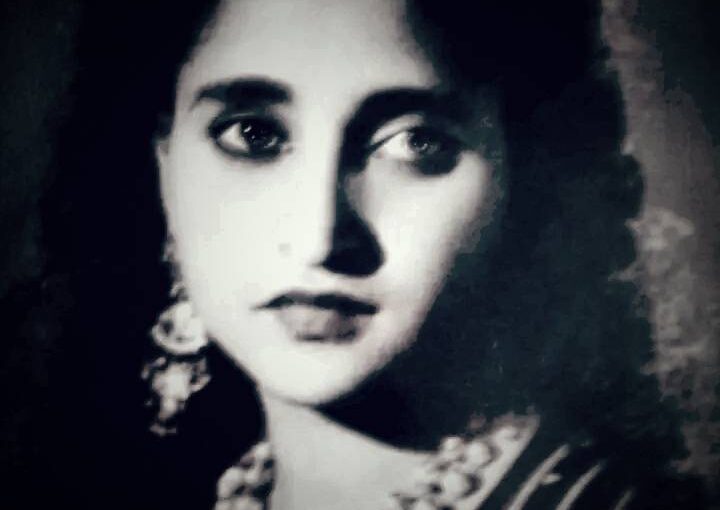
I’m Sumayya from Pakistan, it’s very nice to meet you all. I need your help, it’s about my Dadi.
I’m attaching a picture of my Dadi a year after Partition. She opened up about Partition 1947. I believe it has been a severe kind of trauma where it took her nearly 70 years to open up completely, and even then she stopped talking after a while. It was a bloody massacre, Kashmir sadly bearing the brunt of it. Her last memories are being deceived to get in a bus which would take them to Pakistan, but then women yelling at the driver that he was taking them somewhere else.
Then men standing outside scaring them with swords, while women ran away from the bus and jumped into a nearby river. My Dadi (fourteen at the time) and her younger sister also ran to jump, but her father held them and said nothing would happen to them, and directed them to hide under a seat. She doesn’t remember much after that, just the fact that she heard her baby sister being taken away, and then herself being dragged out, upon which she tried to clutch onto her mother’s kurta but it tore. At that point, herself and her mother were the last in the bus, everyone else was either killed or taken away.
I am not sure, but she firmly, firmly believes that her sister was the most beautiful of them all and must not have been killed and maybe taken away to get married to someone. During her youth she tried posting about her in newspapers but it never helped. I know it’s probably too late, but maybe if she did get married and had children, she must’ve told her story to her kids, whom I could locate? I’ve registered to many Kashmiri directories and pages, let me know what else I could do to locate her family.
The only information I know is that they lived in Jammu, Kashmir and my Dadi’s name is Mehmooda. Her sister was Kulsoom (Ummul Kulsoom), they had eight more siblings. Their parents were Hakim Din and Amna.This is in no way a religious/political debate. Just want to use the internet to locate my long lost family.
Post Credit: Sumayya T Malick

Continue reading Ghosts of 1947

🧵 Open Thread: Hate Speech, Travel Notes, and Diplomatic Surprises

I just saw a comment that genuinely crossed the line; not just a misstep, but something hateful, dehumanizing, and deeply communal. It invoked Partition violence in a way that glorified massacre. That’s not just a dogwhistle, that’s a foghorn.

As most of you know, I’m a light-touch moderator. I tolerate a lot. I believe in messy dialogue. I’ve been fair on my WhatsApp groups, fair on BP, and generally try to err on the side of letting things play out. But this? This wasn’t a close call. It was a clear failure of moral language.

Even if the commenter didn’t ā€œmean it,ā€ this kind of rhetoric has consequences. When you’re speaking about events like 1947, where entire families were destroyed, you need to speak with care, not contempt. There’s no room for casual violence, coded language, or historical gloating. None. Zero.

Before this commenter contributes further to the blog, he will need to fully retract and apologise for the communal language he used. Criticism is fair game. But hate speech is not. Kabir can be theatrical, yes but he does not traffic in dehumanization. The standards must be consistent, and that comment clearly crossed the line.

Please observe this on the thread. I’m traveling, and this is an open post. I’ll be back with more soon. I’ve written a bit in my newsletter but I will expand on those.

In the meantime:

āž”ļø Yes, it appears Pakistan is running smart diplomacy — both with Iran and the U.S.

āž”ļø  I don’t have time to share the links (plane about to take off); they’re all Google-able.

āž”ļø But credit where it’s due. There is no infallibility in foreign affairs. But when someone cannot stand to see Pakistan get anything right, it reveals more about their own biases than about geopolitics.

This isn’t about defending states or “sides”; it’s about defending basic decency in discourse.

Brown Pundits