I’ve updated this post (Brown Pundits is not an echo chamber) after realising something important.
What began as a spirited disagreement veered into something darker. It turns out that bombay_badshah, a voice I initially assumed to be new, may not be who he claims to be (I had a hunch but so did Kabir, that BB was HS reincarnated). The posting style, the fixations, the timing; all too familiar. My suspicion is that BB may be a derivative or proxy of HS, previously banned. If true, this was not a genuine disagreement; it was entrapment, bait-and-switch.
In that light, I owe Kabir an apology. He was provoked in bad faith by someone who may be operating behind a mask. And that matters, because here on Brown Pundits, identity isn’t incidental; it shapes perspective, and we respect that. We excavate worldviews, not just opinions.
While I cannot definitively prove that BB is HS, the circumstantial evidence is strong. I will allow BB to remain but if the commentary returns obsessively to Kabir or Pakistan, I will intervene. Everyone is welcome to engage on substance. But this space will not be hijacked.
The original post remains below the jump, unedited but its context has now changed.
I’ve been enjoying the new direction Brown Pundits has taken since the recent shake-up. Posts are now generating 100+ comments, and that kind of engagement creates a virtuous cycle. You want to write more, think more, respond more. I’m leaning into that.
For now, a lot of the content burden rests on me and that’s okay. It’s been encouraging to see older names return: Girmit, for instance. It feels like a slow reconsolidation of the original readership. Letting people return on their own terms.
Meanwhile, BRAHM, my newsletter, has taken on a different role; a home for more composed writing, life pieces, and the slow launchpad for my business. I just posted something there recently, which I’ll link to for now and follow up on soon. But here, on BP, is where I let myself think in public. Where I go long. Where thoughts breathe.
Reading Kabir’s thoughtful post on the “soft Hindutva” bias at Brown Pundits, I found myself both agreeing with parts of his argument and diverging from its framing. My own journey with BP goes back to its inception. The blog was born in Twixmas December 2010; 10 days after I had met Dr. Lalchand, whose presence has profoundly shaped my civilizational views.
I say this not as a biographical aside but because BP, at its best, is where the personal and civilizational collide. We bring who we are; our marriages, our migrations, our contradictions, into this messy, brilliant conversation.
At the time, like many Pakistanis, I held a deep-seated assumption: that Hindus were fundamentally “other.” It wasn’t overt hatred; just a civilizational distance, internalized from birth. But Dr. V & Brown Pundits challenged that.
A Forum With Bias? Yes. But Which One?
The heart of BP is not neutrality; it’s the willingness to host contradiction. That is its genius, and it must be protected.
In a world increasingly defined by sides, partisanship often masquerades as empathy. Whether it’s Pakistanis performing concern for Indian liberalism, or Indians invoking the plight of Muslim minorities to score points against their ideological rivals, the truth is simple: if you already have a side, you’re not truly invested in the fate of the other.
This isn’t cynicism; it’s structure. Sides, by their nature, demand loyalty. And loyalty comes at the expense of dispassion. You can mourn injustice selectively, but don’t pretend it’s universalism. More often than not, tribalism puts on the mask of principle.
As a Bahá’í, I’ve been shaped by a millenarian vision that urges global unity; yet I’m also deeply influenced by Hindu pluralism and pagan elasticity. Nicholas Nassim Taleb once said the more pagan a mind, the more brilliant it might be (excellent article) because it can hold many contradictions without demanding resolution. That capaciousness allows one to see that not every question needs a single answer. Hinduism, with its deep pluralism, contrasts radically with Islam’s (and Judaism’s) uncompromising monotheism. And yet, these two traditions are bound together—enmeshed across centuries of history, thought, and blood. Their tension is real, but so is their shared life.
That’s the point: opposites don’t just coexist, they form a whole. But when we prescribe change for the “other side,” we ignore our own capacity for reform. It’s always easier to critique outward than to renovate inward. Especially in a world run by oligarchic elites and managed emotions, where empathy is choreographed and outrage monetized.
So no, the Dalit Muslims of Dharavi aren’t the problem. Nor are the marginalized Hindus of East UP and Biharis. The problem is that a single family can build a private skyscraper in Mumbai while the city gasps beneath it. It’s the system that rewards power accumulation, not its occasional victims, that should concern us.
I don’t offer neat solutions. Maybe it’s taxation. Maybe it’s redistribution. Maybe it’s noblesse oblige. But the first step is this: stop pretending your critique of the other side is altruism. It’s not. It’s strategy. And perhaps the more honest work begins at home—with your own side, your own people, your own self.
There’s a quiet but persistent coalition, inside and outside India, that seems intent on denying Hindus the right to define their own future. It includes unreformed Islamists who refuse to reckon with modernity, English-speaking liberal elites still shadowboxing for Nehru, minorities with veto power but no stake in cohesion, and a chorus of Western (and increasingly Chinese) voices, eager to manage India’s trajectory from afar. What unites them? A shared discomfort with Hindu political consolidation.
Let’s be clear: Hindu identity is not a new construct. Whether you place its roots 3,000 or 5,000 years ago, it’s one of the world’s oldest living civilizational continuities. That identity has always been plural, regional, and evolving. But it has also always been there; visible in memory, ritual, geography, and language. Today, that identity is waking up to its political form. And it will not be put back to sleep.
Hindutva is not going anywhere. Nor is the Indian Union. Those who hoped Kashmir would stay outside this arc have already seen the direction of travel. Pakistan’s decision to opt out of Hindustan, and then build an identity against it, has led not to strength but to strategic stasis. Bangladesh, too, for all its cultural richness, now stands as a separate civilizational lane. And so we arrive at the core truth: Hinduism and India are coterminous.
This isn’t a call for exclusion. But it is a reminder that those who opted out do not get to dictate terms to those who stayed in. That includes foreign commentators and diasporic gatekeepers alike. There is a difference between pluralism and paralysis. There is a difference between nationalism and denial. And if majoritarianism is the anxiety; perhaps the deeper fear is that Hindus are no longer apologizing for being the majority. Let India decide. Let Hindus decide. Let the world, finally, learn to listen.
King Khan — I don’t think it’s irrelevant that Muslim-majority regions would have been liminal. Literally.
The previous post got me thinking about demographic engineering, and how it has quietly shaped post-Partition India — not just at the borders, but deep inside the Union itself. When Qureishi redefined the demographic weightage of the Indo-Gangetic, I was reminded of how states like Madhya Pradesh (I’ve had a post waiting on this for months), Maharashtra, Uttar Pradesh, and Bihar — the so-called “giants” of India’s federal structure — were similarly calibrated. Even the historical Andhra Pradesh (before Telangana split), Kerala, and distant territories like the Lakshadweep Islands show signs of internal rebalancing. The logic? To prevent the consolidation of another Muslim-majority province — something the Indian state has remained deeply wary of since Kashmir’s accession crisis in 1947–48.
The anxiety over Muslim-majority units lies at the core of why Kashmir remains “special” — not spiritually, but politically. Its sovereign ambiguity and constitutional exceptionalism stem directly from the post-Partition plebiscite logic, which India initially welcomed. At the time, Nehru and the Congress were confident of winning that vote. Quaid-e-Azam had thoroughly alienated Sheikh Abdullah, by backing the non-consequential “Muslim Conference” and the National Conference had significantly diverged from the Muslim League. The shift didn’t come until later — particularly after the rigged 1987 elections and the spillover from the Afghan jihad, which together detonated the insurgency.
S. Qureshi: “Muslims are today a majority of the population >50% of North British India. If peninsular south was made into its own country in 1947, India would be a Muslim majority country today. Many Muslims actually wanted South India to be a separate country and North India (including Pakistan/Bengal) to be one unit. To say that Indian Muslims who lived in the historical centre of Muslim power for centuries would just get up and leave for Pakistan is just farcical and delusional. These types of ideas were only proposed by extreme right-wing Hindu organizations after partition, and these ideas seem to become mainstream today with BJP. Historical reality, like always, is very different.”
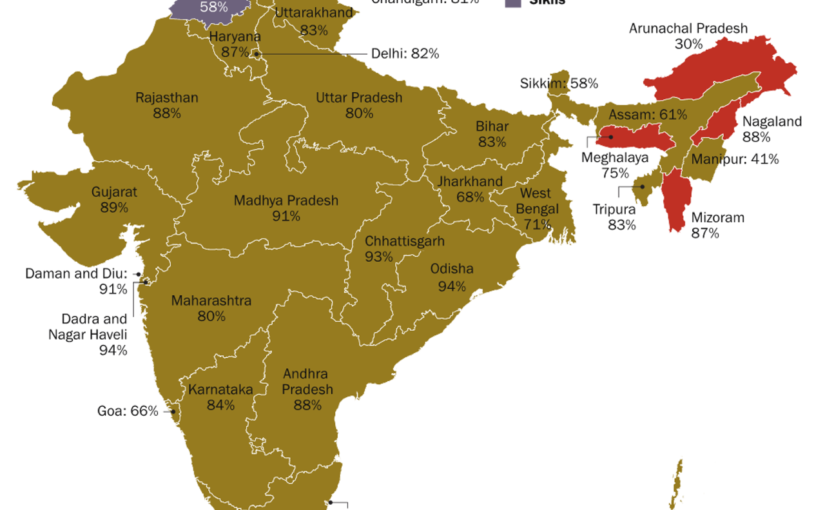
The demographic map of the subcontinent tells a startling story. If South India had formed a separate state in 1947, the rest of British India — encompassing Pakistan, Bangladesh, and the northern Hindi belt — would today constitute a Muslim-majority civilizational bloc. This isn’t conjecture. It’s arithmetic.
An outstanding book. Michael Cook is wiser than he lets on (ie he does not explicitly make big sweeping statements about the lessons of history, but his presentation of the facts is nonetheless based on very sophisticated and wise analysis, which may remain implicit, or he may just hint at the issue and expect that the reader will know why he brought it up exactly like this) and always worth reading.
This is a survey of all of Muslim history from the time of the prophet to the early 20th century. He covers every region and pretty much every dynasty or group that ever ruled from Morocco to Malaysia, but it is not just a recitation of facts; at every point he has interesting things to say and he has a remarkable ability to convey a lot of information in a very short passage. Still, a lot of the details can be skipped if it is not an area you are interested in.
For example, I am very interested in Indian history and I found the short (just 60 pages) section on India to be one of the most balanced and accurate summaries of the 800 years of Islamicate colonization of India and its consequences. So the book passes the Gell-Mann test with flying colors.
This was on old post about blasphemy laws that I wrote in 2015 and revised in 2021. It is on the site, but hard to search for, so i decided to repost it now that blasphemy is again in the news with two recent episodes where the police were able to arrest the accused (ie save him from mob killing) but then the police themselves executed the blasphemer in custody. There has been an episode in the past where a Shia who had blasphemed against the sahaba (the companions of the prophet) was killed (with an axe) by a police officer while in custody and there have been a couple of episodes where blasphemers were killed by other prisoners, but this trend of execution by the police is now at a new level. The police officers who carried out the execution were garlanded and immediately received promises of millions of rupees in rewards (though with Pakistan reaching new levels of conmanship, it is likely that some of these pledges are fake). So now, not only will the mob kill you any time you are accused of blasphemy, if the mob fails, the police will finish the job the same day.
Of course, if it does reach trial, the courts will always sentence to death in any case because judges who let off previous accused have also been killed.
SO it goes.
Meanwhile, as liberal muslims and Liberals and Leftists in the West who want to use orthodox Muslims for their own purposes and want to find ways to oppose blasphemy laws without upsetting Muslims will dig up their usual “colonial era blasphemy laws in Pakistan” story to see if blame can be pinned on some dead entity, such as the British empire. So I wanted to have a post handy where I could direct them; so here it is, a quick overview of the blasphemy issue in Pakistan
A blasphemy law was part of the 19th century Indian Penal code as section 295.. It was not a bad law at all and the lazy habit of blaming it for later blasphemy law crap in the Indian subcontinent is just that: a lazy habit.
Here is section 295 of the Indian Penal Code of 1860:
Injuring or defiling place of worship with intent to insult the religion of any class.—Whoever destroys, damages or defiles any place of worship, or any object held sacred by any class of persons with the intention of thereby insulting the religion of any class of persons or with the knowledge that any class of persons is likely to consider such destruction, damage or defilement as an insult to their religion, shall be punishable with imprisonment of either description for a term which may extend to two years, or with fine, or with both.
The aim of the law was to prevent/punish things like someone throwing a dead pig into a mosque or a cow’s head into a temple. An actual physical desecration is to be punished. This seems like an eminently sensible law and cannot really be blamed for all the evils that came later. But in the 1920s there was a famous case in Lahore where a Hindu publisher was arrested by the colonial authorities after Muslims agitated against him for having published a book called Rangila Rasul (“merry prophet”). The British colonial authorities tried to prosecute him for hurting the religious sentiments of Muslims, but the high court in Lahore (quite properly) found him innocent because there was no law on the books against just publishing a book, no matter how offensive it may be to some religious group. Fearing future communal discord from such provocations, the British then had the legislative assembly add section 295A to the law in order to criminalize deliberate attempts to “outrage the religious feelings of any community”. This section states:
Whoever, with deliberate and malicious intention of outraging the religious feelings of any class of citizens of India, by words, either spoken or written, or by signs or by visible representations or otherwise], insults or attempts to insult the religion or the religious beliefs of that class, shall be punished with imprisonment of either description for a term which may extend to 4[three years], or with fine, or with both. But even with this new and expanded article 295A in place, prosecutions for blasphemy were few and far between until, in the 1980s, General Zia added two new sections to the law in Pakistan and really set the ball rolling. These infamous sections are labelled 295B and 295C.
295-B: Defiling the copy of Holy Qur’an. Whoever wilfully defiles, damages or desecrates a copy of the Holy Qur’an or of an extract there from or uses it in any derogatory manner for any unlawful purpose shall be punishable with imprisonment for life. 295-C: use of derogatory remarks etc., in respect of the Holy Prophet: – who ever by words, either spoken or written, or by visible representation, or by any imputation innuendo, or insinuation, directly, defiles the sacred name of the Holy Prophet Muhammad (PBUH) shall be punished with death, or imprisonment for life and shall also be liable for fine.
Note that the law no longer requires that the offense be malicious in intent. Intent is no longer an issue. Insulting the Quran or the prophet, even unintentionally, is now punishable by death. To seal the deal, in 1991 the Federal Shariat Court of Pakistan struck down the option of life imprisonment and made the death penalty obligatory. And of course, the new amendments only apply to blasphemy against Islam, not against all religions (in this sense, the new laws are more “rational” and internally coherent, since all religions blaspheme against all other religions as a matter of course, so the original law was not coherent in principle, though still workable in practice). Between 1984 to 2004, 5,000 cases of blasphemy were registered in Pakistan and 964 people were charged and accused of blasphemy; 479 Muslims, 340 Ahmadis, 119 Christians, 14 Hindus and 10 others. Thirty-two people charged with blasphemy were killed extra-judicially during that time. More have died since. Eighty-six percent of all the cases were reported in Punjab.
Every time the shit hits the fan, many liberal people start hoping that this blasphemy law can be changed to finally stop or slow down this torrent of prosecutions and killings. Others have noted that the law is not the problem, free-lance enforcement of a broader blasphemy meme in the Muslim community is the problem and will likely persist even if the law is repealed.
In my view the law is not the only problem, but it IS a very potent symbol of the surrender of state and society in front of the blasphemy meme. Repeal of the law will not kill that meme, but repeal of the law will be an equally powerful signal that things have changed and that state and society no longer approve of the killing of blasphemers. It will not end the problem, but it will be the beginning of the end. Repeal of the law is not a sufficient condition for this nightmare to end, but it is a very important necessary condition.
Another BP Podcast is up. You can listen on Libsyn, Apple, Spotify, and Stitcher (and a variety of other platforms). Probably the easiest way to keep up the podcast since we don’t have a regular schedule is to subscribe to one of the links above!
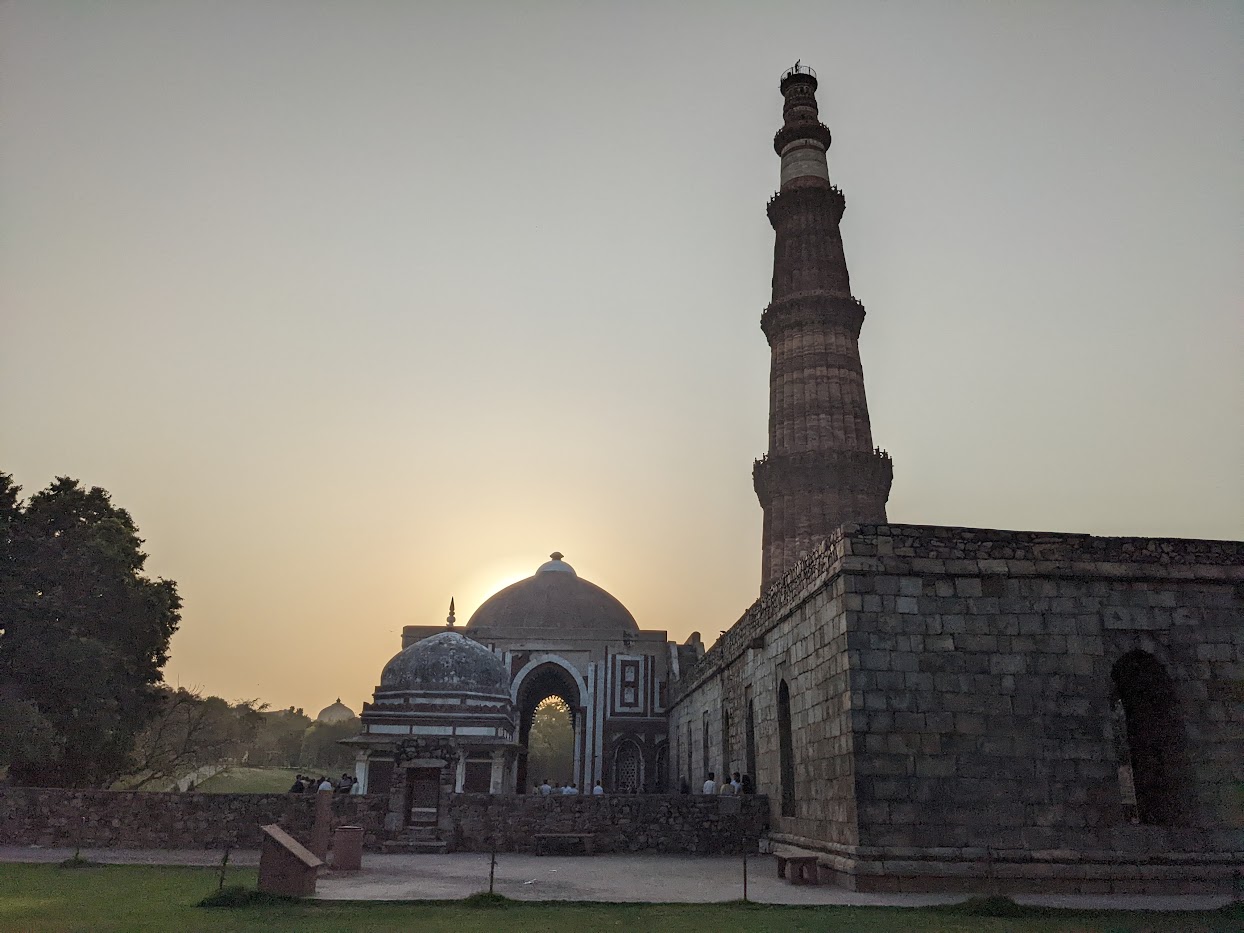
In this episode of the history podcast, Omar and Jay discuss the period of Delhi Sultanate with Jay and Gaurav. We go over all the major dynasties and also discuss the religious, economic aspects of this time.
As Omar Ali puts it, the legacy of Delhi Sultanate is the legacy of Islam in the subcontinent.
References:-
1. The Emergence of the Delhi Sultanate, 1192-1286 by Sunil Kumar
2. The History and Culture of the Indian People: Volume 6: The Delhi Sultanate
3. India in the Persianate Age: 1000-1765 by Richard M. Eaton
4. Medieval India – Vol. 1 by Satish Chandra
5. Advanced Study in the History of Medieval India: Volume I by J L Mehta
6. A Comprehensive History of India: The Delhi Sultanat (A.D. 1206-1526), ed. by Mohammad Habib and Khaliq Ahmad Nizami