Caste and the Structure of Discourse

I’ve come to realise that it’s often more productive to write full posts than to engage in fragmented comment threads. The richness of thought requires a form that can hold tension, contradiction, and nuance but comments, by design, resist that.

The Upper-Caste Template of South Asian Dharmic Discourse

Take, for example, sbarrkum, who shares personal reflections and images from his life on the common board. While one might raise questions about permissions or boundaries, it’s also important to respect dialectical differences in how people choose to engage. There’s no single valid mode of expression.

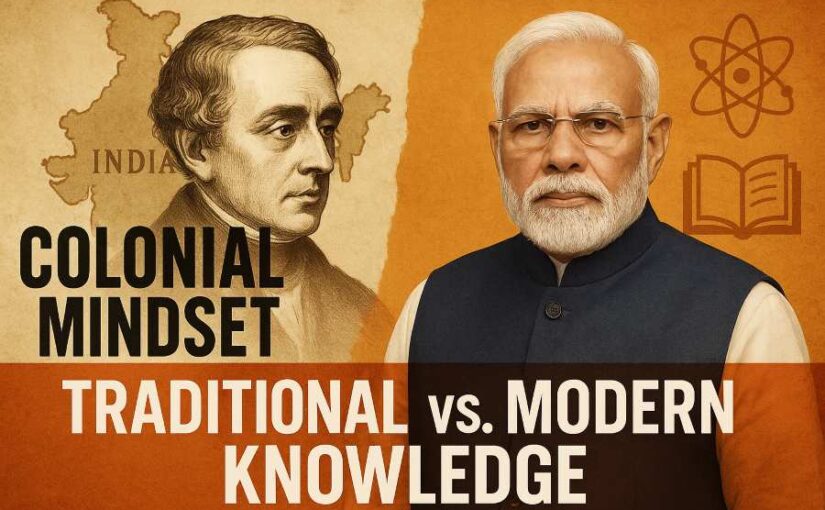
That brings me to a broader reflection: how the very structure of discourse in Dharmic South Asia has long been shaped by upper-caste templates; especially under Western influence. Over two centuries, upper castes have Brahmanised, Saffronised, Persianised, and then Westernised themselves, adopting and enforcing norms of discourse, authority, and ‘rationality.’

Why Intermarriage Doesn’t Erase Hierarchy Continue reading Caste and the Structure of Discourse

Brown Pundits and the Echo Chamber Problem

The Echo Chamber of the Commentariat

It has been on my mind that Brown Pundits, for all its liveliness, risks drifting into an echo chamber. The commentariat is our lifeblood: their activity sustains the blog far more than page views alone. And yet, the very strength of that community can also be its blind spot.

I do not want Kabir to end up being the Cassandra of BP, always warning of decline, and being proved right in the end. If we are not careful, we could slide into a right-wing echo chamber where challenging voices fade, and the capacity for deep interrogation, the core of what makes BP unique, is diminished.


Pahalgam and the Question of Narrative Continue reading Brown Pundits and the Echo Chamber Problem

The Changing Demographics of Undivided India (1900–2025)

South Asia’s demography is one of the great untold stories of the modern world. Too often we look at the subcontinent through today’s partitions — India, Pakistan, Bangladesh — but the real insight comes when we view the region as a single whole. Across 125 years, the balance of populations has shifted dramatically.


📊 1900: A Baseline

At the turn of the twentieth century, Muslims made up about 20% of undivided India’s population. The rest were overwhelmingly Hindu, with significant Sikh, Christian, Jain, and other minorities.


📊 1950: Partition and Realignment Continue reading The Changing Demographics of Undivided India (1900–2025)

Travelling – Open Thread

🔗 Links shared from the comments


💬 Keep the links and thoughts coming — BP works best when the Commentariat bring their own sources into the mix.

The Ilhan Omar of Brown Pundits

Every movement has its lightning rods. In American politics, Ilhan Omar is one: progressive, unyielding, often correct in substance but polarizing in style. She calls out genuine injustices, but her timing and tone can sometimes drown out the very points she is trying to make.

I’ve begun to realize that Kabir plays a similar role on Brown Pundits. Like Ilhan, he often raises necessary truths (for instance Israel has just killed an American family in Lebanon). Like Ilhan, he brings traffic, visibility, and energy. But also like Ilhan, he has a way of inflaming rather than persuading.

Charlie Kirk’s remarks illustrate why Ilhan Omar’s critiques resonate, even if her tone divides. When Kirk sneers that there are “no tall buildings left in Gaza,” or jokes that Palestinians are “stupid Muslims” for resisting, he is not just making political commentary. He is engaging in dog-whistling — racialized, sexist, Islamophobic rhetoric that devalues human life. Combined with his earlier comments about the supposed lack of “brain processing power” among prominent Black women, the pattern is unmistakable. One does not have to be a progressive to see that such speech corrodes the civic space. At the same time, none of this justifies violence: the murders of Charlie Kirk and Irina Zarutska are deplorable and must be condemned without qualification.


The Progressive Dilemma Continue reading The Ilhan Omar of Brown Pundits

Pakistan: The Realpolitik State

In a recent exchange, Kabir suggested that Pakistanis often feel unwelcome in our discussions on Brown Pundits, and that constant criticism of their country creates a sense of unease. It is worth pausing to reflect on this. Pakistanis, like all of us, are shaped by history and circumstance. And yet, there is something in the cultural tenor of Pakistan that makes open engagement difficult.

I say this not to provoke but to observe. Pakistan, as a society, often leans heavily on hierarchism, patronage, and a culture of deference. To borrow an old saying about the Somalis, that every man thinks himself a Sulṭán, one might say that Pakistanis often view themselves through the prism of status and validation. This instinct is hardly unique; Indians, too, have their caste-bound privileges and invisible hierarchies. But in India, these structures are embedded in a dense cultural fabric; family, caste, neighbourhood, ritual, that, for all their flaws, anchor society. Pakistan, by contrast, feels less rooted. It is a younger country (with old traditions), with fewer inherited cultural layers to draw on.

This is not simply an abstract point. When I married, we drew freely from Hindu rituals (dual ceremonies, Bahá’í incl.), Persian customs, and Sindhi traditions, blending them into something whole. But I realised there was nothing distinctly “Pakistani” to contribute; no cultural motif that stood outside India or Iran (we didn’t do a Walima, which is Muslim). Pakistan is, in many ways, a derivation: a state forged through separation, rather than a civilization with deep roots of its own. The cultural space it occupies has been overlaid with militant nationalism and, too often, Hindu-phobia (Kabir is so inured to it that he isn’t able to recognise that but on the flipside so is the Commentariat towards Islam).

To acknowledge this is not to deny the prejudices of Indians toward Muslims, which are very real and enduring. Nor is it to ignore the deracinated, secular archetype embodied by figures like Benazir Bhutto, who seemed neither fully Muslim nor fully Western, suspended between worlds and who are the cultural elite of Pakistan (what they give up on their bridge is their Hindu origins; more than being half-Persian, Benazir’s nani was Hindu). It is simply to note that Pakistan’s cultural story remains unsettled & thus interesting.


Validation and Audience Continue reading Pakistan: The Realpolitik State

Threads, Carpets, and PM Modi’s 75th

Happy Birthday Pradhan Mantri:

I watched several videos — four or five, maybe more — of public figures sending their wishes. Among them: Donald Trump, Narendra Modi, Benjamin Netanyahu, Shah Rukh Khan, Aamir Khan, Mohammed Siraj, and Mukesh Ambani.

Mukesh Ambani, of course, remains closely aligned with the establishment, and Aamir Khan seemed to lean heavily into his Hindu heritage — adorned with Rakhis on his wrist, even a Bindi. He’s presenting himself now in a distinctly Hindu cultural idiom, though he comes from a very prominent Indian Muslim family.

By contrast, Shah Rukh Khan stood out. His message was subtly sardonic — he remarked that the recipient was “outrunning young people like me.” It was light, but just subversive enough to feel intentional. Interestingly, both Shah Rukh and Aamir spoke in shuddh Hindi, which added a certain performative weight to their gestures.


Hindu Art

I’ve been fairly busy the past few days, mostly focused on BRAHM Collections; writing about carpets, curating Trimurti sculptures, and exploring Ardhanarishvara iconography. It’s been a deep dive into the civilizational grammar of India and by extension, the porous boundary between sacred art and civil religion.

In the background, I’ve also been chipping away at longer-form reflections; trying to crack the formula for my newsletter (believe it or not the readership is neck to neck with BP but different demographics). It’s all a bit scattered, but the writing has become its own brown paper trail.


On the Commentariat (and Why I’m Stepping Back)

I still follow the commentariat but I’m slowly easing off. There’s a rhythm to it, sure, but too often it turns into exhaustion. I’ve removed all of Honey Singh’s abusive posts. Abuse is now a hard red line for me, but beyond that, I’m stepping back from constant moderation or sparring. Continue reading Threads, Carpets, and PM Modi’s 75th

The Honey Trap of the Ummah:

🕌 Reflections on Kabir, Afridi, and the Compact of Coexistence

The recent incident involving Kabir / Bombay Badshah / Honey Singh, and the orchestrated drama around his entrapment has, quite unexpectedly, become a catalyst for deeper discussion on Brown Pundits. While none have chosen to focus on analytics (“2,000 daily visitors”—thank you very much:-), the real story lies in how this drama has exposed, yet again, the deep ideological fissures within South Asian identity; especially in the India-Pakistan-Muslim triad.

Let’s begin by being honest: Brown Pundits, for all its digressions into Sri Lanka, Nepal, or Bangladesh, is still primarily a blog about India and Pakistan, and more crucially, about Indian and Pakistani Muslims. This is a feature, not a bug. The origins of the blog lie in the Sepia Mutiny, a scattered band of intellectually independent thinkers questioning dogma from every direction (which started in 2004 and if we are a “daughter blog” that we means have 20+yrs of intellectual antecedents on the Brownet), and it has now matured into one of the few platforms willing to wrestle with the ideological ambiguities at the heart of the subcontinent.

🧕 Kabir’s Point: Brotherhood, Boundaries, and the Big Choice

Kabir made an astute, if difficult, observation: that he views Indian Muslims as “brothers”, but does not feel the same about Pakistani non-Muslims.

This sounds contradictory until one understands the emotional exhaustion of watching Muslims oscillate between claiming ummah-hood when convenient, and weaponizing liberal values when needed. It’s a cognitive dissonance that creates what I can only call the moral coexistence trap: the idea that Muslims, especially in India, demand maximum accommodation, of their food (their nauseating right to murder Gau Mata on Bharat’s sacred soil itself), Faith, festivals, and foreign affiliations, while rarely extending the same pluralistic courtesy in return.

And then there’s that infamous Shahid Afridi clip, the one where he smashed his television after watching an Aarti, being performed. To many of us, that wasn’t just a cringe-inducing moment of bigotry; it begged a real question: Why do Indian cricketers continue to shake hands with Hinduphobes Hindu-hating men like Afridi and his ilk (the Pakistan cricket team)? At what point does tolerance become indulgence?

🚩 The Compact of Indian Minorities: Understand It or Leave It

Continue reading The Honey Trap of the Ummah:

Brown Pundits