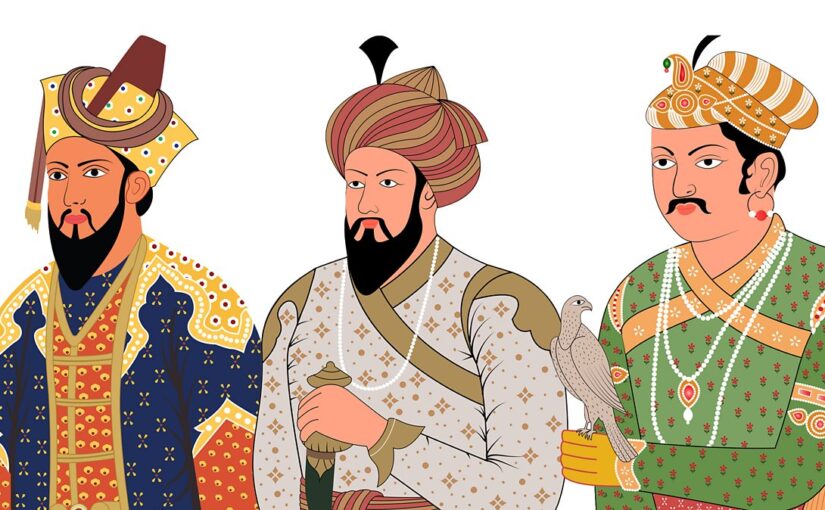
The Mughals Were Not an Indian Dynasty — They Were a Dynasty in India

The Mughals were not an Indian dynasty in the civilizational sense. They were a dynasty in India — rooted in the Persianate ecumene that stretched from Anatolia to Bengal, but distinct from the indigenous Indic civilizational framework.

Richard Eaton’s India in the Persianate Age captures this well. The Mughal elite, like other Turko-Mongol polities across the Islamic world, operated through a tri-layered framework: Arabic religion, Persianate high culture, and Turko-Mongolian kingship. This pattern held from Egypt to Samarkand — and India was no exception.

But here’s the distinction: while in places like Iran, Central Asia, and even parts of Anatolia, the ruling elite and the subject populations often shared linguistic, religious, or cultural proximity, in India the Mughal court sat atop a society whose foundational worldview — Dharma, Sanskritic cosmology, ritual plurality — was wholly different.

Yes, the Mughals were cosmopolitan. Yes, Akbar attempted synthesis. But at their core, the Mughal dynasty retained its sense of separateness — not just politically, but civilizationally. Persian remained the language of court and culture, their aesthetics leaned West, and their ethos remained imperially aloof. Their legitimacy was not drawn from Indian sacred geography but from Turanic, Persian, and Islamic claims of kingship.

Contrast this with the Suri dynasty, which, despite being devoutly Muslim, left a remarkably grounded imprint. Sher Shah Suri ruled in Hindavi. His administrative and infrastructural legacy felt local, even national. In some ways, paradoxically, he felt more Indian than the Mughals did.

This isn’t about Islam being foreign to India. Islam has deep roots in the subcontinent — from Kerala to Bengal to Kashmir. It has been deeply indigenized across regions. But when Islam arrives twinned with Persianate high culture, it becomes something else: a hybrid elite formation, distinct both from Sanskritic Hinduism and from vernacular Islam.

The British Raj, too, was alien — but ironically, its later administrators localized many elements of their rule. The Mughals, by contrast, represented a more refined foreignness: imperial, hybrid, and between worlds.

It’s telling that the most influential women of the Mughal court—Noor Jahan, Mumtaz Mahal, and Hamida Banu Begum—were all of Persian origin. They wielded real power: issuing firmans, shaping court politics, commissioning architecture. In contrast, the Hindu-indigenous consorts—Jodha Bai, Anarkali, even Aurangzeb’s Hindu Rajput lover—were celebrated in romance, not governance. They were symbols, not strategists. Influence, in the Mughal world, came not with local integration but with Persian pedigree. That, in itself, says a great deal.

So no — the Mughals were not an Indian dynasty. They were a dynasty in India. That distinction matters.
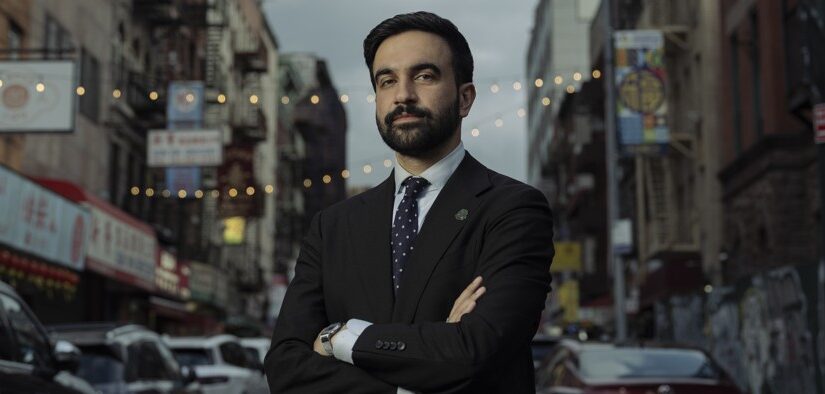
Zohran Mamdani and the Question of Civilizational Belonging

Kabir:

I would question how one defines “Indian” culture vs “Hindu” culture (this is a real question, I’m not being snarky). Zohran speaks Urdu/Hindi, wears shalwar kameez and uses Bollywood references in his campaign. So clearly, he has no issues with Indian culture. He’s not a Hindu so he doesn’t go to temples etc. I’m not sure exactly what you expect him to do?

While Zohran Mamdani expresses outward familiarity with “Indian” culture — speaking Hindi/Urdu, referencing Bollywood, wearing traditional attire — these are surface markers. They do not, on their own, constitute rootedness in Indian civilizational identity. Indian culture, especially post-Partition, is not simply a composite of languages and aesthetics. It is anchored in Dharma — a diffuse but pervasive civilisational ethos shaped over millennia by Hindu, Buddhist, Sikh and Jain worldviews.

Despite being born to a Hindu mother, Zohran’s public identity is strongly framed within a Muslim, Middle Eastern, and postcolonial activist context. His political and cultural instincts appear more aligned with pan-Islamic and Western progressive causes than with any articulation of Indian philosophical or spiritual heritage. His Syrian Muslim spouse, activist framing, and lack of visible engagement with Indic traditions contribute to this perception.

This is not a religious critique but a civilizational one. Just as Israel defines its national identity through a broadly Jewish character — irrespective of belief — India’s cultural self-understanding is inseparable from its Hindu roots. To be Indian, in this view, is not to perform cultural familiarity but to resonate with the metaphysical and historical rhythms of the civilization.

By that measure, Zohran — despite South Asian ancestry — does not code as civilizationally Indian, but rather as an American progressive of South Asian Muslim extraction. The distinction is subtle but important.

What Was the Point of Israel’s Iran Strike?

The Limits of Provocation

At some point, the world will have to ask: what exactly was Israel hoping to achieve?

In the days following the dramatic escalation between Tel Aviv and Tehran, we are left not with clarity but with a deepening sense of confusion. If the intention was to disrupt Iran’s nuclear program, there is little to show for it—centrifuges still spin, scientists remain in place, and the infrastructure of Iran’s deterrent capability stands unshaken. If the aim was to trigger chaos within the Iranian regime, then that too has failed—Tehran did not descend into disarray; it retaliated, measured and intact. And if the goal was symbolic, to remind the world of Israel’s reach and resolve, then the moment has already passed, clouded by questions of proportionality, legality, and consequence.

For all the fire and fury, the strike landed with the strategic weight of a gesture. Continue reading What Was the Point of Israel’s Iran Strike?

Satyajit Das: Middle East Trajectories – Implications for the Region and Energy Markets

This excerpts of the above titled article. Full article at
https://www.nakedcapitalism.com/2025/06/satyajit-das-middle-east-trajectories-implications-for-the-region-and-energy-markets.html

A little intro

When I first got hired to a small Wall Street startup I had low opinion of Traders and the like. Had to change my mind in a month or two. It was impressive to see how successful Traders could reduce different information from politics to medicine into one common Denominator: MONEY. This was the holy grail that Enron was pursuing, to have different markets, eg Water and Weather Futures to Credit Defauls Swaps all in one Porrfolio and integrated Pricing and Risk Management. Got wined and dined by Enron but was woefully lacking in knowledge.

Anyway  was never interested in Finance etc, so was somewhat clueless. The Traders gave me a grounding, but to get a more formal background worked my way thru about 30% of Risk Management and Financial Derivatives: A Guide to the Mathematics by Satyajit Das. Been impressed by him ever since. So when he writes I read very carefully

Later was very disillusioned, Wall Street as it was full of schemes to scam the middle classes and poor out of their money directly or indirectly.  The best example being Sub Prime Mortgages which led to Financial Crash in 2008 (Quite hypocritical of me because I made some decent moolah as well, even though a very small minion)
——————-

Some excerpts
Complacent financial markets and policymakers are playing out a theatre of the absurd based on little detail and propaganda– as the old trope states truth is the first casualty of war.

Caution is warranted. There is no certainty that Iran’s nuclear capabilities have been destroyed or significantly degraded. The fate of Iran’s highly enriched Uranium is unknown. Iran, which has extensive nuclear expertise despite the targeted killings of its scientists, has not indicated abandonment of its programs.

In effect, Iran is being forced to choose between becoming Libya (where Colonel Gaddafi gave up his nuclear ambition and was removed then murdered) or North Korea.

Its campaign against the abandoned Palestinians and attacks on Lebanon and Syria have not ceased. The Iranian action was in part to distract the world’s attention from its continuing genocidal atrocities. These will come back into focus.

Despite its undoubted military capabilities, the Islamic Republic will have noted that the Jewish state is not invulnerable to its missiles and needed extensive US support and intervention in the “12-day war”.

Oil Matters
Western focus on the Middle East is because of Israel, to expiate its own Holocaust guilt, and energy

Currently the world consumes around 100 million barrels of oil daily (around 50 percent for transport and 20 percent for petrochemicals). While energy intensity (usually measured as the tonnes of oil needed to create $1,000 of GDP) has declined from 0.12 in 1975 to 0.05 in 2022, no significant decline in demand is forecast due to limited alternatives for heavy transportation and as a chemical feedstock. Natural gas is around 23 percent of the world’s total energy consumption and provides a quarter of global electricity.

Saudi Arabia’s objectives remain unchanged: generate revenue at necessary levels, maintain its market share as low prices make US shale oil and gas uncompetitive and accelerate use of a potentially stranded resource.

The ruling dynasties can be displaced at the whim of the West. Given the volatile foreign policies of the US and its allies including their short-lived and disastrous backing of the ill-fated Arab Spring, this possibility is non-trivial. As Hosni Mubarak discovered, US support for its ‘allies’ exists until it doesn’t. Subsequently, the Muslim Brotherhood found that Western belief in democracy was highly selective.

In a curious twist which would have been unwelcome in Israel, following the announcement of the ceasefire, President Trump announced that China would be allowed to buy oil from Iran, reversing a policy of sanctioning Chinese refineries for these purchases.

While they may not acknowledge the reality, failure to act strategically now undermines the ruling dynasties of the Gulf states and Jordan. They become little more than rich puppets who serve their American, Israeli and allied masters and whose policies are chosen for them. Their standing and wealth is dependent on a dwindling finite resource with an uncertain future.

For many, MAGA has morphed into MIGA – Make Israel Great Again. The US appears to have been coerced into intervening on behalf of the Jewish state. One X denizen tweeted that “America so deindustrialized we don’t even manufacture our own consent”.

Conflict, most worthwhile military strategists agree, is like opening a door into a dark room where no one knows what is hidden in the darkness. The only certainty is that a new most likely tragic and violent chapter in the history of the region is under way.

The US, Israel and its allies would do well to remember Thucydides’ Melian Dialogue which records Athens’ conquest of Melos. The Melians unsuccessfully resisted suffering horrific losses. Athens believed that “the strong do what they can and the weak suffer what they must”. They believed that they could act with impunity because their power was complete. Less than three years later Athens suffered a military disaster in Sicily from which they never recovered.

Genocide by any other name

“My nerves are shattered,” says Noura, a 26-year-old Palestinian woman, explaining that she has been “left with nothing”.

After years of IVF treatment, she became pregnant in July 2023. “I was overjoyed,” she remembers, describing the moment she saw the positive pregnancy test.

She and her husband Mohamed decided to store two more embryos at Al-Basma Fertility Centre in Gaza City, which had helped them conceive, in the hope of having more children in the future.

“I thought my dream had finally come true,” she says. “But the day the Israelis came in, something in me said it was all over.”

Israel launched a military campaign in Gaza in response to Hamas’s cross-border attack on 7 October 2023, in which about 1,200 people were killed and 251 others were taken hostage.

Since then at least 54,000 people have been killed in Gaza, according to the territory’s health ministry.

Like thousands of Gazans, Noura and Mohamed had to repeatedly flee, and were unable to get the food, vitamins and medication she needed for a healthy pregnancy.

The West’s War of Decline

Dear friends,

I just wanted to share a thought that’s been on my mind lately. Yes, Trump has attacked Iran — but Iran hasn’t responded in any major way. That in itself is telling. It seems less a climax than a provocation, more bait than strategy. In truth, this might be part of a larger Western pattern: in its long twilight, the West no longer seeks peace but relevance — and sometimes, relevance requires war.

I recently heard a wild claim: that Norway was positioning a remote island of 150 people to tempt a Russian invasion, hoping to activate NATO’s mutual defence clause. Whether true or not, it captures something of the moment — the performative anxiety of a declining order, looking for conflict to reaffirm its own centrality.

As Amar writes, “It is heart-wrenching to see Iran being bombed by two nuclear states, while it remains a signatory to the NPT and compliant with IAEA inspections.” He recalls living in Tehran in 1980, a schoolboy witnessing warplanes above Mehrabad and the skies of Tehran blazing with anti-aircraft fire. That memory isn’t abstract — it’s personal, etched in smoke. His excellent comment is after the jump: Continue reading The West’s War of Decline

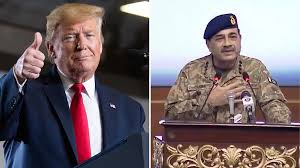
What did Asim Munir talk with Trump

Now that the blog has a lease of new life i thought why don’t I join the fray.

Funny that Asim Munir is having lunch with Donald Trump only a day after Trump was having X diarrhoea threatening Iran and its leadership.

What could potentially be the points of discussion one wonders. I have a few wild thoughts.

  1. Trump is asking for Pakistani help against Iran. Either back-channel negotiations and/or direct intelligence. I am not sure of this one as this seems for a Pro-India cope which sort of makes sense of the ceasefire.
  2. Pakistan wants to remain the only Nuclear Islamic nation and hence is willing to get into bed with Zionists in Trump towers while giving a middle finger to Ummah.
  3. The felid marshal wants swip up some Tomahawks to counter Brahmos.
  4. Trump in all his infinite wisdom is playing at 56D Chess against China via flirting with the felid Marshal and Dumping Modi after a brief fling (or maybe it never was a fling).
  5. Trump wants to learn some catty dictatorship from the felid Marshal for the 3rd term.

Ironically Modi declined US invitation which seems to be related to either claimed US mediation into Op Sindoor or Israel Iran war.

Finally Sorry Amey and Poulasta but the podcast episode on OP Sindoor was terrible. Cant have a podcast where Omar’s wisdom is interrupted as frequently as that with all the rants and interruptions.

I hope to write a longish post from India POV about Op Sindoor and the future as soon as i get some brainspace.

Be civil in comments. 

🕊️ On Iran, Israel, and the Right to Self-Defense

Why loving Israel, believing in peace, and opposing regimes means defending Iran’s right not to be bombed.

Dear Friends,

I don’t usually write about politics. And when I do, I try to centre peace — not provocation.

Anyone who knows me knows I have always believed in the dignity of Israel, the rights of Palestinians, and the intertwined destinies of both peoples. I love Israel. I love Iran. I believe in Palestine. I believe in peace. And I believe that each nation — each people — has a right to their own story, their own future, and yes, their own defense.

Which is why I write today, with care and some sorrow, in response to the recent Israeli strikes on Iran’s nuclear facilities. Let me be clear: I oppose the Iranian regime. Vehemently. I stand with the brave women and men who chanted “Zan, Zendegi, Azadi” — women, life, freedom. But I cannot condone this unprovoked assault.

Read the rest at this link and please subscribe to my newsletter.

🧠 Inside the Mind of Trump: Empire, Restraint, and the Hemispheric Gamble

As an aside the latest FP’s post “India’s Great-Power Delusions” will make an interesting future post

Ten years ago, Donald Trump descended a golden escalator and upended American politics. He entered the White House not as a politician, but as a brand. Today, as the world stands at multiple geopolitical flashpoints—Israel–Iran, India–Pakistan, China–Taiwan—the question is not just what will Trump do, but what kind of world does Trump want to preside over?

Comeback King or New Emperor?

The interlude of Biden’s presidency—whether viewed as rightful or rigged—has only intensified Trump’s mythos. He is no longer just the comeback kid; he is the comeback king in a time when cries of “no king” echo through a fractured republic. A decade on from his initial successful run, he should be an elder statesman but in fact he’s just getting started with another 3 years to go. It’s unparalleled influence in the American Republic since FDR who managed to dominate the 30’s through to the mid 40’s; Trump will be the dominant force in US politics from mid teens through to at least 2029. Continue reading 🧠 Inside the Mind of Trump: Empire, Restraint, and the Hemispheric Gamble

Why Iran Is Not Iraq

These reflections are evolving, and may shift without warning. The winds of change—Divine or otherwise—do not move by human forecast.

In the Western imagination, the idea that Iran could somehow be “dealt with” like Iraq is a dangerous illusion—one rooted not just in hubris, but in historical illiteracy.

Yes, Iraq was once the cradle of civilization. From Ur to Babylon, and later Baghdad under the Abbasids, its glories are undeniable. But geopolitically, Iraq is a lowland nation—deeply enmeshed within the Arab Mashreq, itself a corridor between Egypt and the Persianate world, susceptible to invasions, internal fragmentation, and competing powers.

Iran, by contrast, is a fortress civilization.

Continue reading Why Iran Is Not Iraq

Brown Pundits