Dhurandhar showcases Bollywood’s New Obsession: The Sexy Pakistani Villain

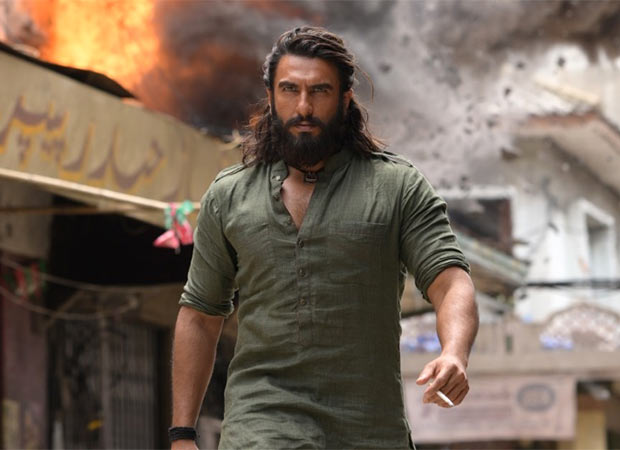
We watched Dhurandhar last night at Apple Cinemas (the last time we went to see Ishaan Khatter’s Homebound). It is the best mass-market Bollywood film I’ve seen since Animal, and far more immersive. What struck me most was not the action, nor the plot, but Bollywood’s new formula: a full-scale fetishisation of Pakistan.

Kabir keeps claiming that Bollywood casts Pakistanis as villains. This misses the point. The villain is always the sexiest figure in any film. Bollywood has finally realised this. Raazi hinted at it. Animal stumbled on it with Bobby Deol’s star stealing turn. Dhurandhar perfects it.

For the first time, Hindu actors are not performing cartoon versions of Pakistan. They are cosplaying Pakistanis with forensic precision; the clothes, the diction, the swagger, the social codes. In earlier decades the attempt was clumsy. Now the calibration is exact. Pakistan, in these films, becomes the Wild West of the subcontinent: familiar enough to feel intimate, distant enough to feel dangerous. Continue reading Dhurandhar showcases Bollywood’s New Obsession: The Sexy Pakistani Villain

Who can speak for the “Muslim minority” of India?

Public debates on Indian Muslims often make one basic mistake: they collapse all minorities into a single category and then declare that “everyone is thriving because a few individuals have done well”. This flattens history, erases structure, and turns civilisational questions into census arithmetic.

1. Minorities Are Not Interchangeable

Jains, Sikhs, and Buddhists offer no meaningful analogy to Indian Muslims.

  • Jains were never politically central to the subcontinent.

  • Sikhs built a regional power, not a pan-subcontinental order.

  • Buddhists have been demographically marginal for a thousand years.

Indian Muslims were different. For centuries they formed the civilisational elite of North India; shaping courts, languages, music, etiquette, food, architecture, and the ways Indian states understood power. Delhi, Agra, Lucknow, Hyderabad were not enclaves. They were the centre of the political and aesthetic world of the Indo-Gangetic plain. A fall from centrality is not comparable to never having been central at all.

2. Individual Success Is Not Structural Health Continue reading Who can speak for the “Muslim minority” of India?

đŸ§” Open Thread: Hate Speech, Travel Notes, and Diplomatic Surprises

I just saw a comment that genuinely crossed the line; not just a misstep, but something hateful, dehumanizing, and deeply communal. It invoked Partition violence in a way that glorified massacre. That’s not just a dogwhistle, that’s a foghorn.

As most of you know, I’m a light-touch moderator. I tolerate a lot. I believe in messy dialogue. I’ve been fair on my WhatsApp groups, fair on BP, and generally try to err on the side of letting things play out. But this? This wasn’t a close call. It was a clear failure of moral language.

Even if the commenter didn’t “mean it,” this kind of rhetoric has consequences. When you’re speaking about events like 1947, where entire families were destroyed, you need to speak with care, not contempt. There’s no room for casual violence, coded language, or historical gloating. None. Zero.

Before this commenter contributes further to the blog, he will need to fully retract and apologise for the communal language he used. Criticism is fair game. But hate speech is not. Kabir can be theatrical, yes but he does not traffic in dehumanization. The standards must be consistent, and that comment clearly crossed the line.

Please observe this on the thread. I’m traveling, and this is an open post. I’ll be back with more soon. I’ve written a bit in my newsletter but I will expand on those.

In the meantime:

âžĄïž Yes, it appears Pakistan is running smart diplomacy — both with Iran and the U.S.

âžĄïž  I don’t have time to share the links (plane about to take off); they’re all Google-able.

âžĄïž But credit where it’s due. There is no infallibility in foreign affairs. But when someone cannot stand to see Pakistan get anything right, it reveals more about their own biases than about geopolitics.

This isn’t about defending states or “sides”; it’s about defending basic decency in discourse.

What Kind of Space Is Brown Pundits

A few of us authors have been actively discussing the future of Brown Pundits; the space, the tone, and the deeper ideas we’re engaging. It started informally on our WhatsApp group, but the questions are foundational: What kind of platform is BP becoming? What should it strive to be? And what kinds of ideas does it host best?

At its best, Brown Pundits is a bridge; across nations, faiths, ideologies, and lived experiences. It’s a space where one can be deeply Indian, wholly Pakistani, broadly Bangladeshi, or diasporic and disillusioned but still belong. But like any bridge, it needs conscious upkeep. If a conversation leans too far in one direction, it doesn’t stretch, it collapses inward.

Some contributors feel the platform has become overly shaped by one ideological current. Others argue that the real problem isn’t dominance, but disengagement ; those who want plurality must also show up. And both perspectives can be true.

Israel, India, and the Rise of Defensive Asymmetry

A Pause in the Offensive:

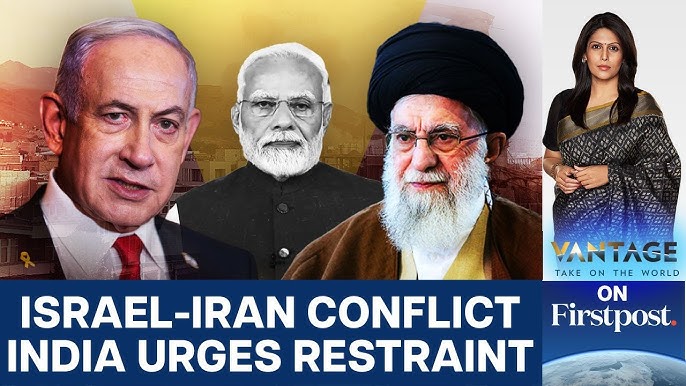
Without getting into the ideological or emotional dimensions of current conflicts, one point stands out: both Israel and India seem quietly surprised by the defensive resilience of their adversaries.

Whether it’s Iran-Israel, India-Pakistan, or even Russia-Ukraine, a pattern is emerging: offensive campaigns that assumed rapid success are stalling against increasingly capable—and surprisingly tenacious—defensive postures.

In classic military doctrine, a successful offense requires a 3:1 superiority. That logic appears to be inverting. What we may be witnessing is a shift in the scientific and technological balance—not just in weaponry, but in surveillance, cyber, and even psychological endurance as evidenced by the Iranians on national television in this clip, IMG_0631.

Continue reading Israel, India, and the Rise of Defensive Asymmetry

đŸ§”Quick Moderation Note

Just a heads-up for everyone:

  • India–Pakistan threads are totally fine when the post is about India–Pakistan, or if it’s an Open Thread. Let the sparks fly there.

  • But on other posts—please avoid steering every conversation back to India–Pakistan. It’s not always relevant and derails useful discussion.

I won’t be actively moderating every thread. If something is genuinely offensive or disruptive, feel free to flag it—I’ll step in only if needed. Continue reading đŸ§”Quick Moderation Note

Denial Isn’t Just a River in Egypt—It’s a Dammed Indus Too

By X.T.M | Acting Editor, Brown Pundits

“Qureshi” has glibly informed me that caste doesn’t exist in Pakistan, and that had I not deleted his comment, I would have seen his thoughtful explanation on why his ancestors would (or wouldn’t- tough to follow) have “embraced caste.”

Let’s address both claims.

I. Denial, and the Geography of Amnesia

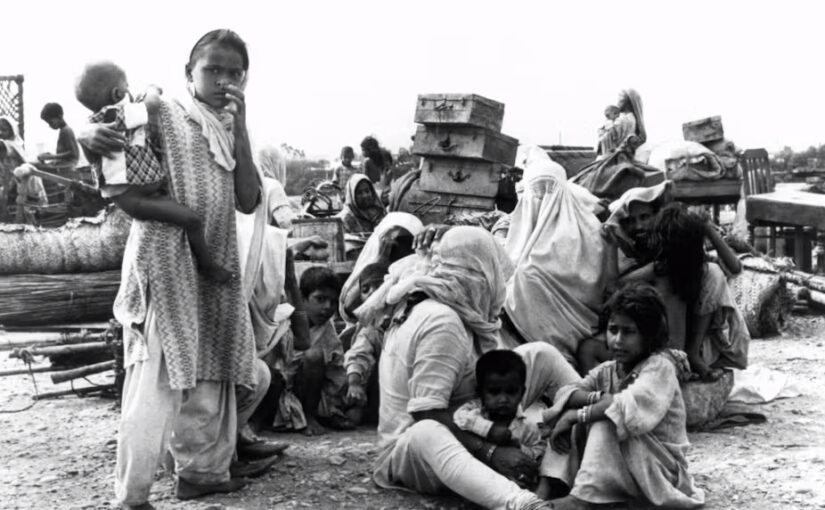
First: the deletion. The reason I removed Qureshi’s comment was simple—it referred to “when the Hindus left Pakistan in 1947.” As if they left. As if it were a long vacation. That turn of phrase is emblematic of a deep, disturbing historical erasure—a civilizational amnesia that’s not just inaccurate, but actively offensive.

To phrase the violent dislocation of millions as “leaving” is a textbook case of internalized Hinduphobia—a posture so normalized in Pakistani elite discourse that it barely registers as cruelty.

This is not about word policing. It’s about confronting the inherited violence buried in euphemism. Continue reading Denial Isn’t Just a River in Egypt—It’s a Dammed Indus Too

Brown Pundits