The Veil We Will Not Wear

A Bahá’í footnote to Gaurav’s seminal “saffron and crescent

Gaurav’s post on the asymmetry of Hindu and Islamic worldviews deserves a response from the third corner of the room. We are not Hindu and we are not Muslim, though our community emerged from inside the Islamicate and is now demographically clustered in the Indic world. The Bahá’í position on the questions Gaurav raises is not a centrist mush. It is a specific civilisational stance, and it begins with a woman taking off her veil.

We were in Revere earlier this evening, the working-class strip north of Boston that the city has quietly handed over to its Spanish-speaking and Muslim arrivals. The playground was alive. Salvadoran grandmothers, Moroccan mothers, a small republic of children negotiating the slide. What struck us was how many of the pubescent girls already wore the hijab. Not the older women alone, not adults making a choice. Eleven year olds. Twelve year olds.

For most secular observers this registers as a costume detail. For us it lands harder. The hijab is the one piece of Islamic practice against which our faith was built.

Continue reading The Veil We Will Not Wear

At Negombo, the Indian subcontinent meets where it still can

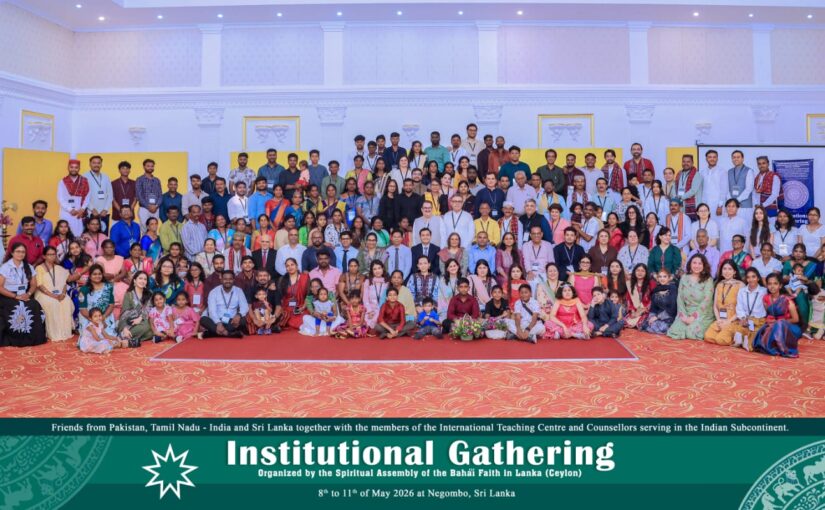
The photograph above was taken on the 11th of May in Negombo, on the western coast of Sri Lanka. The caption records the occasion plainly: friends from Pakistan, from Tamil Nadu, and from Sri Lanka, gathered with members of the International Teaching Centre and the Counsellors serving in the Indian subcontinent, at an Institutional Gathering convened by the Spiritual Assembly of the Bahá’ís of Lanka.

We want to say something about what this image makes possible, and where.

Indians & Pakistanis cannot meet any longer

The hard fact first. There is no longer any practical way for an ordinary Indian and an ordinary Pakistani to sit in the same room inside either of their own countries. Visa regimes have hardened to the point of farce. The land border is sealed in spirit if not in law. What remains are the smaller states of the subcontinent and the wider diaspora. Of the smaller states, Sri Lanka is the one that handles the meeting most gracefully: visa-on-arrival to both passports, no overland complication, no political theatre, and a civic culture that does not ask either side to perform a position.

Which brings us to the older question, whether Sri Lanka belongs to our civilisational space at all. Some friends north of the Palk Strait still treat the island as adjacent rather than constitutive. We think this is wrong, and the reasons are not sentimental.

Sri Lanka is Dharmic? Continue reading At Negombo, the Indian subcontinent meets where it still can

On Safety and Hinduphobia

Bombay Badshah is on vanvas. He earned it. He posted, in passing, personal details of another commenter, which he should never have been examining. He was warned, apologised, and is now serving his time in the forest. Lord Ram took Sita and Lakshman with him for fourteen years. BB is taking the IPL and Dhurandhar reruns for ten days. The proportions are different. The principle is the same. You leave the city when you have offended its order.

This is not a defence of him. It is the opposite. BP must be a safe space for reader, commenter and author. Privacy is the precondition of opinion. If a person cannot post under a handle without a hostile interlocutor looking them up, the room collapses into a lower kind of theatre. We do not run that kind of room.

Engrained Hinduphobia

But his exile is also the moment to say the thing we have been postponing. Hindus on this site have a real grievance, and it has accumulated because the language of liberal discourse equips one side of the argument with a vocabulary the other side does not have. Islamophobia is an institutional word. Hinduphobia is still scratching at the door. The asymmetry shapes every thread:

The Muslim Districts That Hold West Bengal Up

West Bengal Hindus have a real grievance, and it should be stated plainly. East Bengal’s Hindu share fell from 28% in 1941 to under 8% in the 2022 Bangladesh census. West Bengal’s Muslim share rose from 19.85% in 1951 to 27% in the 2011 Census, and is estimated higher today.

The Nehru–Liaquat Pact of 1950 was meant to be reciprocal. It was not. One side kept its minorities; the other did not. Three refugee waves, 1950, 1964, 1971, landed on West Bengal alone. The frustration is not communal; it is actuarial.

But the conclusion drawn from it is often wrong. The three Muslim-majority border districts, Murshidabad, Malda, Uttar Dinajpur, are not a demographic problem to be solved. They are the reason the state functions.

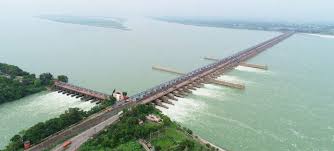
Murshidabad holds the Bhagirathi offtake at Jangipur and the Farakka Barrage beyond it. Farakka diverts the Ganga’s dry-season flow into the Hooghly; without that diversion, Kolkata Port silts up, the Hooghly becomes seasonal, and the salinity line marches inland into the 24 Parganas. Malda anchors the Sealdah–New Jalpaiguri trunk line and the rail spine to Assam; lose it and North Bengal is an island.

Uttar Dinajpur sits directly below the Siliguri Corridor and carries NH 27. These were not given to India by accident in 1947. Radcliffe overrode demography for infrastructure, and the engineering logic has only deepened since.

The Muslims of these districts are weavers, beedi workers, masons, farmers on the most fertile alluvium in eastern India. Murshidabad silk, Malda mangoes, the Farakka catchment; the productive base of three districts rests on a workforce the state would struggle to replace at scale.

Frustration is fair. Cession is not. The districts that look like the problem are the ones holding the system together.

Plus ça change, plus c’est la même chose

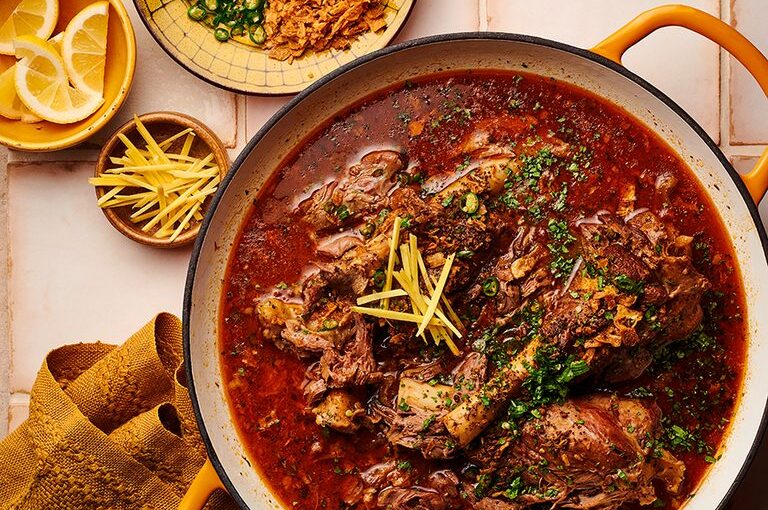
The 2020 Open thread spent a whole afternoon on whether vegetarian biryani, vegetarian haleem and vegetarian paya could exist. Saurav declared the abominations should be banned.

Qureishi extolled the centrality of beef in Pakistani cuisine. The 2026 thread relitigates the same question with Nihari as the exhibit and the Modi diplomatic menu as the provocation.

BB’s argument is that Mughlai cuisine remains Indian property because it is Indian restaurants that carry it globally; the Pakistani versions are cover songs, the originals are still in Awadh and Old Delhi. As BB speaks to the strength of Indian soft power, this comment by Ali Choudhury six years earlier perfectly illustrates it:

Our local Pakistani takeaway does not serve beef dishes partly because they have a fair amount of Indian Hindu customers who don’t want the cross-contamination.

We had guessed this independently. The complexion of Mughlai food in the diaspora, or rather traditional Indo-Islamicate food, is buckling under three constraints: no pork, no beef, halal.

So all restaurants peddling the food of the Indian Subcontinent will converge toward lamb, chicken and goat, the “speciality meat”, as the offerings of choice, with a vast array of vegetarian options alongside. It maximises the customer base, and it is fascinating to see how the syncretic culture survives, despite attempts to destroy it.

The thread and Homelands perform partition. The market and Diaspora quietly un-does it.

Open Thread: Pakistan’s Demons are The Daughters of God

Q writes on Pakistani source confirms US, Iran closing in on one-page memo to end war:

  1. Total Pakistani victory. If Pakistan pulls off the mediation, this will its greatest diplomatic victory ever. Lifting of Iranian sanctions will allow cheaper Iranian oil to flow directly to Pakistan, and the oil pipeline can be finally completed. Complete eradication of Indian influence from Iran is now achieved, and this will also eliminate any support to BLA from across the border.

Pakistan post Sindoor is on a winning streak. The mediation is real, the memo is real, and if it holds, the diplomatic ledger for the year goes firmly into Rawalpindi’s column. Iranian oil at the door, IP pipeline thinkable for the first time in fifteen years, BLA lifelines into Sistan throttled, Chabahar quietly demoted. A Victorious month?

But the question is whether she can conquer her demons. And the demons are not in the foreign ministry. They are in the drama studios.

Q again, on Pakistani dramas:

Women low-key love abusive behaviour from attractive men. Pretty much all women fantasy porn is about this. (What they don’t love is abusive aggressive behaviour from ugly or poor men) Since females are the primary target audience of these dramas, they tend to show this because that’s what the market demands. I would not read too much into this. What’s more concering was that foreign funded NGOs were trying implement anti-family messaging in the last 15 years – and that messaging has suddenly dried up after their funding dried up.

Fantasy is not preference. A woman reading a brooding-billionaire romance is not auditioning for one. To collapse the two is to flatten the female imagination into a market signal, which is exactly what the Pakistani dramas do and exactly why they rot the culture that consumes them.

Daughters of God Continue reading Open Thread: Pakistan’s Demons are The Daughters of God

The Hindification of East India

The Saffron Block

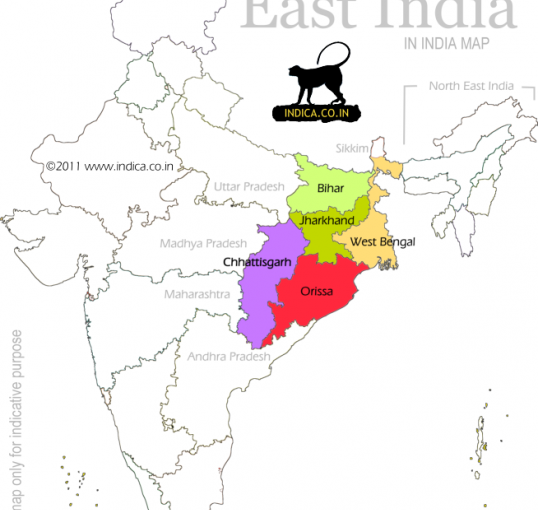
The map of East India has changed colour. Bihar fell to the NDA in November 2025 with 202 of 243 seats, and Samrat Choudhary now sits as the first BJP Chief Minister Bihar has ever had. Odisha went saffron in 2024 under Mohan Charan Majhi. On 4 May 2026 Mamata Banerjee lost Bengal after fifteen years; the BJP took 206 seats and will form its first government in Kolkata. Himanta Biswa Sarma returned in Assam with 82 seats, a two-thirds majority and a third consecutive term. The old Bengal Presidency, once the largest province of British India, is now a single saffron block.

This is the completion, by ballot, of a partition the British attempted by map.

1905

In 1905 Curzon split Bengal. The eastern half was to be Muslim and centred on Dhaka; the western half was to be joined to Bihar and Orissa, which made the Bengalis a linguistic minority in their own province. The Bengali Hindu elite, the bhadralok who ran Bengal’s commerce and letters, fought it bitterly. They did not want to be drowned by Bihari and Oriya numbers. In 1911 the British relented and reunited Bengal.

The Biharis, for their part, had spent two decades campaigning to escape Bengali domination. The 1912 reorganisation that gave them their own province, jointly with Orissa, was their reward.

Linguistic identity then was the prime axis. Hindu and Muslim mattered, but not as much as Bengali, Bihari, Oriya.

The Historical Axis Flipped

A century on, that axis has flipped. The Bengali, the Bihari, the Oriya and the Assamese are voting as Hindus, and they are voting for the same party. The two-nation theory, which Bengal once threw off, is doing its work the long way round.

Hindi,, Hindu, Hindustan

Continue reading The Hindification of East India

the Shah and the Saint

A month ago the Shah wrote to the Saint:

Naah it is a good film… I will make you say Bharat Mata ki Jai by infiltrating into Pakistan and pointing a gun at your head.

The threat to Kabir, however jocularly framed, is the trigger. BB has a habit of strict adherence to the Letter of the Law while frantically attempting to violate its Spirit, and BP’s continued tolerance is contingent on Kabir’s goodwill. If Kabir lodges a reasonable complaint, the sanction escalates.

The next rung is a 40-comment fine and a one-week revocation of authorial and commentator privileges. This applies to BB under any handle or avatar as a lasting Precedent.

We are not heavy-handed and Authorial Autonomy deeply matters to us, but the issue is what the transgression actually was. We want genuine contrition, not a mea culpa followed by the old tricks in slightly more sophisticated form.

India is the successor state of British India – it got independence, Bangladesh and Pakistan were formed

Admin Note: we have brought this picture to the top of BB’s excellent post, which is a Precedent Post, because it deeply move us. Haifa has huge spiritual and sacral significance for us. The Spectacular Shrine of the Báb, the Divine Forerunner of the Bahá’í Faith (and the Symbolic Return of the 12th Imam), overlooks the City.

No photo description available.

Modi at Haifa, Israel paying tribute to the Indian soldiers who died during the Battle of Haifa
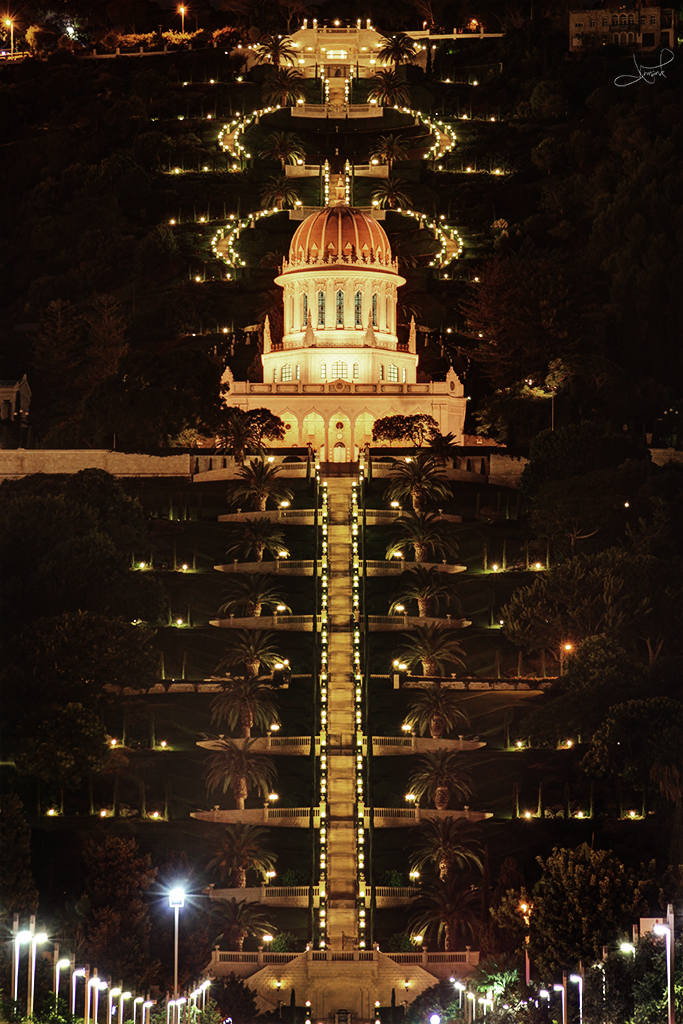
File:Shrine of the Báb, Haifa, Israel (8139739814).jpg - Wikimedia Commons

Bharat Mata Ki Ja and the Holy Land join together to shine light on the World. Hurrah.. Both Israel & India house extensive Bahá’í buildings, apparently the most visited Monument in New Delhi is the Lotus Temple. Nowhere else in the Muslim world does the Bahá’í Faith have Sites of Worship (Pakistan has been very good to Bahá’ís but terrible to the Ahmadis).

Explore the Tranquility: 5 Best Things to Do in the Lotus Temple

Apologies for the Hijacking but back to the Badshah of Balochistan, our very own Humza.

In my previous post about India being the successor state to the Mughal Empire, I mentioned how India was also the successor state to hundreds of other polities which existed across many millennia. British India is one such polity which I will discuss today.

Note: As before, when I use India below I mean the current day Republic of India, not the region of “India” which also encompasses some territories of the modern day states of Bangladesh and Pakistan

The Inheritance

Unlike the previous post, I won’t give as detailed a picture because in the modern age the definition of “successor state” is very well defined.

Some examples of succession in the modern period are the Russian Federation taking over from the USSR in 1991 and the French Fifth Republic taking over from the French Fourth Republic in 1958. Both of them got their predecessor’s UN seats as well as the permanent Security Council spot.

The United Nations

Since we are talking of the United Nations, let us begin with that.

India is a founding member of the United Nations, signing the UN Charter on June 26, 1945, and formally joining on October 30, 1945.
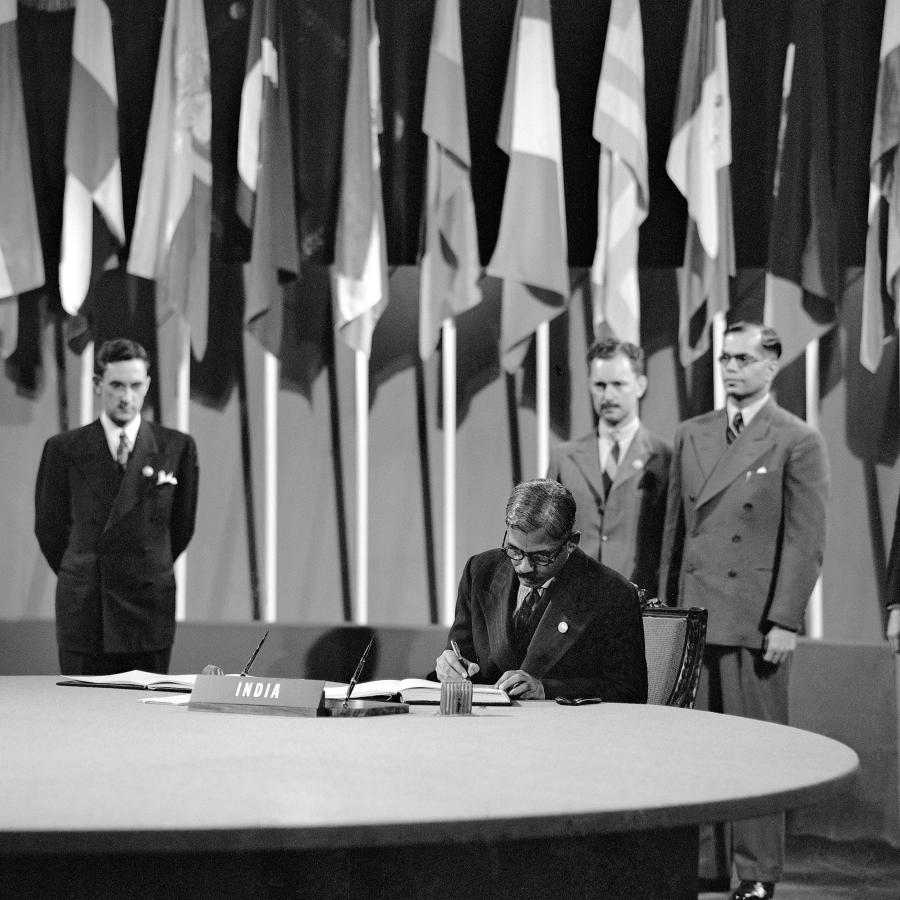
https://india.un.org/sites/default/files/styles/focal_point_square/public/2021-12/235930.jpg?h=cd225dda&itok=sAHVgB5u

Sir Arcot Ramasamy Mudaliar led the Indian delegation and signed the United Nations Charter on June 26, 1945, in San Francisco, United States

Continue reading India is the successor state of British India – it got independence, Bangladesh and Pakistan were formed

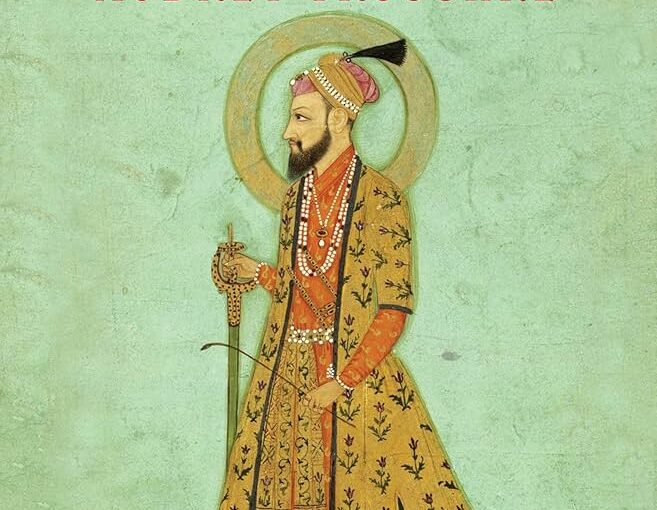
India is the successor state of the Mughal Empire (and the various Sultanates)

A precedent post on who is the successor state of the Mughal Empire (as specified by X.T.M in a comment)

There has been a lot of back-and-forth in the comments section about who gets to “claim” the Mughals.

The Republic of India is the successor state of the Mughal Empire as I explain below.

Note: When I use India below I mean the current day Republic of India, not the region of “India” which also encompasses some territories of the modern day states of Bangladesh and Pakistan

The Land

The Republic of India encompasses around 70 percent of the Mughal Empire at its greatest extent.

Again, possession of majority of the land is not a necessary condition. The UK is the successor state of the British Empire, Turkey is the successor state of the Ottoman Empire and so on. But having possession of the majority of the land makes the case stronger.

The reason that the UK, Turkey, France etc are the successor states of various empires is because they house the “core” – the capital, the ruling elite, the major monuments etc.

The Capital

The Mughal Empire lasted for around 300 odd years. 

It’s capitals were:
Agra for 61 years
Delhi for 228 years
Fatehpur Sikri for 14 years
Lahore for 12 years

The first and last capitals were in India and for 96% of the existence of the empire, the capital was in India.

These capitals still exist in India and are UNESCO World Heritage Sites as well as Monument of National Importance by the Archaeological Survey of India.

The last capital is still used by India in official functions but more on that below.

Agra Fort, Agra

Continue reading India is the successor state of the Mughal Empire (and the various Sultanates)

Brown Pundits