REPOST: On identifying as a liberal

Old post – Reproduced;

My views and politics has changed in last 5 years and i would write a follow-up to this in a week or so. Just thought i would share this in light of recent traffic and comments on this blog.


This blog post was triggered by a Twitter exchange with Akshay Alladi where he questioned why I identify with the label liberal. A lot of people have – on this blog as well as on Twitter or in person have labeled me a Hindutva liberal or closet Sanghi (from the left) or a Hindutva rebel, yet I personally don’t feel comfortable with those labels. Maybe it is positive tribalism on the Saffron side or parochial wokism on the left.

Akshay also referred to me in his blogpost about Liberalism vs Conservatism and I promised I would also come up with an elucidation of my position. Before I go into attempts at formulating my position, a fair warning – I am not a particularly deep thinker on matters of philosophy and do not have an intellectual bent. I get bored with long essays and books about philosophy and religion, it’s the interactions of these abstract ideas with politics, people, and histories (as an art/science) that interests me than the ideas themselves.

It is fair to get some personal biases (which may appear contradictory) I hold out of the way

  • I am a staunch Republican and Secularist. In my early twenties years, I was more partial towards the Laicite as I grow old I become more partial towards the British or American style of secularism. (Though the recent events in France have made me reconsider my position).
  • I have had a very low opinion of Religions in the 21st century in general and Monotheisms in particular.
  • I have some sympathies with Savarkarite Hindutva (not RSS) and I have often been accused of being a closet Sanghi by leftists.
  • Though I think of myself as a patriot who is well aware of British exploitation of India, I am an Anglophile. I adore the Brits with their language, literature, culture, models of governance (Westminster model). I don’t have shame in saying “Anglo West is the best”.

I would like to explain my identification with liberalism in three progressive strains.

Roots and Personality:
Continue reading REPOST: On identifying as a liberal

At Negombo, the Indian subcontinent meets where it still can

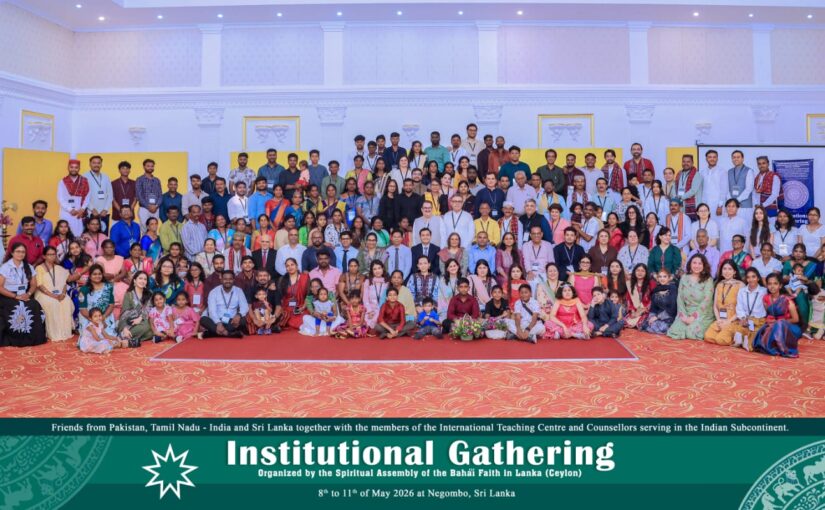
The photograph above was taken on the 11th of May in Negombo, on the western coast of Sri Lanka. The caption records the occasion plainly: friends from Pakistan, from Tamil Nadu, and from Sri Lanka, gathered with members of the International Teaching Centre and the Counsellors serving in the Indian subcontinent, at an Institutional Gathering convened by the Spiritual Assembly of the Bahá’ís of Lanka.

We want to say something about what this image makes possible, and where.

Indians & Pakistanis cannot meet any longer

The hard fact first. There is no longer any practical way for an ordinary Indian and an ordinary Pakistani to sit in the same room inside either of their own countries. Visa regimes have hardened to the point of farce. The land border is sealed in spirit if not in law. What remains are the smaller states of the subcontinent and the wider diaspora. Of the smaller states, Sri Lanka is the one that handles the meeting most gracefully: visa-on-arrival to both passports, no overland complication, no political theatre, and a civic culture that does not ask either side to perform a position.

Which brings us to the older question, whether Sri Lanka belongs to our civilisational space at all. Some friends north of the Palk Strait still treat the island as adjacent rather than constitutive. We think this is wrong, and the reasons are not sentimental.

Sri Lanka is Dharmic? Continue reading At Negombo, the Indian subcontinent meets where it still can

Conversion out of Hinduism and Caste


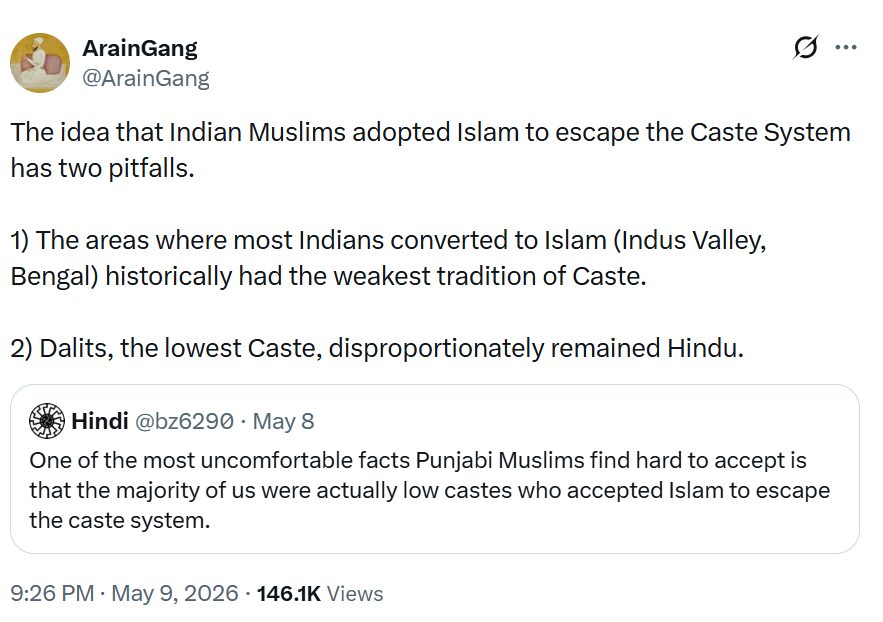
The idea that jAti-varNa – Caste system is the reason why ancient Indians converted to Islam and Christianity in olden times is often presented as a obvious wisdom. Why wouldn’t the oppressed seek new religion the instance it was offered ? But this simplistic notion is often goes against historic evidence.

As BP commentator and genetics nerd ArainGang states here – Areas of subcontinent which today form Pakistan and Bangladesh – were the least conservative regions of the subcontinent – ie – least rigid caste system. These regions also had significantly higher Buddhists than the heartland.

Christian conversions in Goa and Kerala were often but not always elite lead. Even in Maharashtra which is the birth place of Ambekarite Navayana Buddhism, significant % of Dalits remain Hindu (30-40%). Outside Maharashtra even less % of Dalits have embraced Navayana – though most regard Ambedkar as a quasi divinity. Mayawati, the longest serving Dalit CM of India hadn’t officially converted to Navayana as she assumed she would lose the non Jatav Dalit votes if she did.

Simplistic theories about history – which seem obvious to our understand often don’t stand the test of evidence. It means the simplistic models which explained the reality of Caste and mechanisms of conversion can be rejected and even their premise need to be scrutinised.


She carried an entire civilization in her hands

We have just landed back in the United States, and since we have been writing about gender all week, we wanted to share this sweet Mother’s Day note from the Hindu American Foundation here on BP.

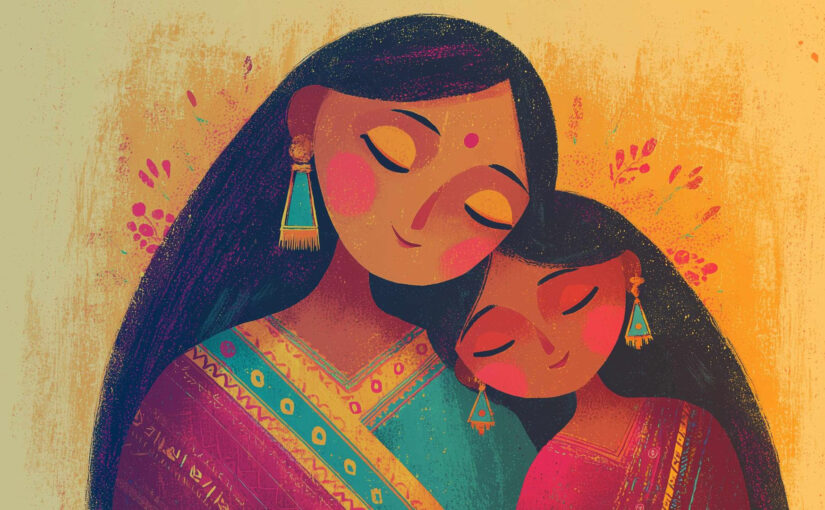
She didn’t pack much. Maybe a small murti of Ganesha wrapped carefully in the folds of a sari. A handwritten copy of the Hanuman Chalisa. A few photos of her parents and siblings. And yet, she carried everything.

The full note is below but we wanted to share a few short thoughts as well. Q posted a tweet on the parallel thread arguing that Islam is the last holdout against total Westernisation. It is a serious claim and worth answering. Superficially he is right. The visible global resistance to Western moral universalism is largely Muslim, and the Manosphere is paying heed.

But the deeper claim is more complex, and the Hindu American Foundation’s letter illustrates why.

Continue reading She carried an entire civilization in her hands

On Safety and Hinduphobia

Bombay Badshah is on vanvas. He earned it. He posted, in passing, personal details of another commenter, which he should never have been examining. He was warned, apologised, and is now serving his time in the forest. Lord Ram took Sita and Lakshman with him for fourteen years. BB is taking the IPL and Dhurandhar reruns for ten days. The proportions are different. The principle is the same. You leave the city when you have offended its order.

This is not a defence of him. It is the opposite. BP must be a safe space for reader, commenter and author. Privacy is the precondition of opinion. If a person cannot post under a handle without a hostile interlocutor looking them up, the room collapses into a lower kind of theatre. We do not run that kind of room.

Engrained Hinduphobia

But his exile is also the moment to say the thing we have been postponing. Hindus on this site have a real grievance, and it has accumulated because the language of liberal discourse equips one side of the argument with a vocabulary the other side does not have. Islamophobia is an institutional word. Hinduphobia is still scratching at the door. The asymmetry shapes every thread:

The Muslim Districts That Hold West Bengal Up

West Bengal Hindus have a real grievance, and it should be stated plainly. East Bengal’s Hindu share fell from 28% in 1941 to under 8% in the 2022 Bangladesh census. West Bengal’s Muslim share rose from 19.85% in 1951 to 27% in the 2011 Census, and is estimated higher today.

The Nehru–Liaquat Pact of 1950 was meant to be reciprocal. It was not. One side kept its minorities; the other did not. Three refugee waves, 1950, 1964, 1971, landed on West Bengal alone. The frustration is not communal; it is actuarial.

But the conclusion drawn from it is often wrong. The three Muslim-majority border districts, Murshidabad, Malda, Uttar Dinajpur, are not a demographic problem to be solved. They are the reason the state functions.

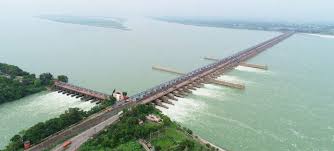
Murshidabad holds the Bhagirathi offtake at Jangipur and the Farakka Barrage beyond it. Farakka diverts the Ganga’s dry-season flow into the Hooghly; without that diversion, Kolkata Port silts up, the Hooghly becomes seasonal, and the salinity line marches inland into the 24 Parganas. Malda anchors the Sealdah–New Jalpaiguri trunk line and the rail spine to Assam; lose it and North Bengal is an island.

Uttar Dinajpur sits directly below the Siliguri Corridor and carries NH 27. These were not given to India by accident in 1947. Radcliffe overrode demography for infrastructure, and the engineering logic has only deepened since.

The Muslims of these districts are weavers, beedi workers, masons, farmers on the most fertile alluvium in eastern India. Murshidabad silk, Malda mangoes, the Farakka catchment; the productive base of three districts rests on a workforce the state would struggle to replace at scale.

Frustration is fair. Cession is not. The districts that look like the problem are the ones holding the system together.

Plus ça change, plus c’est la même chose

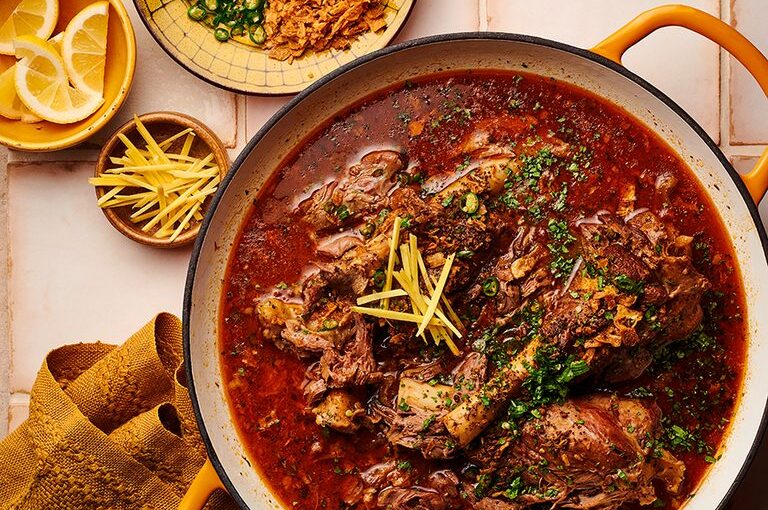
The 2020 Open thread spent a whole afternoon on whether vegetarian biryani, vegetarian haleem and vegetarian paya could exist. Saurav declared the abominations should be banned.

Qureishi extolled the centrality of beef in Pakistani cuisine. The 2026 thread relitigates the same question with Nihari as the exhibit and the Modi diplomatic menu as the provocation.

BB’s argument is that Mughlai cuisine remains Indian property because it is Indian restaurants that carry it globally; the Pakistani versions are cover songs, the originals are still in Awadh and Old Delhi. As BB speaks to the strength of Indian soft power, this comment by Ali Choudhury six years earlier perfectly illustrates it:

Our local Pakistani takeaway does not serve beef dishes partly because they have a fair amount of Indian Hindu customers who don’t want the cross-contamination.

We had guessed this independently. The complexion of Mughlai food in the diaspora, or rather traditional Indo-Islamicate food, is buckling under three constraints: no pork, no beef, halal.

So all restaurants peddling the food of the Indian Subcontinent will converge toward lamb, chicken and goat, the “speciality meat”, as the offerings of choice, with a vast array of vegetarian options alongside. It maximises the customer base, and it is fascinating to see how the syncretic culture survives, despite attempts to destroy it.

The thread and Homelands perform partition. The market and Diaspora quietly un-does it.

The Brahmins behind April’s Traffic

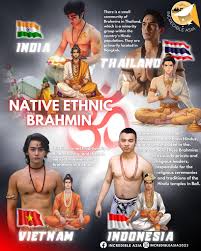
One post earns sixteen percent of all our organic traffic. Written in February 2019. Titled The Five Great Brahmin Castes and Their Proclivities. Seven years on, still the engine.

That is the centre of the site, whether we planned it or not.

What people are searching for

top 5 caste in india. brahman caste. brahmin last names. aryan indians. pakistani hindu. is hinduism pagan.

People are searching caste, ancestry, and religious lineage. We rank for it. Some readers are working out what they are. Some are arguing with relatives. Some are looking up a surname before a marriage call. We do not need to romanticise them. The search bar tells the truth.

The 2019 post answered a question hundreds of thousands of people have asked since. It still answers it.

What sits below it

Four other posts share the next 22% of organic traffic between them.

Continue reading The Brahmins behind April’s Traffic

India-Pakistan pop culture and future trends

Admin Note: this is a shameless plug but rather related to Humza Shah’s post.

Just some general thoughts about India-Pakistan pop culture and future trends.

There were some comments in the recent discussions that caught my eye. One was about Pakistanis no longer using memes from recent Indian movies as well as another about Indian soaps being cheesy and badly made. Both are opinions I broadly agree with but there is a certain element that is being missed in such discussions.

Maybe due to the age of the commenters or maybe due to Pakistan not having equivalents, one thing was completely skipped: the rise of Indian streaming.

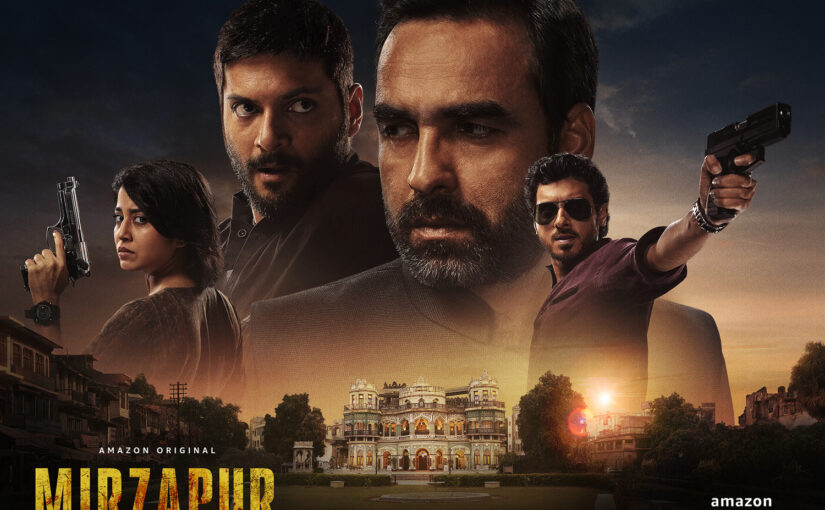
Due to rising incomes and internet penetration/quality, there has been a deluge of streaming platforms and shows all across India. These include American platforms like Netflix and Amazon Prime as well as dozens of local Indian platforms – JioHotstar, Zee5, SonyLiv etc. Quality of these shows vary, as with everything but freed from the restrictions of TV censorship laws, these shows on an average do tend to be more transgressive and experimental, tackling topics/themes which would simply not find a place in normal cable TV. Also because these are usually seasons of a few episodes rather than a “daily” soap, they tend to be technically of a higher quality. The discerning urban/elite Indian demographic with access to American/global pop culture are the primary audience of these shows.

In a way, memes from these shows are now far more commonplace than memes from movies. And I have seen Pakistanis use these memes along with the memes from older 00s movies (mostly Akshay Khanna comedies). Tbf, even Indians don’t particularly use memes from modern movies. The Pakistani internet does seem to be influenced by the larger Indian internet, adopting trends wholesale (I even saw a Babar Azam edit with music from the second Dhurandhar movie).

Continue reading India-Pakistan pop culture and future trends

Brown Pundits