The Shijrah and the Y-Chromosome

A sequel to “Arab Fathers are not fabrications (entirely)

The previous post answered BB. The comment thread produced an objection from Q, who concedes the cultural point and grants that Sayyid status mattered, then argues that Y-DNA is unreliable because Central Asian Sufism accepted matrilineal Sayyid descent and that South Asian Sayyids are 95 per cent autosomally local in any case. BB and Q essentially reach the same conclusion by different routes.

The mother’s status

Hinduism and Christianity both carry the mother’s status as load-bearing. Varna purity is bilineal, and the maternal line is policed: pratiloma unions, where a lower-status man fathers a child on a higher-status woman, are catastrophic in Manusmriti. The Christian veneration on the Virgin runs the same logic by inversion. A story of “foreign father, local mother” collapses status in both systems, so it gets erased. Brahmin origin narratives almost never claim foreign paternity.

Islam does not police the maternal line the same way. The line is the father’s, and a slave concubine’s son inherits paternal status undiluted. The eleventh Imam was the son of a Nubian concubine. The Abbasid caliphs from the mid-period onward were almost all sons of Turkic, Greek, Berber, or Slavic mothers. Classical fiqh weighs maternal lineage in kafa’ah and in some legitimacy disputes, but that is stratification, not pollution metaphysics.

The same asymmetry produced two radically different slavery histories. In the Atlantic system, partus sequitur ventrem fixed the child to the mother’s status; the descendants of African slaves remained enslaved and congealed into a marked descendant class. In the Islamic system, the child of an African concubine inherited his father’s status as a free Muslim; the descendants assimilated into the general population over generations. The genetics ratify the divergence: Sub-Saharan ancestry is diffused across Arabian, Iranian, and Turkish populations rather than concentrated in a separated descendant community.

Hence the asymmetric record. Mappilas, the Hadhrami diaspora, the Swahili coast all preserve foreign paternal lineage, and the Y-DNA converges with the claim. Arab nasab tradition demands at least ten generations of fathers in living recall.

Shia and Sunni Sayyids

Continue reading The Shijrah and the Y-Chromosome

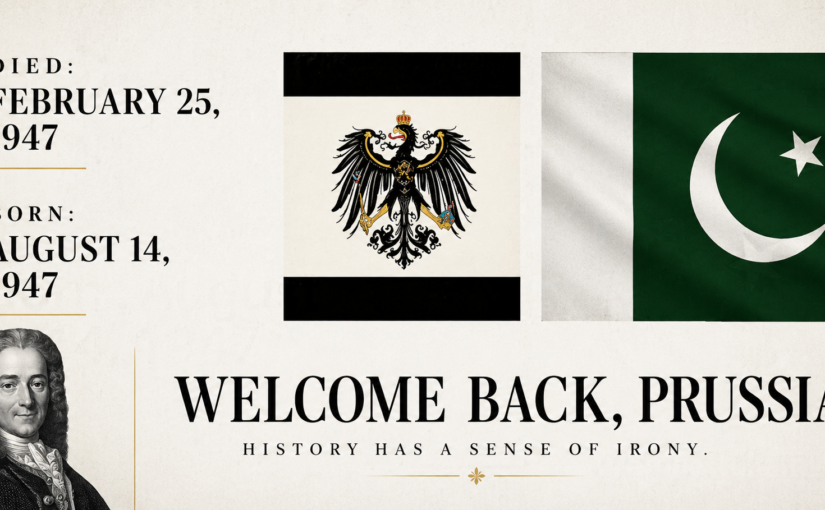
India is the successor state of British India – it got independence, Bangladesh and Pakistan were formed

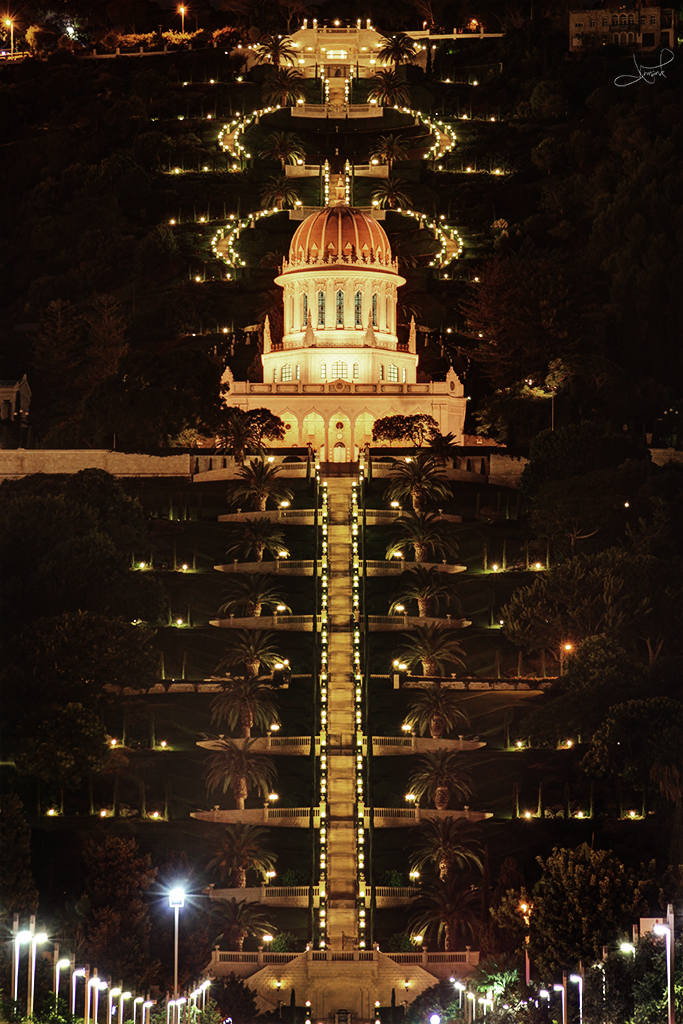
Admin Note: we have brought this picture to the top of BB’s excellent post, which is a Precedent Post, because it deeply move us. Haifa has huge spiritual and sacral significance for us. The Spectacular Shrine of the Báb, the Divine Forerunner of the Bahá’í Faith (and the Symbolic Return of the 12th Imam), overlooks the City.

No photo description available.

Modi at Haifa, Israel paying tribute to the Indian soldiers who died during the Battle of Haifa

File:Shrine of the Báb, Haifa, Israel (8139739814).jpg - Wikimedia Commons

Bharat Mata Ki Ja and the Holy Land join together to shine light on the World. Hurrah.. Both Israel & India house extensive Bahá’í buildings, apparently the most visited Monument in New Delhi is the Lotus Temple. Nowhere else in the Muslim world does the Bahá’í Faith have Sites of Worship (Pakistan has been very good to Bahá’ís but terrible to the Ahmadis).

Explore the Tranquility: 5 Best Things to Do in the Lotus Temple

Apologies for the Hijacking but back to the Badshah of Balochistan, our very own Humza.

In my previous post about India being the successor state to the Mughal Empire, I mentioned how India was also the successor state to hundreds of other polities which existed across many millennia. British India is one such polity which I will discuss today.

Note: As before, when I use India below I mean the current day Republic of India, not the region of “India” which also encompasses some territories of the modern day states of Bangladesh and Pakistan

The Inheritance

Unlike the previous post, I won’t give as detailed a picture because in the modern age the definition of “successor state” is very well defined.

Some examples of succession in the modern period are the Russian Federation taking over from the USSR in 1991 and the French Fifth Republic taking over from the French Fourth Republic in 1958. Both of them got their predecessor’s UN seats as well as the permanent Security Council spot.

The United Nations

Since we are talking of the United Nations, let us begin with that.

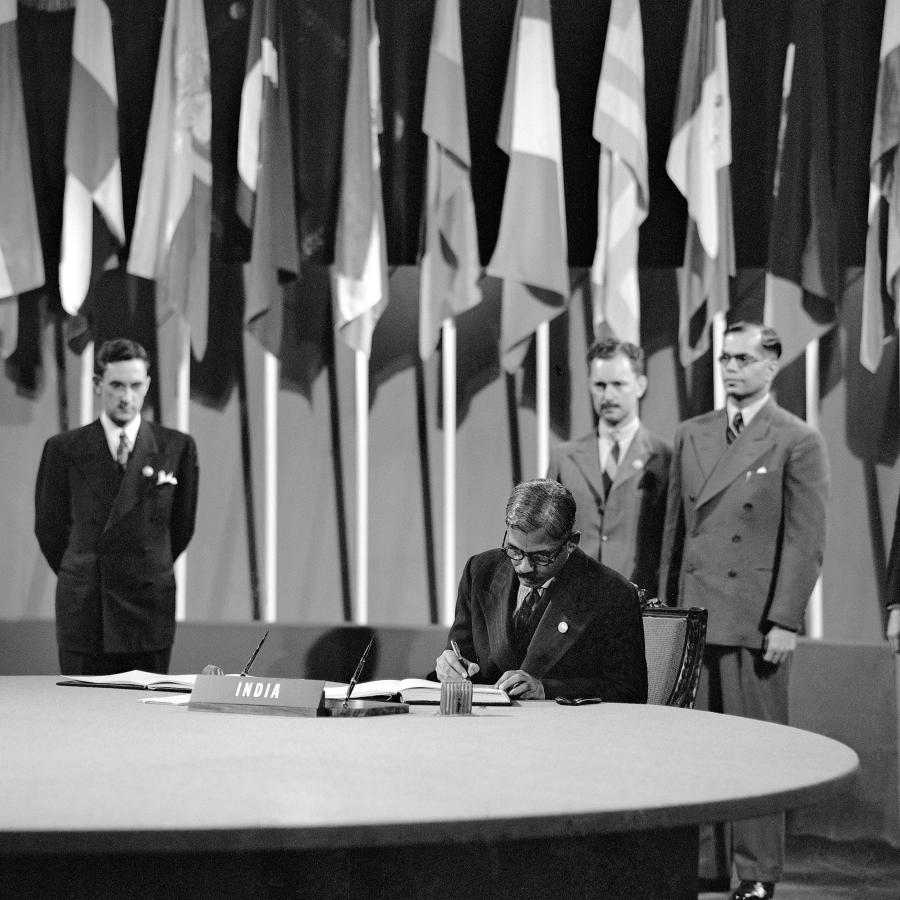
India is a founding member of the United Nations, signing the UN Charter on June 26, 1945, and formally joining on October 30, 1945.

https://india.un.org/sites/default/files/styles/focal_point_square/public/2021-12/235930.jpg?h=cd225dda&itok=sAHVgB5u

Sir Arcot Ramasamy Mudaliar led the Indian delegation and signed the United Nations Charter on June 26, 1945, in San Francisco, United States

Continue reading India is the successor state of British India – it got independence, Bangladesh and Pakistan were formed

Arab Fathers are not fabrications (entirely)

India is the successor state of the Mughal Empire (and the various Sultanates)

A precedent post on who is the successor state of the Mughal Empire (as specified by X.T.M in a comment)

There has been a lot of back-and-forth in the comments section about who gets to “claim” the Mughals.

The Republic of India is the successor state of the Mughal Empire as I explain below.

Note: When I use India below I mean the current day Republic of India, not the region of “India” which also encompasses some territories of the modern day states of Bangladesh and Pakistan

The Land

The Republic of India encompasses around 70 percent of the Mughal Empire at its greatest extent.

Again, possession of majority of the land is not a necessary condition. The UK is the successor state of the British Empire, Turkey is the successor state of the Ottoman Empire and so on. But having possession of the majority of the land makes the case stronger.

The reason that the UK, Turkey, France etc are the successor states of various empires is because they house the “core” – the capital, the ruling elite, the major monuments etc.

The Capital

The Mughal Empire lasted for around 300 odd years. 

It’s capitals were:
Agra for 61 years
Delhi for 228 years
Fatehpur Sikri for 14 years
Lahore for 12 years

The first and last capitals were in India and for 96% of the existence of the empire, the capital was in India.

These capitals still exist in India and are UNESCO World Heritage Sites as well as Monument of National Importance by the Archaeological Survey of India.

The last capital is still used by India in official functions but more on that below.

Agra Fort, Agra

Continue reading India is the successor state of the Mughal Empire (and the various Sultanates)

Pakistani Diversity

Q’s comment, on Kabir’s excellent post, deserves to be reproduced in full.

Several points are wrong here:

I have never actually met a Pakistani who thinks they are Arab or Turk ethnically. Claiming lineage is not ethnicity, not even the Syeds identify with Arabs although they will try to flex their Syed status occassionally. Many Syeds in the family, never heard anyone claim they were ethnically Arab.

Ergutral did not make people in Pakistan think they were Turks, what they identified with was the Islamic history and mannerisms being portrayed. A pasthun guy told me that it portrayed ‘our history’ and while I completely understdood the ‘our’ part because he was using it in an Islamic context (because he is a proud Pasthun, not Arab or Turk), but I did correct him that it was mostly fiction. Continue reading Pakistani Diversity

You Cannot Demolish His Mosque and Claim His High Culture

A precedent post on hybridity, custodial duty, and the elites who want it both ways

The argument running through the recent threads is sharper than the usual India versus Pakistan braggadocio. It is a claim about high culture itself. A civilisation cannot demolish a man’s mosque and claim his high culture in the same breath. The two moves cancel. The elites on both sides of the 1947 line have been performing both moves for eighty years, and the contradiction is now visible.

What high culture is

High culture is the foundational settlement of values, ordinarily anchored in religion, that a civilisation runs on. It can be syncretic in formation. Plural ownership is harder to sustain, and most attempts eventually close into a single settlement or fracture into rival ones; some imperial frames (Ottoman, Mughal, the Republic of India itself) did hold the tension for longer than the simple model would predict. The point is not that plurality is impossible. The point is that plurality is unstable, and the instability is what generates events like 1992.

England is the cleanest worked example of closure. The English high culture is a hybridisation of Anglo-Saxon, Anglo-Norman, and an absorbed Celtic remainder. Scotland and Wales sit inside the matrix without breaking it. The hybridisation closed; one settlement emerged.

Ireland is the test case in the negative. The same Anglophone substrate produced a different high culture in the Catholic south, and in the Catholic pockets of the north, because religion did the foundational work and religion would not blend. Two islands, one language family, two high cultures. Language is the medium. Religion is the substrate.

Ludwig von Mises, in Nation, State, and Economy, argued the related half. The nation is a speech community, but the speech community is shaped by what the school teaches and what the church says. Plattdeutsch villages on the Dutch border could have gone either way two centuries ago; the descendants would now be just as good Hollanders or just as good Germans, depending only on where the school and the church sat. Language carries national consciousness. The religious settlement decides which language wins.

Notre Dame: The custodial bargain Continue reading You Cannot Demolish His Mosque and Claim His High Culture

Gurdaspur and Siliguri: The Two Necks That Held

A precedent post on Pakistan’s self-exile from the subcontinent, and the geography that outlasted it

This is not anti-Pakistan polemic. Pakistan can flourish in the role she has chosen, and may continue to do so (Pakistan’s pivotal role in the US-Iran war is, on any honest reading, a legitimisation win for the current hybrid government)). The point being made here is structural, not personal.

Pakistanis are a subset of the British Raj’s Muslim population. As Punjabis, as inheritors of the Mughal cultural complex (alas one cannot destroy his Masjid and simultaneously claim to be his heir), as native carriers of the Hindustani register that becomes Urdu under one stylisation and Hindi under another, they began with a favoured position inside the subcontinent. They have traded it for a subordinate position inside the wider Muslim world. The internal hierarchies of the Islamicate, where Pakistanis rank against Arabs, Turks, and Persians, are dense and unflattering and deserve their own treatment another day.

The cause of the trade, in the end, is theological. The subcontinent runs on iconographic generosity, painted shrines, sung saints, plural deities, devotional excess. Strict iconophobia cannot live inside that civilization without breaking it. Pakistan chose the stricter line in 1947 and has progressively tightened it since. The Urdu denial, the recent insistence in some Pakistani quarters that Urdu is not really an Indian language, is the cleanest evidence of the opt-out.

Irreducibly Indo-Persian

Continue reading Gurdaspur and Siliguri: The Two Necks That Held

India and Pakistan Are Playing Chicken; simply to hurt themselves

Two comments are worth picking up on, and one claim worth interrogating.

N disagrees that contact ameliorates ties. EK suggests the only Islamicate voices the Indian RW respects are those who have “debased their own civilizational integrity.” We do not know who he is shadow-tweeting. It could be us, the Founders of this blog, who are Islamicate by heritage and recognisably friendly to Hindu right-wing readings. Either way, the framing is off. And then there is Q, on the thread as we write, claiming Pakistanis “will eventually take over the Islamicate world.

The cost of distance

The dominant idea of the last decade is that less contact means more security. Fewer visas. Less trade. No cricket. No artistic exchange. Reduced diplomatic warmth. This is sold as realism. It is, in large part, self-harm.

Distance does not produce clarity. It produces mythology. When people stop meeting one another, they begin imagining one another. The imagined neighbour is always simpler, darker, and easier to hate than the real one.

He is also, as Dhurandhar showed, sexier. Hatred and desire run on the same current. The more villainous the Pakistani on screen, the more the Indian audience leans in.

Civility is built by proximity. Not sainthood. Habituation. When people share space, study, trade, marriage, and culture, the room for fantasy narrows. One can still dislike the other side. But one dislikes actual people, not cartoons.

N’s response to this is that contact theory is “akin to blaming a victim for not engaging with the perpetrator.” That feels like the Israeli security story applied to the Indian Sub-continent. It assumes Pakistanis are a permanent terror-source requiring permanent counter-violence.

Pakistan obliges the narrative by behaving badly enough often enough to keep it alive. India obliges the frame by treating every bad actor as the median Pakistani. Both governments are now invested in the loop.

Pakistanis no longer defend hybrid Islamicate culture Continue reading India and Pakistan Are Playing Chicken; simply to hurt themselves

Brown Pundits