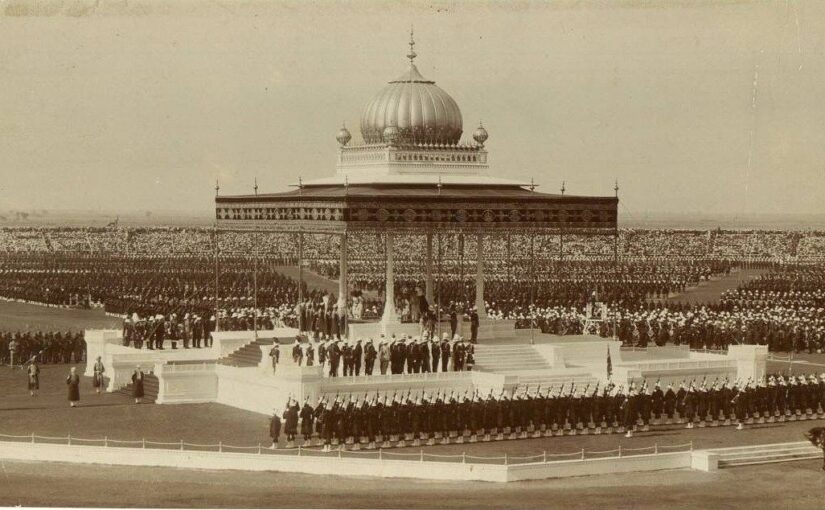
The 1000 Years Frame Erases 80% of India

girmit, high signal as ever as the Comment threads threaten to get engulfed in flames (the Crescentiate are being more provocative than usual). Will return to this properly in a separate post. as an aside when we see girmit, we think Kermit. Probably one of our wises voices in BP.

Indians and their gratitude for Partition

You will be hard pressed to find a normal person in India who doesn’t accept this. If you listen to young people talk they would treat the fact that India-Pakistan were once part of the same polity as some kind of surprising trivia. My point is that, while TNT was used to litigate for partition , and the results of that have been accepted by all parties, the *further* application of TNT will find no takers among liberals. An example would be a statement like “Kashmir should have gone to Pakistan because of having a muslim majority”. There are excellent reasons why one can argue for Kashmir as an independent state in 1947 or even part of Pakistan, that don’t depend on TNT. The foremost being the idea that the process of accession was corrupted somehow. J&K had the same exact right to self-determinaton as Travancore for instance. But the underlying principal is self-determination in the Wilsonian sense i suppose, not TNT. (This goes both ways, as Indians use an imperial logic of their own that a fully intact successor state to the british raj was their entitlement, which is quite outageousely grandiose to be fair).

BJP is a broad tent

Continue reading The 1000 Years Frame Erases 80% of India

Pakistani Centrists, Not Muslim Extremists

A Precedent note

The most important thing to understand about the Pakistani voices on this site is that they are centrists, not extremists. Kabir, El Khawaja, S Qureishi: none of them is a fringe figure in Pakistani society. They are roughly where a literate, urban, employed Pakistani sits, and that fact deserves attention.

It deserves attention because India, over the last decade, has stopped engaging with Pakistanis altogether. Visas have collapsed. Cricket is gone. Cinema is gone. Academic exchange is gone. The everyday oxidation of one society against another, the slow correction by which extreme positions get rounded down through exposure to people who hold different ones, has been switched off. What is left is each side talking to itself about the other.

Brown Pundits is one of the few places where that has not happened.

The thread that prompted this note will illustrate. A week ago, S Qureishi observed that the only downside of the Islamic Revolution was that “there is no OnlyFans.” We were deeply offended by this line seriously enough to write the next piece on counterfactual analysis of Iranian society. Q then returned, under another post, with a fuller thesis: female sexuality must be controlled to sustain a civilisation. Pressed on enforcement, he listed disownment, violence, lawsuits, vandalism. Finally when pressed on honour killing, he admitted it was “horrible” and “immoral.”

Three voices took shape on the thread. The most salient asked that the comment be deleted as misogynist.

We are not deleting it.

We disagree with Q on almost every line he wrote. The thesis that female autonomy is the load-bearing crack in civilisation is one we reject in full. The post on Virginity Policing that triggered this thread was our own. But Q is not a Taliban spokesman. He is a Pakistani who, when challenged in writing by other commenters, was forced to articulate his position, defend it under hostile examination, and concede that violence is wrong. That is not platforming. That is engagement. It is the slow work India has decided it no longer needs to do.

Continue reading Pakistani Centrists, Not Muslim Extremists

Two Colonisations, One Border: What the Data Actually Says About Bengal’s Post-1971 Demographic Story

Check BB’s personal anecdote on the Northeast.

As mentioned, the Special Intensive Revision of electoral rolls in West Bengal has removed 9.1 million names, 2.7 million of them under contested adjudication. The argument has compressed itself into two bad positions. Either every deletion is disenfranchisement, or every deletion is a Bangladeshi caught. Neither is true, and the census of the last hundred years tells a more specific story than either side wants.

The received wisdom on Northeast India collapses into one sentence: Bangladeshi Muslims are flooding across the border. The received wisdom is partly wrong and mostly incomplete. A narrower reading of the census, focused on the actual border districts, tells a stranger story. There are two demographic colonisations in eastern India, not one. They run in opposite religious directions, and Indian statecraft has treated them as opposites: one ratified, one criminalised.

Tripura: the Hindu Bengali takeover

Tripura*: 1951: 71% Hindu, 7% Muslim (with ~21% still counted under tribal religions separately).

Today: 83% Hindu, 9% Muslim.

In 1941, tribals were 50% of Tripura. By 2011, 32%. Partition and the 1971 war did the rest.

The population that replaced the Kokborok, Reang, and Jamatia is Bengali Hindu, not Muslim. Tripura’s Muslim share today is 9%, below the all-India average. The Northeast state most transformed by Partition and 1971 is the one that became a Hindu Bengali colony.

South Tripura district is the cleanest data point. The ST share there is 17%. The Bengali Hindu majority there is overwhelmingly composed of descendants of refugees who crossed between 1947 and 1971.

*Note on Tripura: the Hindu figure jumped partly because tribals were reclassified as Hindu between 1951 and 1971 in the census. Real Hindu Bengali influx adds on top of that statistical shift.

Assam border districts: the Muslim Bengali case

Assam: 1951: 72% Hindu, 25% Muslim.

Today: 61% Hindu, 34% Muslim. Continue reading Two Colonisations, One Border: What the Data Actually Says About Bengal’s Post-1971 Demographic Story

Honour and Acid: The Great Indus Split

We published on the virginity economy yesterday. In the thread, we remembered a very line to us we could not leave alone. Honour killing is what Pakistan took from Indus culture. Acid throwing is what the Indian side took. The data is messier than the line. The line is still broadly right.

The Honour Killing Skew

Between 2018 and 2022, Punjab alone booked 841 incidents with 1,058 victims, 799 of them women. UNFPA’s working estimate is up to 5,000 deaths per year once karo-kari, siyahkari, and “natural cause” burials are folded back in.

India’s NCRB figures for honour killing sit in the low tens per year. This is an undercount so severe it is a category error. Most Indian cases are filed under IPC Section 302 as ordinary murder. The same is true in Pakistan. The difference is that Pakistan’s press, HRCP, and Dawn keep the score. India’s hotspots are Haryana, western UP, and Tamil Nadu (caste-coded).

Adjusted for population, Pakistan’s honour killing intensity is roughly an order of magnitude higher than India’s.

The Acid Attack Skew Continue reading Honour and Acid: The Great Indus Split

Why is Pakistani Culture obsessed with Policing Female Virginity?

We were at our favourite Persian restaurant. A young woman two tables away, not Persian herself, was telling her Persian father about her female friend in continental Europe.

The friend was Pakistani-origin. She had started dating a Latino man. The Pakistani friend’s mother, somehow, had a dream. In the dream, her daughter had lost her virginity.

The dream was the trigger.

The mother went into a spiral. The father, it was said, lost his job. The mother had a nervous breakdown. A trip back to the Muslim homeland was arranged. The daughter refused to board until she saw the return flight in her hand. Only then did she get on the plane. When she returned to the Muslim country, they told her she wasn’t going back to Europe.

We lost the rest of the story, and, over the rest of the meal, we thought about Sana Cheema.


What Sana Cheema Saw

Sana Cheema was a twenty-six-year-old Italian-Pakistani who had lived in Brescia since 2002. She wanted to marry a second-generation Italian-Pakistani man of her own choosing. Her father took her back to Gujrat, in Punjab, under the pretext of a visit.

She was strangled the day before her return flight to Italy. Her neck was broken. Her hyoid bone dislocated. Her father, her brother, and her uncle were charged. They had buried her quickly, without autopsy, and told relatives she had died of natural causes. The body had to be exhumed on a magistrate’s order after Italian media forced the case into daylight.


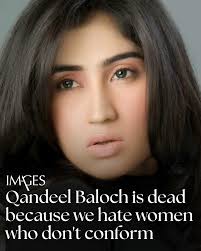
Qandeel Baloch, in the Same Line Continue reading Why is Pakistani Culture obsessed with Policing Female Virginity?

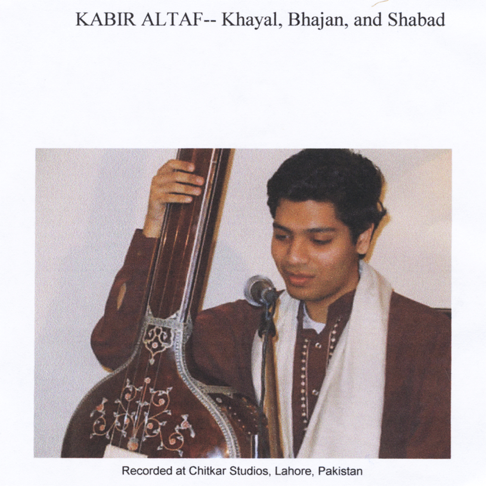
Kabir, the Anchor of the Crescent

Dissent Must Have a Home

The parent post set out why the house speaks in the plural and why pruning widens the room. This post sets out the harder discipline. A plural voice that cannot bind itself is not a voice. It is a whip. And a forum that cannot bind its Founders is not a forum. It is their salon.

The Crescent anchor.

When Brown Pundits was revived, two commentators returned before anyone else. Kabir was one of them. sbarrkum was the other. That mattered more than any traffic number. A forum lives by the return of people willing to argue in public, under their own names or their settled masks, on a schedule that does not flinch.

Kabir matters for a second reason. The Centre gathers quietly and often overlaps with the Saffron bench in instinct or historical frame. The Crescent bloc on this site is essentially held together by Kabir. Remove him and the others do not regroup under a new flag. They drift.

Without Kabir, Brown Pundits will become a site where Muslims are written about more than they are written by.

Continue reading Kabir, the Anchor of the Crescent

We Are Now Hitting 200 Comments a Day

And Why We Use the Word “We”. A BP Precedent Post (our 40th one).

We begin with the constitutional question. Why is BP’s editorial voice plural?

“We” depersonalises the view. A plural voice separates the ruling from the individual. When a comment is moderated, a post is Precedented, or a thread is steered, the call is not a private preference dressed up as authority. It is the house speaking, on the record, under rules that must survive this case and govern the next.

200 a Day

Daily comment volume has risen sharply and is now nudging 200. Active commentators have expanded from a handful to around twenty. Removal rates are running at an estimated ten to twenty percent of all comments. The more we prune, the faster the diversity of commentators grows.

The BP Factions Continue reading We Are Now Hitting 200 Comments a Day

Does the average muslim ‘dislike hindus’?

Admin Note: This is a Precedent Post.

“You seem to be underestimating how much the average Muslim dislikes Hindus (and vice versa). This is a sad reality.”

This comment on a thread conversation – yet again discussing partition on BP, jumped out at me. And I think it deserves to be dissected.

I for one, strongly disagree with the projection of personal animus, extrapolated all the way into the ‘average muslim’. And vice versa. I’m going to assume that Kabir is ‘only’ deigning to speak on behalf of the ‘average muslim’ of the subcontinent, and not beyond. But even then, I think this assertion is utterly inaccurate.

I do not believe that ‘disliking Hindus’ is baked into the character or mindset of the muslims of the subcontinent, whether in India, or beyond it, into Bangladesh of Pakistan. Now, I am aware of the ‘kufr’ attack lines that those suffering from Islamophobia often deploy and may even believe. But I am confident that this is the usual weaponization of the fringe by those with ignorant, or intentionally jaundiced agendas.

The Problem with Monolithic Thinking

To say that “Muslims dislike Hindus” is to treat over 500 million people across multiple countries as if they share a single mindset. This kind of thinking ignores differences in geography, class, education, political views, and personal experiences.

Communities are not monoliths. A Muslim family in Kerala may have vastly different social interactions and attitudes compared to one in Lahore or Dhaka. The same is true for Hindus across regions. Reducing such diversity to a single emotional stance erases individual agency and lived reality.

Historical Context Matters—but So Does Interpretation

It’s true that the subcontinent has witnessed periods of conflict, most notably during the Partition of 1947. That traumatic event left deep scars and continues to influence inter-community perceptions. However, it is a mistake to project historical violence onto present-day relationships without acknowledging the decades of peaceful coexistence that have followed.

In fact, millions of Hindus and Muslims continue to live side by side, working together, forming friendships, and even intermarrying. Everyday life in much of the subcontinent is not defined by hostility but by routine interaction.

The Role of Politics and Media

Modern tensions, where they exist, are often amplified by political rhetoric or media framing. Narratives that emphasize division can serve specific agendas, making it appear as though distrust is more widespread than it actually is.

It’s important to distinguish between politically motivated discourse and the attitudes of ordinary people. The loudest voices are not always the most representative.

Lived Reality: Coexistence Over Conflict

Walk through neighborhoods in cities like Mumbai, Delhi, Karachi, or Dhaka, and you’ll find markets, schools, and workplaces where Hindus and Muslims interact daily. Festivals are sometimes shared, businesses are jointly run, and friendships cross religious lines.

These everyday examples rarely make headlines, but they represent the true fabric of society.

Why Generalizations Are Harmful

Broad claims about mutual dislike do more than misrepresent reality—they can actively contribute to division. When people are told repeatedly that another group harbors negative feelings toward them, it can create suspicion where none existed.

Challenging such narratives is not about denying that tensions exist, but about refusing to let those tensions define entire populations.

A More Nuanced Understanding

A more accurate perspective acknowledges that:

Historical conflicts exist, but so does long-term coexistence
Political narratives can distort social realities
Individual experiences vary widely
Cultural interdependence is a defining feature of the region

If we are to understand the subcontinent honestly, we must move beyond simplistic narratives and recognize the complexity—and humanity—of its people. Resorting to ignorant tropes about ‘muslims dislike hindus and vice versa’ not only should be avoided, but deserves to be countered forcefully.


Men of State, and the Great Mahatma

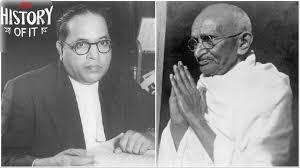
A Precedent Post on Gandhi, Ambedkar, and the Authority to Speak

Kabir is right to push back on the deliberately provocative, “pure evil.” It misses what QeA & Nehru were and what Gandhi & Ambedkar were.

This post sets four Precedents.

One. QeA and Nehru were men of state. Neither evil, neither saint. To be evaluated by the standards appropriate to men who build and run states.

Two. Gandhi was a man of Dharma. He is a saint. Comparing him with QeA and Nehru on their terms is a category error.

Three. Ambedkar is the fourth figure. Not a man of state in the QeA or Nehru sense; not a man of Dharma in the Gandhian sense. He is a constitutional saint, in the Mahatma’s register.

Nehru and QeA may be criticised. They may not be disrespected. Gandhi and Ambedkar are a different order. Discussion of them on this blog proceeds from profound respect for their achievement: the redemption of the soul of India after a thousand years of slavery.

*Thousand years of slavery is not Precedent but rhetorical flourish. It is worth noting that all of the Pakistani commentators on BP would be subordinated “Hindustani Muslims” in the hierarchical world of the Mughals, who explicitly favoured foreign-born Turani and Irani nobles over the converted Indian majority.

Four. SD is not to be quoted on this blog. Initials only where strictly necessary. Reasons at section XII.

Part I. The Distinction

I. The Man of State

The modern state is a Westphalian inheritance: territory, a monopoly of violence, legal personality. A man of state operates inside that frame. He does not step outside it.

QeA was a man of state. He was perhaps the finest constitutional negotiator the subcontinent produced in the twentieth century. He read the Government of India Act the way a master reads a score. In his Fourteen Points of 1929, drafted in response to the Nehru Report’s dismissal of the Muslim minority, he foresaw with brutal clarity that a Westminster majority in a plural society could become a permanent tyranny once the demographic count was fixed.

According to Mohammad Ali Jinnah, “The Committee has adopted a narrow minded policy to ruin the political future of the Muslims. I regret to declare that the report is extremely ambiguous and does not deserve to be implemented.”

There is a reason Pakistanis venerate him to the extent they do. Without QeA, the Muslims of the subcontinent would have remained a set of regional identities & class interests: Punjabi, United Provinces aristocrats, Bengali. He forged a single Islamicate identity out of them and politicised it into a state. In the history of the Ummah, and indeed the world, this is almost unique.

The Two Nation Theory was not his starting point. In 1916, at Lucknow, Sarojini Naidu called him the Ambassador of Hindu-Muslim Unity, and the phrase was earned. He reached for the Two Nation Theory two decades later, when the softer constitutional instruments had been closed off by Congress intransigence and Viceregal haste.

The tragedy of QeA is that the state he called into being never settled its founding question. A secular Muslim who ate pork and drank whisky summoned an Islamic state and then, on 11 August 1947, tried to unsummon it in a speech that Pakistan has spent the rest of its history editing out of its school curriculum. The confusion was structural from day one. It is structural still.

II. The Architect and the Scaffold

Nehru was a man of state of a different temperament. Harrow, Cambridge, Inner Temple. Fabian socialist. Scientific temper. Where QeA built a state around a community, Nehru built one around an idea: that a civilisation as old as India could be poured into a parliamentary republic and would accept the mould. It largely did. We owe him this.

Continue reading Men of State, and the Great Mahatma

Parsi Nanis Are Gujarati

Part I of III: Hypergamy, Endogamy, and the Terminal Phase of the Parsi Model

With a nod to the Y. M. Hodiwalla thread on the Parsi Zoroastrians Worldwide Facebook page, 19 April 2026.


“The Parsis are a quarter Gujarati (genetically). Essentially their Nanis are Gujjus and interestingly enough culture is almost always transmitted via the mothers and their mothers.”


I. The Language Is the Mother

On 19 April, Y. M. Hodiwalla published a long lament on the Parsi Zoroastrians Worldwide page. He called the community’s shift from Gujarati to English a “cultural suicide,” a “refined, English-speaking whimper,” the surrender of a thousand-year linguistic inheritance for the “glittering tinsel of modern fashion.” The comments beneath agreed with him almost to a person. One commenter, KCR, asked the most interesting question in the thread, and everyone ignored it:

Did Jadi Rana tell Parsis to change their “mother tongue”? Was the language of Jadi Rana’s era called Gujarati? And no one retains MT after a couple of generations especially if their numbers are small after migration.

That single comment contains the argument Hodiwalla’s essay cannot bring itself to make. The Parsis did not “adopt” Gujarati in some conscious civilisational pact with Jadi Rana. They speak Gujarati because their founding mothers were Gujarati. The Qissa-i Sanjan gives us the romance. The genome gives us the picture.

II. The Parsi Genome

Continue reading Parsi Nanis Are Gujarati

Brown Pundits