
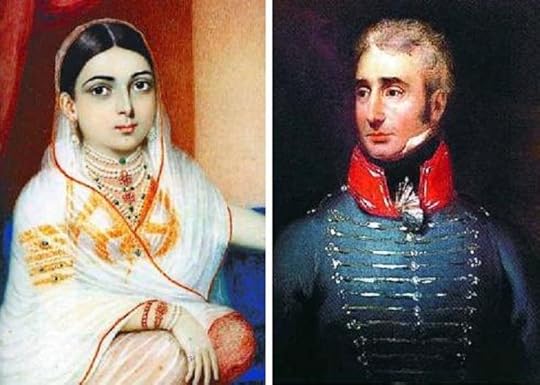

India is the successor state of the Mughal Empire (and the various Sultanates)
A precedent post on who is the successor state of the Mughal Empire (as specified by X.T.M in a comment)
There has been a lot of back-and-forth in the comments section about who gets to “claim” the Mughals.
The Republic of India is the successor state of the Mughal Empire as I explain below.
Note: When I use India below I mean the current day Republic of India, not the region of “India” which also encompasses some territories of the modern day states of Bangladesh and Pakistan
The Land
The Republic of India encompasses around 70 percent of the Mughal Empire at its greatest extent.
Again, possession of majority of the land is not a necessary condition. The UK is the successor state of the British Empire, Turkey is the successor state of the Ottoman Empire and so on. But having possession of the majority of the land makes the case stronger.
The reason that the UK, Turkey, France etc are the successor states of various empires is because they house the “core” – the capital, the ruling elite, the major monuments etc.
The Capital
The Mughal Empire lasted for around 300 odd years.
It’s capitals were:
Agra for 61 years
Delhi for 228 years
Fatehpur Sikri for 14 years
Lahore for 12 years
The first and last capitals were in India and for 96% of the existence of the empire, the capital was in India.
These capitals still exist in India and are UNESCO World Heritage Sites as well as Monument of National Importance by the Archaeological Survey of India.
The last capital is still used by India in official functions but more on that below.

Agra Fort, Agra
Continue reading India is the successor state of the Mughal Empire (and the various Sultanates)

Pakistani Diversity
Q’s comment, on Kabir’s excellent post, deserves to be reproduced in full.
Several points are wrong here:
I have never actually met a Pakistani who thinks they are Arab or Turk ethnically. Claiming lineage is not ethnicity, not even the Syeds identify with Arabs although they will try to flex their Syed status occassionally. Many Syeds in the family, never heard anyone claim they were ethnically Arab.
Ergutral did not make people in Pakistan think they were Turks, what they identified with was the Islamic history and mannerisms being portrayed. A pasthun guy told me that it portrayed ‘our history’ and while I completely understdood the ‘our’ part because he was using it in an Islamic context (because he is a proud Pasthun, not Arab or Turk), but I did correct him that it was mostly fiction. Continue reading Pakistani Diversity
You Cannot Demolish His Mosque and Claim His High Culture
A precedent post on hybridity, custodial duty, and the elites who want it both ways
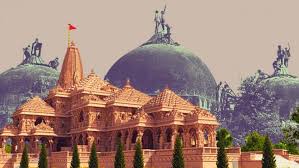
The argument running through the recent threads is sharper than the usual India versus Pakistan braggadocio. It is a claim about high culture itself. A civilisation cannot demolish a man’s mosque and claim his high culture in the same breath. The two moves cancel. The elites on both sides of the 1947 line have been performing both moves for eighty years, and the contradiction is now visible.
What high culture is
High culture is the foundational settlement of values, ordinarily anchored in religion, that a civilisation runs on. It can be syncretic in formation. Plural ownership is harder to sustain, and most attempts eventually close into a single settlement or fracture into rival ones; some imperial frames (Ottoman, Mughal, the Republic of India itself) did hold the tension for longer than the simple model would predict. The point is not that plurality is impossible. The point is that plurality is unstable, and the instability is what generates events like 1992.
England is the cleanest worked example of closure. The English high culture is a hybridisation of Anglo-Saxon, Anglo-Norman, and an absorbed Celtic remainder. Scotland and Wales sit inside the matrix without breaking it. The hybridisation closed; one settlement emerged.
Ireland is the test case in the negative. The same Anglophone substrate produced a different high culture in the Catholic south, and in the Catholic pockets of the north, because religion did the foundational work and religion would not blend. Two islands, one language family, two high cultures. Language is the medium. Religion is the substrate.
Ludwig von Mises, in Nation, State, and Economy, argued the related half. The nation is a speech community, but the speech community is shaped by what the school teaches and what the church says. Plattdeutsch villages on the Dutch border could have gone either way two centuries ago; the descendants would now be just as good Hollanders or just as good Germans, depending only on where the school and the church sat. Language carries national consciousness. The religious settlement decides which language wins.
Notre Dame: The custodial bargain Continue reading You Cannot Demolish His Mosque and Claim His High Culture
Dhurandhar releasing in Japan

Dhurandhar Part 1 is releasing in Japan on 10th July.
A few thoughts:
The Japanese make kick ass posters.
In cinephile circles, Japanese movie posters are very renowned. Here are a few more, both Indian and Hollywood.


India has global ambitions with its movies Continue reading Dhurandhar releasing in Japan
Gurdaspur and Siliguri: The Two Necks That Held
A precedent post on Pakistan’s self-exile from the subcontinent, and the geography that outlasted it
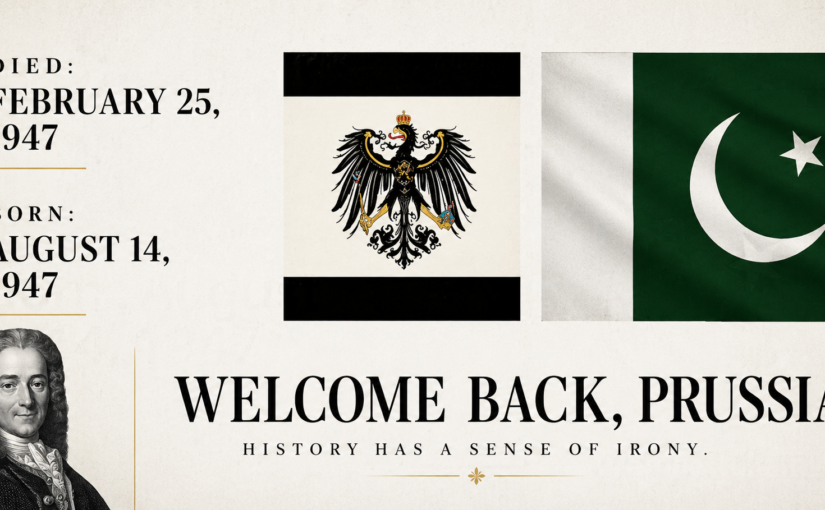
This is not anti-Pakistan polemic. Pakistan can flourish in the role she has chosen, and may continue to do so (Pakistan’s pivotal role in the US-Iran war is, on any honest reading, a legitimisation win for the current hybrid government)). The point being made here is structural, not personal.
Pakistanis are a subset of the British Raj’s Muslim population. As Punjabis, as inheritors of the Mughal cultural complex (alas one cannot destroy his Masjid and simultaneously claim to be his heir), as native carriers of the Hindustani register that becomes Urdu under one stylisation and Hindi under another, they began with a favoured position inside the subcontinent. They have traded it for a subordinate position inside the wider Muslim world. The internal hierarchies of the Islamicate, where Pakistanis rank against Arabs, Turks, and Persians, are dense and unflattering and deserve their own treatment another day.
The cause of the trade, in the end, is theological. The subcontinent runs on iconographic generosity, painted shrines, sung saints, plural deities, devotional excess. Strict iconophobia cannot live inside that civilization without breaking it. Pakistan chose the stricter line in 1947 and has progressively tightened it since. The Urdu denial, the recent insistence in some Pakistani quarters that Urdu is not really an Indian language, is the cleanest evidence of the opt-out.
Irreducibly Indo-Persian
Continue reading Gurdaspur and Siliguri: The Two Necks That Held
India and Pakistan Are Playing Chicken; simply to hurt themselves
Two comments are worth picking up on, and one claim worth interrogating.
N disagrees that contact ameliorates ties. EK suggests the only Islamicate voices the Indian RW respects are those who have “debased their own civilizational integrity.” We do not know who he is shadow-tweeting. It could be us, the Founders of this blog, who are Islamicate by heritage and recognisably friendly to Hindu right-wing readings. Either way, the framing is off. And then there is Q, on the thread as we write, claiming Pakistanis “will eventually take over the Islamicate world.“
The cost of distance
The dominant idea of the last decade is that less contact means more security. Fewer visas. Less trade. No cricket. No artistic exchange. Reduced diplomatic warmth. This is sold as realism. It is, in large part, self-harm.
Distance does not produce clarity. It produces mythology. When people stop meeting one another, they begin imagining one another. The imagined neighbour is always simpler, darker, and easier to hate than the real one.
He is also, as Dhurandhar showed, sexier. Hatred and desire run on the same current. The more villainous the Pakistani on screen, the more the Indian audience leans in.
Civility is built by proximity. Not sainthood. Habituation. When people share space, study, trade, marriage, and culture, the room for fantasy narrows. One can still dislike the other side. But one dislikes actual people, not cartoons.
N’s response to this is that contact theory is “akin to blaming a victim for not engaging with the perpetrator.” That feels like the Israeli security story applied to the Indian Sub-continent. It assumes Pakistanis are a permanent terror-source requiring permanent counter-violence.
Pakistan obliges the narrative by behaving badly enough often enough to keep it alive. India obliges the frame by treating every bad actor as the median Pakistani. Both governments are now invested in the loop.
Pakistanis no longer defend hybrid Islamicate culture Continue reading India and Pakistan Are Playing Chicken; simply to hurt themselves

The 1000 Years Frame Erases 80% of India
girmit, high signal as ever as the Comment threads threaten to get engulfed in flames (the Crescentiate are being more provocative than usual). Will return to this properly in a separate post. as an aside when we see girmit, we think Kermit. Probably one of our wises voices in BP.
Indians and their gratitude for Partition
You will be hard pressed to find a normal person in India who doesn’t accept this. If you listen to young people talk they would treat the fact that India-Pakistan were once part of the same polity as some kind of surprising trivia. My point is that, while TNT was used to litigate for partition , and the results of that have been accepted by all parties, the *further* application of TNT will find no takers among liberals. An example would be a statement like “Kashmir should have gone to Pakistan because of having a muslim majority”. There are excellent reasons why one can argue for Kashmir as an independent state in 1947 or even part of Pakistan, that don’t depend on TNT. The foremost being the idea that the process of accession was corrupted somehow. J&K had the same exact right to self-determinaton as Travancore for instance. But the underlying principal is self-determination in the Wilsonian sense i suppose, not TNT. (This goes both ways, as Indians use an imperial logic of their own that a fully intact successor state to the british raj was their entitlement, which is quite outageousely grandiose to be fair).
BJP is a broad tent
Pakistani Centrists, Not Muslim Extremists
A Precedent note
The most important thing to understand about the Pakistani voices on this site is that they are centrists, not extremists. Kabir, El Khawaja, S Qureishi: none of them is a fringe figure in Pakistani society. They are roughly where a literate, urban, employed Pakistani sits, and that fact deserves attention.
It deserves attention because India, over the last decade, has stopped engaging with Pakistanis altogether. Visas have collapsed. Cricket is gone. Cinema is gone. Academic exchange is gone. The everyday oxidation of one society against another, the slow correction by which extreme positions get rounded down through exposure to people who hold different ones, has been switched off. What is left is each side talking to itself about the other.
Brown Pundits is one of the few places where that has not happened.
The thread that prompted this note will illustrate. A week ago, S Qureishi observed that the only downside of the Islamic Revolution was that “there is no OnlyFans.” We were deeply offended by this line seriously enough to write the next piece on counterfactual analysis of Iranian society. Q then returned, under another post, with a fuller thesis: female sexuality must be controlled to sustain a civilisation. Pressed on enforcement, he listed disownment, violence, lawsuits, vandalism. Finally when pressed on honour killing, he admitted it was “horrible” and “immoral.”
Three voices took shape on the thread. The most salient asked that the comment be deleted as misogynist.
We are not deleting it.
We disagree with Q on almost every line he wrote. The thesis that female autonomy is the load-bearing crack in civilisation is one we reject in full. The post on Virginity Policing that triggered this thread was our own. But Q is not a Taliban spokesman. He is a Pakistani who, when challenged in writing by other commenters, was forced to articulate his position, defend it under hostile examination, and concede that violence is wrong. That is not platforming. That is engagement. It is the slow work India has decided it no longer needs to do.
Two Colonisations, One Border: What the Data Actually Says About Bengal’s Post-1971 Demographic Story
Check BB’s personal anecdote on the Northeast.
As mentioned, the Special Intensive Revision of electoral rolls in West Bengal has removed 9.1 million names, 2.7 million of them under contested adjudication. The argument has compressed itself into two bad positions. Either every deletion is disenfranchisement, or every deletion is a Bangladeshi caught. Neither is true, and the census of the last hundred years tells a more specific story than either side wants.
The received wisdom on Northeast India collapses into one sentence: Bangladeshi Muslims are flooding across the border. The received wisdom is partly wrong and mostly incomplete. A narrower reading of the census, focused on the actual border districts, tells a stranger story. There are two demographic colonisations in eastern India, not one. They run in opposite religious directions, and Indian statecraft has treated them as opposites: one ratified, one criminalised.
Tripura: the Hindu Bengali takeover
Tripura*: 1951: 71% Hindu, 7% Muslim (with ~21% still counted under tribal religions separately).
Today: 83% Hindu, 9% Muslim.
In 1941, tribals were 50% of Tripura. By 2011, 32%. Partition and the 1971 war did the rest.
The population that replaced the Kokborok, Reang, and Jamatia is Bengali Hindu, not Muslim. Tripura’s Muslim share today is 9%, below the all-India average. The Northeast state most transformed by Partition and 1971 is the one that became a Hindu Bengali colony.
South Tripura district is the cleanest data point. The ST share there is 17%. The Bengali Hindu majority there is overwhelmingly composed of descendants of refugees who crossed between 1947 and 1971.
*Note on Tripura: the Hindu figure jumped partly because tribals were reclassified as Hindu between 1951 and 1971 in the census. Real Hindu Bengali influx adds on top of that statistical shift.
Assam border districts: the Muslim Bengali case
Assam: 1951: 72% Hindu, 25% Muslim.
Today: 61% Hindu, 34% Muslim. Continue reading Two Colonisations, One Border: What the Data Actually Says About Bengal’s Post-1971 Demographic Story
The claim depends on treating South Asian Muslims as a single block. They are not one block. The genetic record is a gradient, and on that gradient several specific populations carry foreign ancestry that exceeds what local conversion alone would produce. Most South Asian Muslims are autosomally close to their Hindu neighbours. That is the modal story. It is not the only story.
The NorthWestern Muslims
Working strongest to softest.
Pashtuns. Y-DNA from Pashtun samples differentiates them from Punjabi and Sindhi neighbours. Elevated R1a-Z93 patterns with Central Asian distributions, alongside meaningful J2 and G. The autosomal work under Reich and Narasimhan places northwest Pakistani populations at a higher Steppe MLBA fraction and closer to Iran-related reference groups than most South Asian samples. The signal is layered, not pure, but it is not reducible to local conversion.
Continue reading Arab Fathers are not fabrications (entirely)