Honour and Acid: The Great Indus Split

We published on the virginity economy yesterday. In the thread, we remembered a very line to us we could not leave alone. Honour killing is what Pakistan took from Indus culture. Acid throwing is what the Indian side took. The data is messier than the line. The line is still broadly right.

The Honour Killing Skew

Between 2018 and 2022, Punjab alone booked 841 incidents with 1,058 victims, 799 of them women. UNFPA’s working estimate is up to 5,000 deaths per year once karo-kari, siyahkari, and “natural cause” burials are folded back in.

India’s NCRB figures for honour killing sit in the low tens per year. This is an undercount so severe it is a category error. Most Indian cases are filed under IPC Section 302 as ordinary murder. The same is true in Pakistan. The difference is that Pakistan’s press, HRCP, and Dawn keep the score. India’s hotspots are Haryana, western UP, and Tamil Nadu (caste-coded).

Adjusted for population, Pakistan’s honour killing intensity is roughly an order of magnitude higher than India’s.

The Acid Attack Skew Continue reading Honour and Acid: The Great Indus Split

Why is Pakistani Culture obsessed with Policing Female Virginity?

We were at our favourite Persian restaurant. A young woman two tables away, not Persian herself, was telling her Persian father about her female friend in continental Europe.

The friend was Pakistani-origin. She had started dating a Latino man. The Pakistani friend’s mother, somehow, had a dream. In the dream, her daughter had lost her virginity.

The dream was the trigger.

The mother went into a spiral. The father, it was said, lost his job. The mother had a nervous breakdown. A trip back to the Muslim homeland was arranged. The daughter refused to board until she saw the return flight in her hand. Only then did she get on the plane. When she returned to the Muslim country, they told her she wasn’t going back to Europe.

We lost the rest of the story, and, over the rest of the meal, we thought about Sana Cheema.


What Sana Cheema Saw

Sana Cheema was a twenty-six-year-old Italian-Pakistani who had lived in Brescia since 2002. She wanted to marry a second-generation Italian-Pakistani man of her own choosing. Her father took her back to Gujrat, in Punjab, under the pretext of a visit.

She was strangled the day before her return flight to Italy. Her neck was broken. Her hyoid bone dislocated. Her father, her brother, and her uncle were charged. They had buried her quickly, without autopsy, and told relatives she had died of natural causes. The body had to be exhumed on a magistrate’s order after Italian media forced the case into daylight.


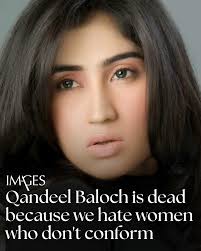
Qandeel Baloch, in the Same Line Continue reading Why is Pakistani Culture obsessed with Policing Female Virginity?

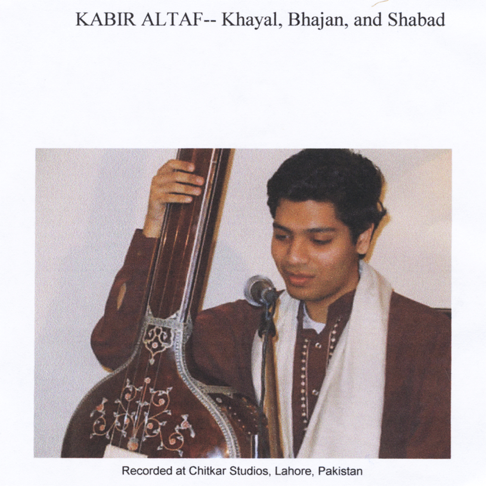
Kabir, the Anchor of the Crescent

Dissent Must Have a Home

The parent post set out why the house speaks in the plural and why pruning widens the room. This post sets out the harder discipline. A plural voice that cannot bind itself is not a voice. It is a whip. And a forum that cannot bind its Founders is not a forum. It is their salon.

The Crescent anchor.

When Brown Pundits was revived, two commentators returned before anyone else. Kabir was one of them. sbarrkum was the other. That mattered more than any traffic number. A forum lives by the return of people willing to argue in public, under their own names or their settled masks, on a schedule that does not flinch.

Kabir matters for a second reason. The Centre gathers quietly and often overlaps with the Saffron bench in instinct or historical frame. The Crescent bloc on this site is essentially held together by Kabir. Remove him and the others do not regroup under a new flag. They drift.

Without Kabir, Brown Pundits will become a site where Muslims are written about more than they are written by.

Continue reading Kabir, the Anchor of the Crescent

We Are Now Hitting 200 Comments a Day

And Why We Use the Word “We”. A BP Precedent Post (our 40th one).

We begin with the constitutional question. Why is BP’s editorial voice plural?

“We” depersonalises the view. A plural voice separates the ruling from the individual. When a comment is moderated, a post is Precedented, or a thread is steered, the call is not a private preference dressed up as authority. It is the house speaking, on the record, under rules that must survive this case and govern the next.

200 a Day

Daily comment volume has risen sharply and is now nudging 200. Active commentators have expanded from a handful to around twenty. Removal rates are running at an estimated ten to twenty percent of all comments. The more we prune, the faster the diversity of commentators grows.

The BP Factions Continue reading We Are Now Hitting 200 Comments a Day

Does the average muslim ‘dislike hindus’?

Admin Note: This is a Precedent Post.

“You seem to be underestimating how much the average Muslim dislikes Hindus (and vice versa). This is a sad reality.”

This comment on a thread conversation – yet again discussing partition on BP, jumped out at me. And I think it deserves to be dissected.

I for one, strongly disagree with the projection of personal animus, extrapolated all the way into the ‘average muslim’. And vice versa. I’m going to assume that Kabir is ‘only’ deigning to speak on behalf of the ‘average muslim’ of the subcontinent, and not beyond. But even then, I think this assertion is utterly inaccurate.

I do not believe that ‘disliking Hindus’ is baked into the character or mindset of the muslims of the subcontinent, whether in India, or beyond it, into Bangladesh of Pakistan. Now, I am aware of the ‘kufr’ attack lines that those suffering from Islamophobia often deploy and may even believe. But I am confident that this is the usual weaponization of the fringe by those with ignorant, or intentionally jaundiced agendas.

The Problem with Monolithic Thinking

To say that “Muslims dislike Hindus” is to treat over 500 million people across multiple countries as if they share a single mindset. This kind of thinking ignores differences in geography, class, education, political views, and personal experiences.

Communities are not monoliths. A Muslim family in Kerala may have vastly different social interactions and attitudes compared to one in Lahore or Dhaka. The same is true for Hindus across regions. Reducing such diversity to a single emotional stance erases individual agency and lived reality.

Historical Context Matters—but So Does Interpretation

It’s true that the subcontinent has witnessed periods of conflict, most notably during the Partition of 1947. That traumatic event left deep scars and continues to influence inter-community perceptions. However, it is a mistake to project historical violence onto present-day relationships without acknowledging the decades of peaceful coexistence that have followed.

In fact, millions of Hindus and Muslims continue to live side by side, working together, forming friendships, and even intermarrying. Everyday life in much of the subcontinent is not defined by hostility but by routine interaction.

The Role of Politics and Media

Modern tensions, where they exist, are often amplified by political rhetoric or media framing. Narratives that emphasize division can serve specific agendas, making it appear as though distrust is more widespread than it actually is.

It’s important to distinguish between politically motivated discourse and the attitudes of ordinary people. The loudest voices are not always the most representative.

Lived Reality: Coexistence Over Conflict

Walk through neighborhoods in cities like Mumbai, Delhi, Karachi, or Dhaka, and you’ll find markets, schools, and workplaces where Hindus and Muslims interact daily. Festivals are sometimes shared, businesses are jointly run, and friendships cross religious lines.

These everyday examples rarely make headlines, but they represent the true fabric of society.

Why Generalizations Are Harmful

Broad claims about mutual dislike do more than misrepresent reality—they can actively contribute to division. When people are told repeatedly that another group harbors negative feelings toward them, it can create suspicion where none existed.

Challenging such narratives is not about denying that tensions exist, but about refusing to let those tensions define entire populations.

A More Nuanced Understanding

A more accurate perspective acknowledges that:

Historical conflicts exist, but so does long-term coexistence
Political narratives can distort social realities
Individual experiences vary widely
Cultural interdependence is a defining feature of the region

If we are to understand the subcontinent honestly, we must move beyond simplistic narratives and recognize the complexity—and humanity—of its people. Resorting to ignorant tropes about ‘muslims dislike hindus and vice versa’ not only should be avoided, but deserves to be countered forcefully.

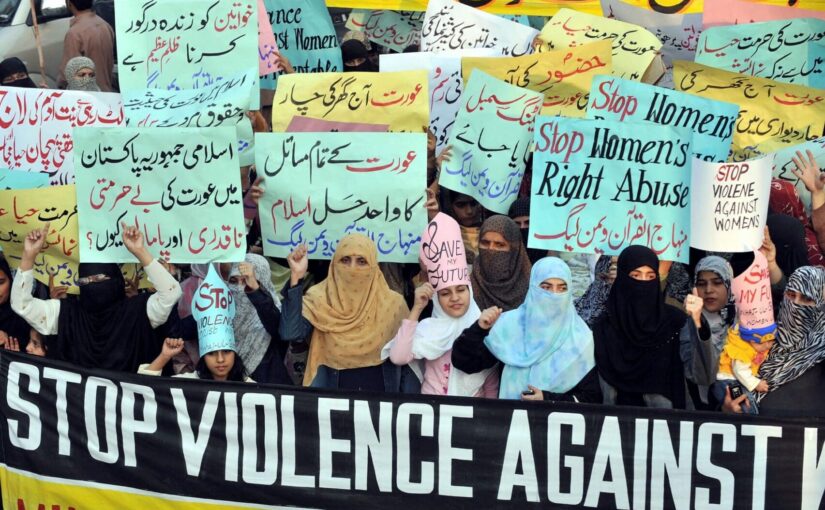
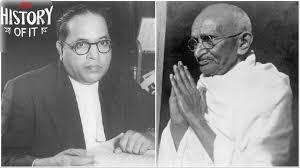
Men of State, and the Great Mahatma

A Precedent Post on Gandhi, Ambedkar, and the Authority to Speak

Kabir is right to push back on the deliberately provocative, “pure evil.” It misses what QeA & Nehru were and what Gandhi & Ambedkar were.

This post sets four Precedents.

One. QeA and Nehru were men of state. Neither evil, neither saint. To be evaluated by the standards appropriate to men who build and run states.

Two. Gandhi was a man of Dharma. He is a saint. Comparing him with QeA and Nehru on their terms is a category error.

Three. Ambedkar is the fourth figure. Not a man of state in the QeA or Nehru sense; not a man of Dharma in the Gandhian sense. He is a constitutional saint, in the Mahatma’s register.

Nehru and QeA may be criticised. They may not be disrespected. Gandhi and Ambedkar are a different order. Discussion of them on this blog proceeds from profound respect for their achievement: the redemption of the soul of India after a thousand years of slavery.

*Thousand years of slavery is not Precedent but rhetorical flourish. It is worth noting that all of the Pakistani commentators on BP would be subordinated “Hindustani Muslims” in the hierarchical world of the Mughals, who explicitly favoured foreign-born Turani and Irani nobles over the converted Indian majority.

Four. SD is not to be quoted on this blog. Initials only where strictly necessary. Reasons at section XII.

Part I. The Distinction

I. The Man of State

The modern state is a Westphalian inheritance: territory, a monopoly of violence, legal personality. A man of state operates inside that frame. He does not step outside it.

QeA was a man of state. He was perhaps the finest constitutional negotiator the subcontinent produced in the twentieth century. He read the Government of India Act the way a master reads a score. In his Fourteen Points of 1929, drafted in response to the Nehru Report’s dismissal of the Muslim minority, he foresaw with brutal clarity that a Westminster majority in a plural society could become a permanent tyranny once the demographic count was fixed.

According to Mohammad Ali Jinnah, “The Committee has adopted a narrow minded policy to ruin the political future of the Muslims. I regret to declare that the report is extremely ambiguous and does not deserve to be implemented.”

There is a reason Pakistanis venerate him to the extent they do. Without QeA, the Muslims of the subcontinent would have remained a set of regional identities & class interests: Punjabi, United Provinces aristocrats, Bengali. He forged a single Islamicate identity out of them and politicised it into a state. In the history of the Ummah, and indeed the world, this is almost unique.

The Two Nation Theory was not his starting point. In 1916, at Lucknow, Sarojini Naidu called him the Ambassador of Hindu-Muslim Unity, and the phrase was earned. He reached for the Two Nation Theory two decades later, when the softer constitutional instruments had been closed off by Congress intransigence and Viceregal haste.

The tragedy of QeA is that the state he called into being never settled its founding question. A secular Muslim who ate pork and drank whisky summoned an Islamic state and then, on 11 August 1947, tried to unsummon it in a speech that Pakistan has spent the rest of its history editing out of its school curriculum. The confusion was structural from day one. It is structural still.

II. The Architect and the Scaffold

Nehru was a man of state of a different temperament. Harrow, Cambridge, Inner Temple. Fabian socialist. Scientific temper. Where QeA built a state around a community, Nehru built one around an idea: that a civilisation as old as India could be poured into a parliamentary republic and would accept the mould. It largely did. We owe him this.

Continue reading Men of State, and the Great Mahatma

Parsi Nanis Are Gujarati

Part I of III: Hypergamy, Endogamy, and the Terminal Phase of the Parsi Model

With a nod to the Y. M. Hodiwalla thread on the Parsi Zoroastrians Worldwide Facebook page, 19 April 2026.


“The Parsis are a quarter Gujarati (genetically). Essentially their Nanis are Gujjus and interestingly enough culture is almost always transmitted via the mothers and their mothers.”


I. The Language Is the Mother

On 19 April, Y. M. Hodiwalla published a long lament on the Parsi Zoroastrians Worldwide page. He called the community’s shift from Gujarati to English a “cultural suicide,” a “refined, English-speaking whimper,” the surrender of a thousand-year linguistic inheritance for the “glittering tinsel of modern fashion.” The comments beneath agreed with him almost to a person. One commenter, KCR, asked the most interesting question in the thread, and everyone ignored it:

Did Jadi Rana tell Parsis to change their “mother tongue”? Was the language of Jadi Rana’s era called Gujarati? And no one retains MT after a couple of generations especially if their numbers are small after migration.

That single comment contains the argument Hodiwalla’s essay cannot bring itself to make. The Parsis did not “adopt” Gujarati in some conscious civilisational pact with Jadi Rana. They speak Gujarati because their founding mothers were Gujarati. The Qissa-i Sanjan gives us the romance. The genome gives us the picture.

II. The Parsi Genome

Continue reading Parsi Nanis Are Gujarati

Founder Sites and Institutional Sites: A Note on Sikh Sacred Geography

This post is to be treated as Precedent on two matters.

First, on moderation

We have been alerted by Hamza that a number of Pakistani commentators on this site have been using anti-Dravidian racialised language against South Indian communities. This will not be tolerated on Brown Pundits.

Any comment that uses racialised language against Dravidian, Tamil, or South Indian communities will be removed, and the offending commenter will have twenty comments removed instantly as an automatic fine. There is no warning phase.

This is personal as well as editorial. DLV’s family was driven out of Sindh by Muhajirs at Partition. It was the Dravidians and the Tamils of Chennai who welcomed them, gave them a second home, and treated them as their own. Any racialised language against those communities on this site will be met with the full weight of the moderation tools available.

To Kabir’s credit, as far as we are aware, he is the only regular Pakistani voice on this blog who has never used racialised language of any kind, even in sharp disagreement. He remains institutional and high-minded even when the argument turns to nuclear rattling. He does not share in the wider Desi pathology with regards to skin colour and race, and that exception is worth naming. It may be the American side of him. Whatever the source, it is the standard this site expects of every commenter, Pakistani, Indian, Bangladeshi, or otherwise.

Second, on substance

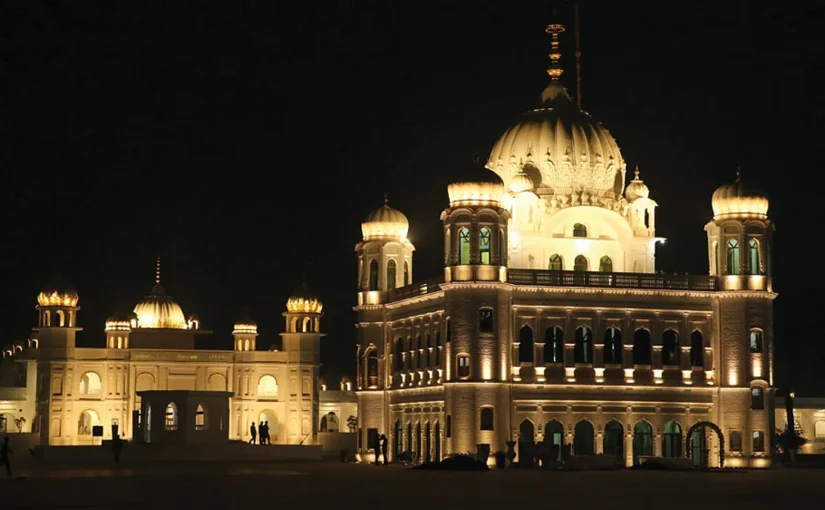
The post below establishes a framework for how this site will discuss the sacred geographies of Partition going forward. The recent Kabir-Kishore exchange on Sikh holy places, is the occasion, but the framework is intended to apply across all such disputes: Hindu sites in Pakistan, Muslim sites in India, Sikh sites on both sides of the Wagah, Buddhist sites across the subcontinent. Future BP posts on sacred geography should refer back to the founder-institutional distinction laid out here.


Founder Sites and Institutional Sites: A Note on Sikh Sacred Geography

A recent exchange on this site sets out two claims about Sikh holy places. The first says Sikhs lost most of their sacred sites to Pakistan in 1947. The second calls that claim nonsense. Both are right, and the disagreement turns on a distinction neither has named: founder sites versus institutional sites.

The Pakistan-side Holy Sites

Continue reading Founder Sites and Institutional Sites: A Note on Sikh Sacred Geography

Op Sindoor Was Not a Pakistani Defeat: Precedents Two Days From Pahalgam

Two days from the tragic anniversary of Pahalgam (may those brave Martyrs rest in Peace for their sacrifice for Dharma). A useful moment to set down precedents, because a year out the narrative has hardened in places it should not have, and we would like the comments to stress-test these before they calcify further.

Precedent one. Operation Sindoor was not a Pakistani defeat.

Pakistan entered 2025 as a failed state. It exits the Pahalgam year as a diplomatic champion. Whatever happened in the skies over those days in May, the outcome in global perception is unambiguous. A military operation is never only a military operation. It is also how the world reads it, and on that ledger the result is not the one Delhi wanted. No Pakistani commentator across the spectrum treats Sindoor as a setback. Our Pakistani readers can confirm this in the thread, and we invite them to. The Indian premise that Pakistan might now re-engage to recover from some imagined humiliation makes zero sense. The humiliation is not where Indian commentary locates it.

Precedent two. The Crescent commentariat cannot have it both ways.

There is a pernicious Pakistani trait, most visible in the diaspora and the Anglophone class at home. They live distinctly Western lifestyles. They then want Islam for all. Live your beliefs. It is a genuinely offensive thing to cheer on the Iranian revolution, a revolution deeply devastating to the Iranian people, from an American suburb or a DHA drawing room. Only a Pakistani commentator could manage the trick of celebrating the Islamic Republic while exempting themselves from its consequences.

In the Iranian diaspora, religious Shias are quietly ostracised. Persian pride, across pre-Islamic, Islamic and post-Islamic registers, is astonishing in its depth. Some of us, the Baha’is for instance, integrate all three.

The TNT move, which imports Islamist preferences onto others while the class that holds them escapes the reality (QeA typifies this), is the opposite.

Precedent three. The rediscovery of Hinduism is coming, and it will come from South Punjab and Sindh. Continue reading Op Sindoor Was Not a Pakistani Defeat: Precedents Two Days From Pahalgam

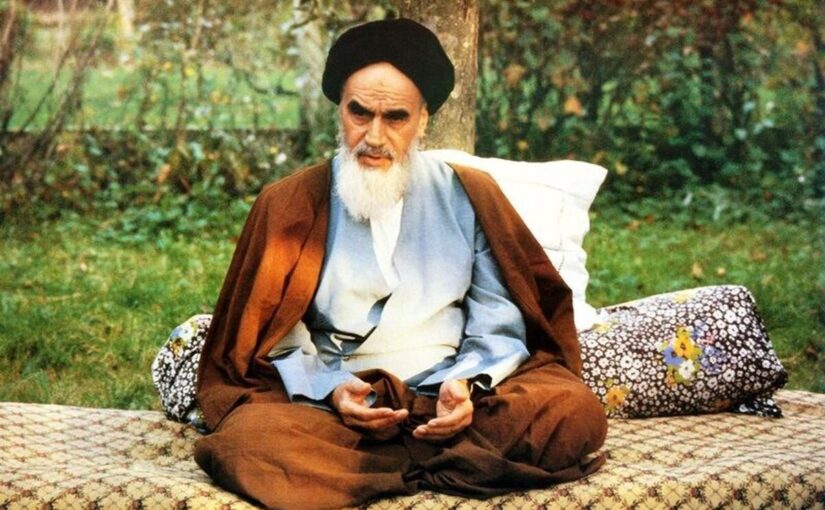
The Iran That 1979 Erased: What If Khomeini Had Lost?

A Counterfactual Iran, 1979–2026

This is a thought experiment, not a manifesto. The Shah was finished by 1978. SAVAK, the Rastakhiz one-party state, the inflationary shock of the 1973–74 oil windfall, the rural migration dumped into an unready Tehran. The question is not whether Mohammad Reza Pahlavi survived. The question is what replaced him, and what that Iran looked like in 2026.

Start with the baseline the Islamic Republic inherited and dismantled.

Between 1960 and 1979, the Iranian economy grew at 9.1% per year. That is the Central Bank of Iran’s own figure. By 1977, Iran was the world’s 18th largest economy, ahead of Turkey at 20th and South Korea at 28th. Real per capita income had tripled in three decades. The White Revolution, launched in 1963, had already delivered universal suffrage for women, mass university expansion, the Literacy Corps, the Health Corps, land reform that turned roughly 90% of Iranian sharecroppers into landowners, and a domestic industrial base that was exporting motor vehicles to Egypt and Yugoslavia by the early 1970s. The regime was brutal. The development was real. Both things are true.

Then compound the counterfactual. Central Bank data shows Iranian GDP growth collapsed to 1.9% per year between 1979 and 2020, a near-fivefold reduction sustained over four decades. In 1980, Iran’s nominal GDP per capita was $2,374, higher than Turkey’s $2,169, Korea’s $1,711 and Vietnam’s $514. By 2024, Iran sits around $5,000 per capita, Turkey around $15,000, Korea above $33,000, Vietnam around $4,500 and rising fast. Every comparator with a functioning state has overtaken Iran. Iran has been lapped by a country (Vietnam) that fought a twenty-year war with the United States, lost it, and rebuilt from rubble.

Now run the counterfactual forward.

The Transition

Continue reading The Iran That 1979 Erased: What If Khomeini Had Lost?

Brown Pundits