Founder Sites and Institutional Sites: A Note on Sikh Sacred Geography

This post is to be treated as Precedent on two matters.

First, on moderation

We have been alerted by Hamza that a number of Pakistani commentators on this site have been using anti-Dravidian racialised language against South Indian communities. This will not be tolerated on Brown Pundits.

Any comment that uses racialised language against Dravidian, Tamil, or South Indian communities will be removed, and the offending commenter will have twenty comments removed instantly as an automatic fine. There is no warning phase.

This is personal as well as editorial. DLV’s family was driven out of Sindh by Muhajirs at Partition. It was the Dravidians and the Tamils of Chennai who welcomed them, gave them a second home, and treated them as their own. Any racialised language against those communities on this site will be met with the full weight of the moderation tools available.

To Kabir’s credit, as far as we are aware, he is the only regular Pakistani voice on this blog who has never used racialised language of any kind, even in sharp disagreement. He remains institutional and high-minded even when the argument turns to nuclear rattling. He does not share in the wider Desi pathology with regards to skin colour and race, and that exception is worth naming. It may be the American side of him. Whatever the source, it is the standard this site expects of every commenter, Pakistani, Indian, Bangladeshi, or otherwise.

Second, on substance

The post below establishes a framework for how this site will discuss the sacred geographies of Partition going forward. The recent Kabir-Kishore exchange on Sikh holy places, is the occasion, but the framework is intended to apply across all such disputes: Hindu sites in Pakistan, Muslim sites in India, Sikh sites on both sides of the Wagah, Buddhist sites across the subcontinent. Future BP posts on sacred geography should refer back to the founder-institutional distinction laid out here.


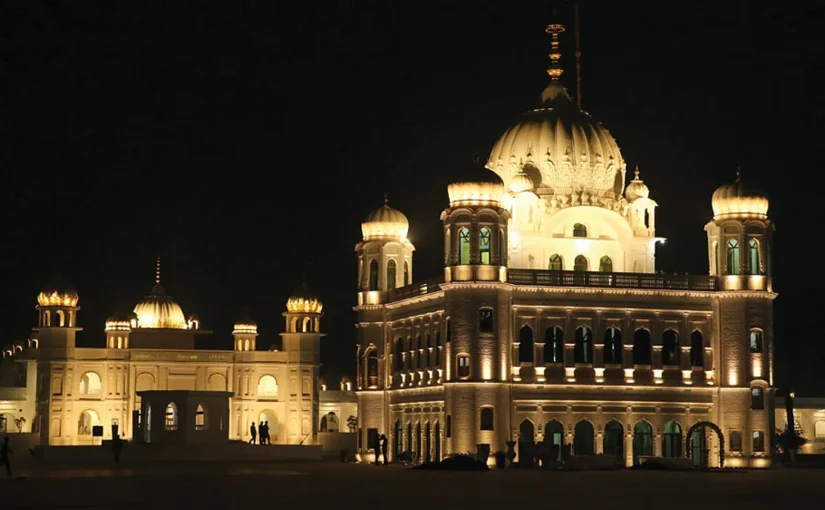
Founder Sites and Institutional Sites: A Note on Sikh Sacred Geography

A recent exchange on this site sets out two claims about Sikh holy places. The first says Sikhs lost most of their sacred sites to Pakistan in 1947. The second calls that claim nonsense. Both are right, and the disagreement turns on a distinction neither has named: founder sites versus institutional sites.

The Pakistan-side Holy Sites

Continue reading Founder Sites and Institutional Sites: A Note on Sikh Sacred Geography
Op Sindoor Was Not a Pakistani Defeat: Precedents Two Days From Pahalgam

Two days from the tragic anniversary of Pahalgam (may those brave Martyrs rest in Peace for their sacrifice for Dharma). A useful moment to set down precedents, because a year out the narrative has hardened in places it should not have, and we would like the comments to stress-test these before they calcify further.

Precedent one. Operation Sindoor was not a Pakistani defeat.

Pakistan entered 2025 as a failed state. It exits the Pahalgam year as a diplomatic champion. Whatever happened in the skies over those days in May, the outcome in global perception is unambiguous. A military operation is never only a military operation. It is also how the world reads it, and on that ledger the result is not the one Delhi wanted. No Pakistani commentator across the spectrum treats Sindoor as a setback. Our Pakistani readers can confirm this in the thread, and we invite them to. The Indian premise that Pakistan might now re-engage to recover from some imagined humiliation makes zero sense. The humiliation is not where Indian commentary locates it.

Precedent two. The Crescent commentariat cannot have it both ways.

There is a pernicious Pakistani trait, most visible in the diaspora and the Anglophone class at home. They live distinctly Western lifestyles. They then want Islam for all. Live your beliefs. It is a genuinely offensive thing to cheer on the Iranian revolution, a revolution deeply devastating to the Iranian people, from an American suburb or a DHA drawing room. Only a Pakistani commentator could manage the trick of celebrating the Islamic Republic while exempting themselves from its consequences.

In the Iranian diaspora, religious Shias are quietly ostracised. Persian pride, across pre-Islamic, Islamic and post-Islamic registers, is astonishing in its depth. Some of us, the Baha’is for instance, integrate all three.

The TNT move, which imports Islamist preferences onto others while the class that holds them escapes the reality (QeA typifies this), is the opposite.

Precedent three. The rediscovery of Hinduism is coming, and it will come from South Punjab and Sindh. Continue reading Op Sindoor Was Not a Pakistani Defeat: Precedents Two Days From Pahalgam

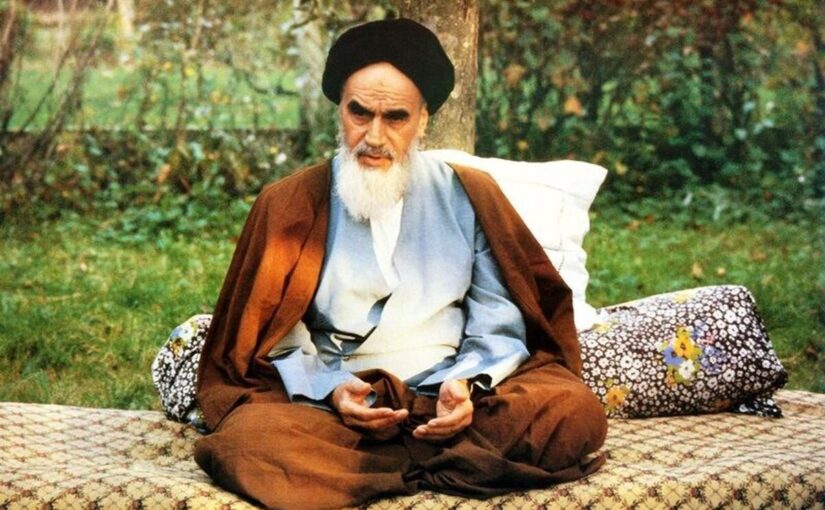
The Iran That 1979 Erased: What If Khomeini Had Lost?

A Counterfactual Iran, 1979–2026

This is a thought experiment, not a manifesto. The Shah was finished by 1978. SAVAK, the Rastakhiz one-party state, the inflationary shock of the 1973–74 oil windfall, the rural migration dumped into an unready Tehran. The question is not whether Mohammad Reza Pahlavi survived. The question is what replaced him, and what that Iran looked like in 2026.

Start with the baseline the Islamic Republic inherited and dismantled.

Between 1960 and 1979, the Iranian economy grew at 9.1% per year. That is the Central Bank of Iran’s own figure. By 1977, Iran was the world’s 18th largest economy, ahead of Turkey at 20th and South Korea at 28th. Real per capita income had tripled in three decades. The White Revolution, launched in 1963, had already delivered universal suffrage for women, mass university expansion, the Literacy Corps, the Health Corps, land reform that turned roughly 90% of Iranian sharecroppers into landowners, and a domestic industrial base that was exporting motor vehicles to Egypt and Yugoslavia by the early 1970s. The regime was brutal. The development was real. Both things are true.

Then compound the counterfactual. Central Bank data shows Iranian GDP growth collapsed to 1.9% per year between 1979 and 2020, a near-fivefold reduction sustained over four decades. In 1980, Iran’s nominal GDP per capita was $2,374, higher than Turkey’s $2,169, Korea’s $1,711 and Vietnam’s $514. By 2024, Iran sits around $5,000 per capita, Turkey around $15,000, Korea above $33,000, Vietnam around $4,500 and rising fast. Every comparator with a functioning state has overtaken Iran. Iran has been lapped by a country (Vietnam) that fought a twenty-year war with the United States, lost it, and rebuilt from rubble.

Now run the counterfactual forward.

The Transition

Continue reading The Iran That 1979 Erased: What If Khomeini Had Lost?

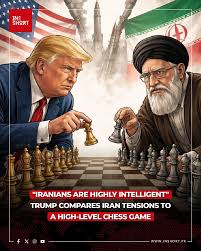
The Chess Masters Who Weren’t

The presumption behind the grand-strategist mythos is always the same. Trump, Milei, Netanyahu, Modi and Orbán are playing three moves ahead, and the other side is stupid. Strip the second half of that sentence and the first collapses.

Look at the scoreboard.

Op Sindoor. India’s post-operation strategic environment does not favour India. Whatever the tactical ledger reads, the diplomatic map around South Asia has tightened against Delhi, not loosened. Delhi has learned. The region has taken notes.

Pakistan. The surprise winner of Op Sindoor is not India. Rawalpindi has played the post-operation hand better than anyone expected and is now cashing cheques in Washington, the Persian Gulf and Beijing in the same quarter. On the current scoreboard, Pakistan is the diplomatic champion of the world.

Iran.* Tehran has pushed back harder than the MAGA-Likud axis priced in. Hormuz did not close on Washington’s schedule. The Islamic Republic has not folded on Washington’s terms. The deterrence calculus is running the wrong way.

Lebanon. Netanyahu was ordered to stop. Not persuaded, not incentivised. Ordered. That is a tell about who holds the leash, and it is not Jerusalem.

Hungary. Orbán conceded on 12 April 2026. Sixteen years, gone in a single parliamentary cycle, to Péter Magyar’s Tisza on a two-thirds supermajority. Some say it was thanks to JD’s Kiss of Death. The flagship of illiberal democracy in Europe was voted out by the electorate it was supposed to have captured.

Continue reading The Chess Masters Who Weren’t

Moderation Notice

A brief note to all commentators on standards going forward.

We prefer ten comments from ten commentators rather than a hundred comments from three commentators.

Capacity for unmoderated commenting has run out. Known authors will be held to a materially higher bar than anonymous readers, because name recognition carries responsibility.

Kabir has set the template. He has moved his argumentation out of comment threads and into original posts (India is Not a “Muslim Power” & Overzealous Pemra), which is exactly the trajectory we want to see from regular contributors.

Direct warning to BB: stop fanning thread fires. The metric this year is not comment density, it is commenter diversity. Low-quality threads drive high-quality voices off the platform, and we have watched it happen in real time. One dominant voice churning out heat costs us three or four signal contributors who quietly stop showing up.

If you have a substantive argument, write a post. If you have a reaction, keep it tight and keep it clean. Threads are not a venue for serial combat.

This applies to everyone, but authors especially. You set the tone whether you mean to or not.

– Moderation, Brown Pundits

Pakistanis = Indian Muslims With Sovereignty?

Part 1: Who Can Speak for the Muslims of India

Part 2

BB has made a comment calling Pakistanis “strayed Muslim Indians“; which does not quite make sense, because Pakistanis are both Indic & Islamic, uniquely so. One cannot deny the highly syncretic and distinct Muslim subculture that has come about from a very long and deep history in India. It cannot be subsumed into an Indian identity in any meaningful way without acknowledging that distinctiveness.

But the phrasing opens a useful equation.

Pakistanis = Indian Muslims with sovereignty.

Continue reading Pakistanis = Indian Muslims With Sovereignty?

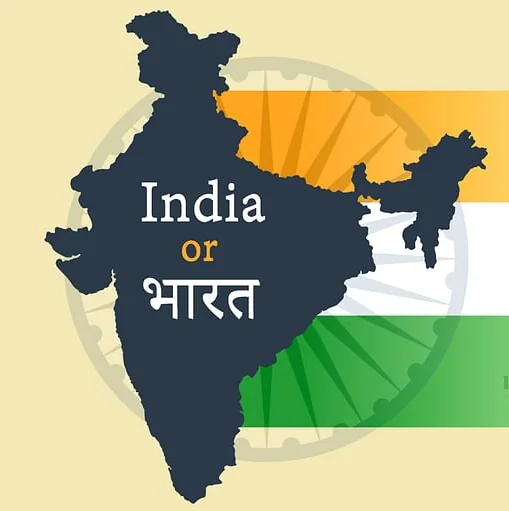
India That Is Bharat: The Exceptional Uniqueness and the Dual Identity

This is a Brown Pundits Precedent Post.


We have been asked, repeatedly and in good faith, why Brown Pundits appears to handle criticism of India with more care than it handles criticism of Pakistan. The charge is that we hold a double standard. It deserves a direct answer.

The answer is that we do hold a distinction, and we are not embarrassed by it, but it is not the distinction the charge assumes.

The Distinction

Pakistan is roughly seventy-nine years old as a sovereign state. India as a sovereign state is roughly seventy-nine years old as well. As nation-states under international law, as signatories to the United Nations, as entities with currencies and armies and foreign ministries, the two are pari passu. We treat them that way and we will continue to treat them that way. On every question that applies to nation-states as nation-states, the two sit at the same table and get the same scrutiny.

But India is not only a nation-state. India is also a civilisation, and the civilisation is not seventy-nine years old. The civilisation is, give or take the archaeological argument one prefers to have, somewhere around five thousand years old. It stretches from the Indus Valley through the Dravidian-Aryan synthesis, through the Vedic period, through the great classical flowering, through the medieval syntheses, through the colonial rupture, and into the present. One can argue the exact nature of the continuity. One cannot plausibly argue that the continuity is not there. It is there in the same way it is there for China. It is there in the same way it is there for Egypt. It is there.

This is not a claim about superiority. It is a claim about category. Pakistan is a sovereign state. India is a sovereign state and a civilisation. The two facts do not cancel. They coexist.

The Civilisational Peer Group Is Short

How short is short. At the level of a nation-state that is co-terminus with a multi-millennial civilisation, the peer group is essentially India and China. Two entries. Iran and Egypt have the civilisational depth but have been transformed by the Greco-Arab conquest, in an unalterable fashion. Greece has the civilisational depth but the modern Greek state is a nineteenth-century construction with limited political continuity to the ancient polis; the Ottoman interlude was equally determinative. Israel is a unique case and we will come to it.

That leaves India and China. Two countries on the planet where the nation-state is also the civilisation, where the sovereign political entity today is a recognisable continuation of the same cultural-linguistic-religious matrix that produced its earliest texts, and where the ordinary citizen, with some education, can read something written two or three thousand years ago in a language that is still a living vehicle of the culture.

That is not a small claim. It is also not a nationalist claim. It is simply a descriptive one.

The Indian Exception Continue reading India That Is Bharat: The Exceptional Uniqueness and the Dual Identity

Open Thread; the endless Argument of the Archives

What We Did

Brown Pundits was founded as a diaspora project. A handful of Brown people thinking out loud about where they came from, what it meant, and whether the subcontinent could be understood in English without either romanticising it or apologising for it.

What happened instead was stranger and more valuable. The site became a place where the subcontinent argues with itself in public, without editorial supervision, without a line to hold, and without the particular kind of cowardice that afflicts publications which need to keep everybody happy.

Over the past week, we forced the archive into coherence. All 3,987 published posts; every Open thread, Genetics argument, Civilisational essay, Partition debate, BrownCast episode, Film review, Obituary, every Moderation notice, are now part of a single navigable structure. For the first time, the site can be read not as a sequence of posts, but as a narration.

What the Archive Revealed

The Partition of India is not a historical event on this site. It is a living emergency. Every argument we have had about Pakistan’s identity, India’s secularism, the Muslim League, Jinnah that is QeA, the two-nation theory, Bangladesh’s founding, the treatment of minorities across all three successor states; all of it is 1947 refusing to close. The wound keeps producing arguments because it was never properly treated. The British left. The questions they left behind did not. Brown Pundits has been, among other things, one of the few places in the English-speaking world where those questions are fought over by people who have actual stakes in the answers, not just professional opinions about them.

Pax Persica

Continue reading Open Thread; the endless Argument of the Archives

The Ukrainian Interlude is over

The Iranian One has just started

Nobody seems to be interested in Pakistan’s diplomatic resurrection. What does it mean that a country written off as failed just a year ago is now the hinge of a regional peace settlement and averting World War Three on the double. This is the actual story of 2026 and it is not on our comment boards.

Pakistan: From Failed State to Diplomatic Champion

A year ago, before Operation Sindor, Pakistan was being written off in every serious strategic publication in the English language. The IMF was reluctant. Every mainstream Indian and Western analyst agreed. Pakistan was finished as a regional actor of any significance.

Today Pakistan is mediating, leading, the Iran crisis. The Hormuz situation, which could have escalated into a catastrophic closure of the world’s most important oil chokepoint, is moving toward resolution largely because Pakistan has positioned itself as the only party credible with Tehran, Riyadh, and Washington simultaneously.

The war that looked civilisational is now looking more like a pivot point. Pakistan is not a failed state. India is not uniquely ascendant under PM Modi. The question of whether the BJP holds power post-Modi is now a live one, not a theoretical one. Iran is not isolated. Israel is not unbreakable. The realignment is happening now, in real time, and almost nobody seems to be writing about it.

Iran Stood Up Continue reading The Ukrainian Interlude is over

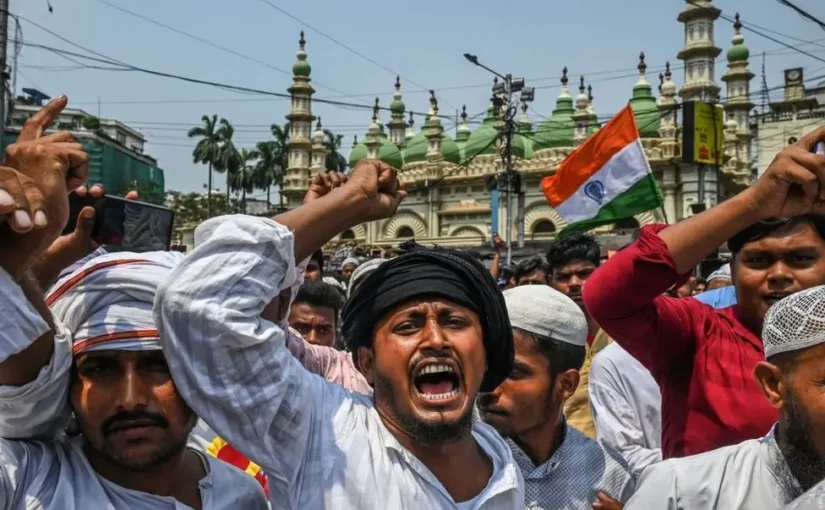
The Inward Turn: Muslim Politics in the Indian Subcontinent from the Fall of the Mughals to the Present

A friend from Twitter (@kartheeque) has written a nice detailed post about the inward turn in Muslim politics in India and its various consequences. It is well worth a read. The original is available at Substack as “The Inward turn..” (he goes by Viduracounsel) He has kindly consented to posting the whole thing here as well:

Continue reading The Inward Turn: Muslim Politics in the Indian Subcontinent from the Fall of the Mughals to the Present

Brown Pundits