The Muslim Districts That Hold West Bengal Up

West Bengal Hindus have a real grievance, and it should be stated plainly. East Bengal’s Hindu share fell from 28% in 1941 to under 8% in the 2022 Bangladesh census. West Bengal’s Muslim share rose from 19.85% in 1951 to 27% in the 2011 Census, and is estimated higher today.

The Nehru–Liaquat Pact of 1950 was meant to be reciprocal. It was not. One side kept its minorities; the other did not. Three refugee waves, 1950, 1964, 1971, landed on West Bengal alone. The frustration is not communal; it is actuarial.

But the conclusion drawn from it is often wrong. The three Muslim-majority border districts, Murshidabad, Malda, Uttar Dinajpur, are not a demographic problem to be solved. They are the reason the state functions.

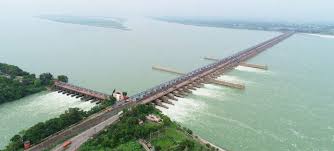
Murshidabad holds the Bhagirathi offtake at Jangipur and the Farakka Barrage beyond it. Farakka diverts the Ganga’s dry-season flow into the Hooghly; without that diversion, Kolkata Port silts up, the Hooghly becomes seasonal, and the salinity line marches inland into the 24 Parganas. Malda anchors the Sealdah–New Jalpaiguri trunk line and the rail spine to Assam; lose it and North Bengal is an island.

Uttar Dinajpur sits directly below the Siliguri Corridor and carries NH 27. These were not given to India by accident in 1947. Radcliffe overrode demography for infrastructure, and the engineering logic has only deepened since.

The Muslims of these districts are weavers, beedi workers, masons, farmers on the most fertile alluvium in eastern India. Murshidabad silk, Malda mangoes, the Farakka catchment; the productive base of three districts rests on a workforce the state would struggle to replace at scale.

Frustration is fair. Cession is not. The districts that look like the problem are the ones holding the system together.
Plus ça change, plus c’est la même chose

The 2020 Open thread spent a whole afternoon on whether vegetarian biryani, vegetarian haleem and vegetarian paya could exist. Saurav declared the abominations should be banned.

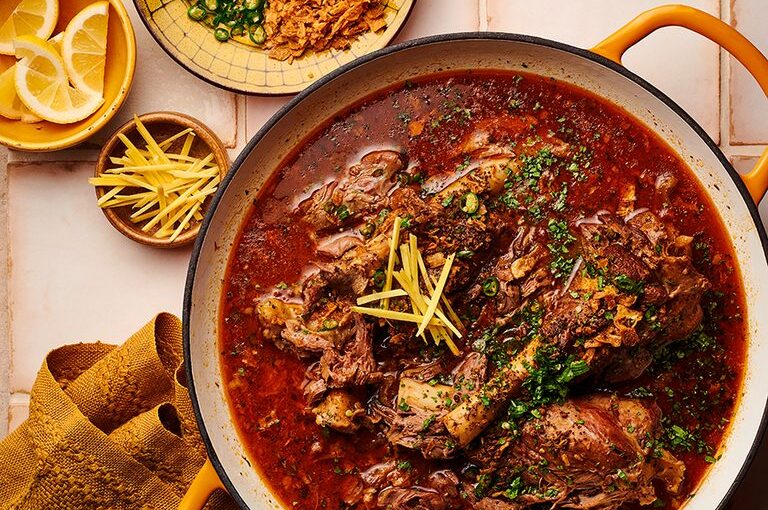
Qureishi extolled the centrality of beef in Pakistani cuisine. The 2026 thread relitigates the same question with Nihari as the exhibit and the Modi diplomatic menu as the provocation.

BB’s argument is that Mughlai cuisine remains Indian property because it is Indian restaurants that carry it globally; the Pakistani versions are cover songs, the originals are still in Awadh and Old Delhi. As BB speaks to the strength of Indian soft power, this comment by Ali Choudhury six years earlier perfectly illustrates it:

Our local Pakistani takeaway does not serve beef dishes partly because they have a fair amount of Indian Hindu customers who don’t want the cross-contamination.

We had guessed this independently. The complexion of Mughlai food in the diaspora, or rather traditional Indo-Islamicate food, is buckling under three constraints: no pork, no beef, halal.

So all restaurants peddling the food of the Indian Subcontinent will converge toward lamb, chicken and goat, the “speciality meat”, as the offerings of choice, with a vast array of vegetarian options alongside. It maximises the customer base, and it is fascinating to see how the syncretic culture survives, despite attempts to destroy it.

The thread and Homelands perform partition. The market and Diaspora quietly un-does it.

The Brahmins behind April’s Traffic

One post earns sixteen percent of all our organic traffic. Written in February 2019. Titled The Five Great Brahmin Castes and Their Proclivities. Seven years on, still the engine.

That is the centre of the site, whether we planned it or not.

What people are searching for

top 5 caste in india. brahman caste. brahmin last names. aryan indians. pakistani hindu. is hinduism pagan.

People are searching caste, ancestry, and religious lineage. We rank for it. Some readers are working out what they are. Some are arguing with relatives. Some are looking up a surname before a marriage call. We do not need to romanticise them. The search bar tells the truth.

The 2019 post answered a question hundreds of thousands of people have asked since. It still answers it.

What sits below it

Four other posts share the next 22% of organic traffic between them.

Continue reading The Brahmins behind April’s Traffic

India-Pakistan pop culture and future trends

Admin Note: this is a shameless plug but rather related to Humza Shah’s post.

Just some general thoughts about India-Pakistan pop culture and future trends.

There were some comments in the recent discussions that caught my eye. One was about Pakistanis no longer using memes from recent Indian movies as well as another about Indian soaps being cheesy and badly made. Both are opinions I broadly agree with but there is a certain element that is being missed in such discussions.

Maybe due to the age of the commenters or maybe due to Pakistan not having equivalents, one thing was completely skipped: the rise of Indian streaming.

Due to rising incomes and internet penetration/quality, there has been a deluge of streaming platforms and shows all across India. These include American platforms like Netflix and Amazon Prime as well as dozens of local Indian platforms – JioHotstar, Zee5, SonyLiv etc. Quality of these shows vary, as with everything but freed from the restrictions of TV censorship laws, these shows on an average do tend to be more transgressive and experimental, tackling topics/themes which would simply not find a place in normal cable TV. Also because these are usually seasons of a few episodes rather than a “daily” soap, they tend to be technically of a higher quality. The discerning urban/elite Indian demographic with access to American/global pop culture are the primary audience of these shows.

In a way, memes from these shows are now far more commonplace than memes from movies. And I have seen Pakistanis use these memes along with the memes from older 00s movies (mostly Akshay Khanna comedies). Tbf, even Indians don’t particularly use memes from modern movies. The Pakistani internet does seem to be influenced by the larger Indian internet, adopting trends wholesale (I even saw a Babar Azam edit with music from the second Dhurandhar movie).

Continue reading India-Pakistan pop culture and future trends

Open Thread: Pakistan’s Demons are The Daughters of God

Q writes on Pakistani source confirms US, Iran closing in on one-page memo to end war:

  1. Total Pakistani victory. If Pakistan pulls off the mediation, this will its greatest diplomatic victory ever. Lifting of Iranian sanctions will allow cheaper Iranian oil to flow directly to Pakistan, and the oil pipeline can be finally completed. Complete eradication of Indian influence from Iran is now achieved, and this will also eliminate any support to BLA from across the border.

Pakistan post Sindoor is on a winning streak. The mediation is real, the memo is real, and if it holds, the diplomatic ledger for the year goes firmly into Rawalpindi’s column. Iranian oil at the door, IP pipeline thinkable for the first time in fifteen years, BLA lifelines into Sistan throttled, Chabahar quietly demoted. A Victorious month?

But the question is whether she can conquer her demons. And the demons are not in the foreign ministry. They are in the drama studios.

Q again, on Pakistani dramas:

Women low-key love abusive behaviour from attractive men. Pretty much all women fantasy porn is about this. (What they don’t love is abusive aggressive behaviour from ugly or poor men) Since females are the primary target audience of these dramas, they tend to show this because that’s what the market demands. I would not read too much into this. What’s more concering was that foreign funded NGOs were trying implement anti-family messaging in the last 15 years – and that messaging has suddenly dried up after their funding dried up.

Fantasy is not preference. A woman reading a brooding-billionaire romance is not auditioning for one. To collapse the two is to flatten the female imagination into a market signal, which is exactly what the Pakistani dramas do and exactly why they rot the culture that consumes them.

Daughters of God Continue reading Open Thread: Pakistan’s Demons are The Daughters of God

Indians and Pakistani dramas

Recently, BB made a comment claiming that Indians don’t watch Pakistani dramas while Pakistanis are very familiar with Bollywood.  While it is certainly true that Indian media has greater penetration in Pakistan than Pakistani media does in India–which is only to be expected since Bollywood is a much larger industry– it is also a fact that there are many fans of Pakistani dramas in India.  As I pointed out in a comment, Fawad Khan and Mahira Khan became well-known in India after the success of Humsafar.  Sanam Saeed also became well-known after Zindagi Gulzar Hai (in which she starred opposite Fawad Khan) aired on Indian TV.  While the film industry in Pakistan has struggled for many reasons, our drama industry is going strong.  One point to note is that unlike Indian soap operas, Pakistani dramas generally come to an end after twenty five or thirty episodes.   This means that there is no need to keep a story going by having people return from the dead etc–this is not specific to Indian soaps since American soaps are also like this.

I personally don’t watch Pakistani dramas (I don’t really watch TV and what media I do consume tends to be Western).  I think the last Pakistani drama I watched was Barzakh which also starred Fawad and Sanam and was coincidentally made for an Indian streaming service (ZEE Zindagi).

Anyway, I came across this reel today on IG which is called “Indians after watching a Pakistani drama” and I thought I’d share it here.   This is basically light entertainment but it does prove that there is an audience in India for Pakistani content. Presumably, the user didn’t make this video just for the Pakistani audience.

I am of the opinion that art transcends national borders so there is nothing wrong with this.  Just as Pakistanis are fans of Lata Mangeskhar, Asha Bhosle and Muhammad Rafi, Indians are fans of Mehdi Hassan, Ghulam Ali, Nusrat Fateh Ali Khan etc.  Though the two countries obviously have political tensions–both see each other as hostile states– we do share a common culture and there is nothing wrong in acknowledging that fact.


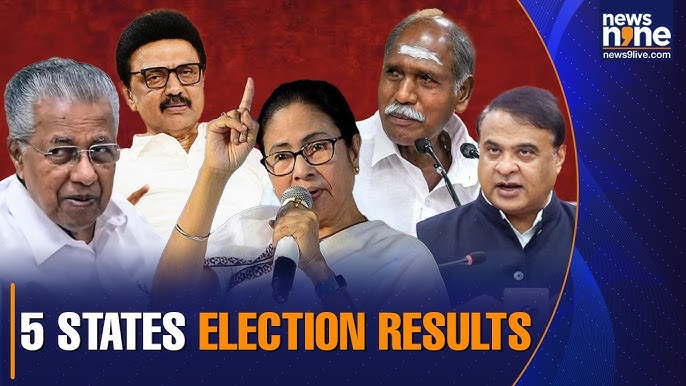
Biggest takeaway of Assembly elections


I was listening to this interview of pollster Pradeep Gupta with Barkha Dutt and this line stuck out. {Copied at relevant point}

Last few assembly elections including the Maharashtra landslide were suggesting that direct cash transfers to women 1 year prior to elections was turning elections sharply in favor of incumbent. Notable examples being BJP in MP in 2023, JMM in Jharkhand 2025, BJP in MH 2025 etc.

All 5 states went into handout mode in late 2025-2026 for this election, but incumbents have only one in 2 small states out of the 5 states. Most notably – DMK which has spend significant amount from state funds last year {apart from usual vote for Cash campaign} has lost big. My contacts in TN tell me that both DMK and AIADMK had spend their significant party coffers on cash for votes – whereas T Vijay had not – only giving away flags and whistles. {not sure if this is 100% true but seemed to be the sentiment}.

If true this truly is the biggest positive of these election results.

Also appending Shekhar Gupta’s post
Key takeaways from West Bengal, Tamil Nadu, Kerala elections

Matuas – Dalits mostly from Bangladesh – who are one of the communities specifically touched by SIR had backed BJP despite that – owling to increased violence against them in Bangladesh :

Why Bangladesh played a big role in BJP’s West Bengal win

Ayan Guha, British Academy International Fellow at the Department of Anthropology, University of Sussex, told ThePrint that while it is a fact that a substantial section of the Matuas has suffered exclusion from electoral rolls due to SIR, it seems they have chosen to stay with the BJP this election. The reason, Guha believes, is Bangladesh.

“While this exclusion has created anxiety and frustration, it is quite evident that the BJP still remains their preferred choice. It clearly appears that widespread violence and atrocities committed on the Hindus in post-Hasina Bangladesh have made them vote as Hindu refugees,” Guha said.


The Hindification of East India

The Saffron Block

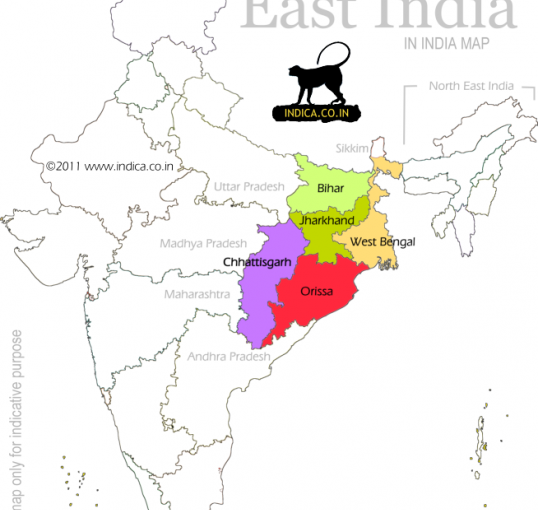
The map of East India has changed colour. Bihar fell to the NDA in November 2025 with 202 of 243 seats, and Samrat Choudhary now sits as the first BJP Chief Minister Bihar has ever had. Odisha went saffron in 2024 under Mohan Charan Majhi. On 4 May 2026 Mamata Banerjee lost Bengal after fifteen years; the BJP took 206 seats and will form its first government in Kolkata. Himanta Biswa Sarma returned in Assam with 82 seats, a two-thirds majority and a third consecutive term. The old Bengal Presidency, once the largest province of British India, is now a single saffron block.

This is the completion, by ballot, of a partition the British attempted by map.

1905

In 1905 Curzon split Bengal. The eastern half was to be Muslim and centred on Dhaka; the western half was to be joined to Bihar and Orissa, which made the Bengalis a linguistic minority in their own province. The Bengali Hindu elite, the bhadralok who ran Bengal’s commerce and letters, fought it bitterly. They did not want to be drowned by Bihari and Oriya numbers. In 1911 the British relented and reunited Bengal.

The Biharis, for their part, had spent two decades campaigning to escape Bengali domination. The 1912 reorganisation that gave them their own province, jointly with Orissa, was their reward.

Linguistic identity then was the prime axis. Hindu and Muslim mattered, but not as much as Bengali, Bihari, Oriya.

The Historical Axis Flipped

A century on, that axis has flipped. The Bengali, the Bihari, the Oriya and the Assamese are voting as Hindus, and they are voting for the same party. The two-nation theory, which Bengal once threw off, is doing its work the long way round.

Hindi,, Hindu, Hindustan

Continue reading The Hindification of East India

Courtesan Culture

There has been some discussion of courtesan culture on X.T.M’s recent thread.

While BB is probably trolling, I am using the opportunity to provide links to some pieces that I have written discussing courtesan culture.   These pieces can be read by anyone who is interested in an informed discussion of the topic.

I will briefly quote from my essay Thumri and Social Change (originally written as part of my Masters coursework):

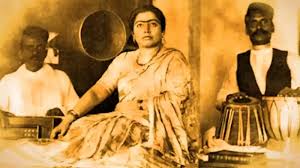
Thumri was traditionally associated with tawayafs, a Persian word which appears in Hindi/Urdu around the middle of the 19th century. Although currently associated with prostitution, the word originally denoted high class courtesans who were highly-skilled singers and dancers trained in the arts of poetry and conversation. Aristocrats would send their sons to tawayafs to be trained in manners and etiquette (Du Perron 2007: 1-2). Prior to colonial rule, courtesans were associated with royal courts. With the decline of these courts, courtesans increasingly began to entertain in their own private salons. They were often wealthy and, because of their unmarried status, were able to move around freely (2). Thumri was one of the principal genres of courtesan performance. The texts often express female desire, usually in the form of love-in-separation (viraha). The heroine either curses the day her lover left her or pleads with him not to abandon her. These themes made thumri ideal for courtesan performance as the performer could act out the anguish and desire experienced by the song’s heroine (3).

Asides from the above piece, some further relevant links are:

Review: Siren Song: Understanding Pakistan Through Its Women Singers by Fawzia Afzal-Khan 

Review: Umrao Jan Ada by Mirza Ruswa (translated by Khushwant Singh and M.A. Husaini) 

Review: Tawaifnama by Saba Dewan 


The Black Album: Between Liberalism and Fundamentalism

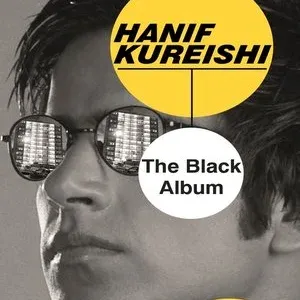
In the context of the recent debate about feminism and liberalism in Pakistan, I am taking the liberty of excerpting from an essay I wrote about Hanif Kureishi’s novel The Black Album.  This novel remains relevant many years after it was initially published.

Living in Pakistan post September 11th, it is impossible to get away from debates about the increasing “Talibanization” of society. The comment sections of online English-language newspapers are filled with what passes for discussion among those who advocate for the secularization of society and those who advocate for a return to “Islamic values”. This “discussion” usually consists of nothing more than one side calling the other “liberal fascists” and the other side responding by calling their opponents “Taliban apologists”. The same “discussions” occur on social media such as Facebook. Pakistani novelists too have attempted to tackle the issue of Pakistan’s involvement in the US-led “global war on terror” and the increasing religiosity of urban middle-class “educated” youth. For example, this theme forms much of the narrative of Mohsin Hamid’s 2007 bestseller The Reluctant Fundamentalist, recently made into a film. However, in my opinion, the best novel to examine the dialectic between liberalism and fundamentalism and the struggle in one man’s soul between these two polar opposites, was actually written long before 9/11. This novel, published in 1995, is Hanif Kureishi’s The Black Album.

And:

As a novel of ideas, The Black Album is a fascinating study of the struggle in one British Pakistani young man’s heart between loyalty to his “culture” (as defined by Islam) versus loyalty to the ideals of his adopted homeland. Though much of the novel is specifically about the Rushdie affair, the debates about free expression and whether it should be limited or not—and if so, how much—are still current around the world. The book burning protest against The Satanic Verses can be compared to the violent protests against the recent YouTube film Innocence of Muslims and the riots that occurred on “Love the Prophet (PBUH) Day” in Pakistan on September 21st 2012. It is the strength of Literature that it enables us to see events, through the experiences and dilemmas of individuals, in a way that journalism or current affairs pieces don’t allow us to. No recent novel about fundamentalism has been able to capture the struggle that takes place in the hearts and minds of many Muslim adolescents as effectively as Kureishi was able to do in The Black Album.

The whole essay can be read here 


Brown Pundits