L’OpĆ©ra, Iran, and the Post-Hindu Condition

A Meditation on Revolution, Secularism, and South Asia’s Futures


Inspiration arrives in the strangest of places.

Recently, I found myself deep in yoga, settling deeper roots in Cambridge, Massachusetts. It’s not clear whether this will be our long-term home yet but even so time to lay down the contours of a life (our main life of course still remains Cambridge, UK while Chennai, India is a must thrice yearly ensconcement).

In the midst of this personal flux, a video Nivedita just shared with cut through the noise: a YouTube interview about Iran before and after the Islamic Revolution, told through the eyes of a Baha’i couple who fled Iran and went on to create a French patisserie empire in India, L’OpĆ©ra.

Continue reading L’OpĆ©ra, Iran, and the Post-Hindu Condition

šŸ—“ļø One Year Ago Today: The Taj Mahal, Sacred Lands, and the Power of Timing

Friends,

The spirit of Brown Pundits has always been dialogue — open, searching, and at times, fierce. But dialogue only flourishes when it is consistent and principled.

Recently, a contradiction has emerged in Kabir’s contributions: applying one set of standards to India and Pakistan, and a different set to Israel. This has led to repeated cycles of disruption, rather than genuine exchange.

To preserve the integrity of our space, Kabir’s participation will be paused until this inconsistency is clarified (we will remove any of his comments that do not address and acknowledge the contradiction; we will also remove any replies to his comments). This is not censorship, but stewardship. Free speech here is not about endless repetition; it is about coherence, accountability, and respect for the whole.

šŸ•Šļø On Confirmation, Coincidence, and the Return of Brown Pundits

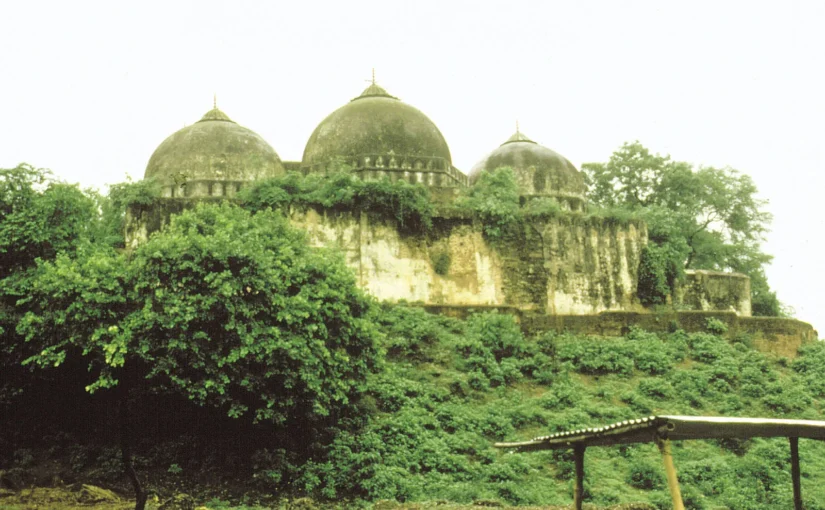
Exactly one year ago today, 17 September 2024,Ā I published a piece titled ā€œThe Battle for the Taj Mahal: India’s Sacred Lands & Waqf Boards Under Fireā€.

At the time, Brown Pundits was stirring from hibernation. Readership had dwindled to near-zero, the commentariat was dormant, and the site, once lively and interrogative in its heyday, felt like a forgotten archive. That post, like so many others before it, was written in solitude. There was no traction, no expectation. Just thought, laid down with care.

And yet here we are, one year to the day, and the blog has roared back to life.


šŸ“æ What the BahÔʼí Tradition Calls ā€œConfirmationā€

In the BahÔʼí tradition, we don’t reduce these moments to mere coincidence. Instead, we speak of confirmation; divine endorsement coupled with meaningful alignment. A subtle assurance that what was offered in silence may still echo in relevance.

Sometimes, truth takes time. It must be planted, and it must ripen. And then, if the conditions are right, it re-emerges at the very moment it’s needed again.


šŸ›ļø Revisiting the Taj & the Sacredness of Land

That post, exploring Waqf Boards, sacred lands, and the Taj Mahal’s place in India’s civilizational memory,Ā was written in a moment of saturation. Too many headlines, too little context. My intention wasn’t to settle the argument, but to recast it: What makes land sacred? Who has the right to remember? Who gets to reclaim?

Reading it now, what’s striking is not just how relevant it remains, but how the same debate has reassembled; not just thematically, but almost ritually, with new voices circling back in familiar orbits.


šŸŒ€ Same Debate, Same Deflection

And so we arrive back, with uncanny symmetry, to Kabir. He’s long argued that nations must be judged by their own internal frameworks: Continue reading šŸ—“ļø One Year Ago Today: The Taj Mahal, Sacred Lands, and the Power of Timing

Threads, Carpets, and PM Modi’s 75th

Happy Birthday Pradhan Mantri:

I watched several videos — four or five, maybe more — of public figures sending their wishes. Among them: Donald Trump, Narendra Modi, Benjamin Netanyahu, Shah Rukh Khan, Aamir Khan, Mohammed Siraj, and Mukesh Ambani.

Mukesh Ambani, of course, remains closely aligned with the establishment, and Aamir Khan seemed to lean heavily into his Hindu heritage — adorned with Rakhis on his wrist, even a Bindi. He’s presenting himself now in a distinctly Hindu cultural idiom, though he comes from a very prominent Indian Muslim family.

By contrast, Shah Rukh Khan stood out. His message was subtly sardonic — he remarked that the recipient was ā€œoutrunning young people like me.ā€ It was light, but just subversive enough to feel intentional. Interestingly, both Shah Rukh and Aamir spoke in shuddh Hindi, which added a certain performative weight to their gestures.


Hindu Art

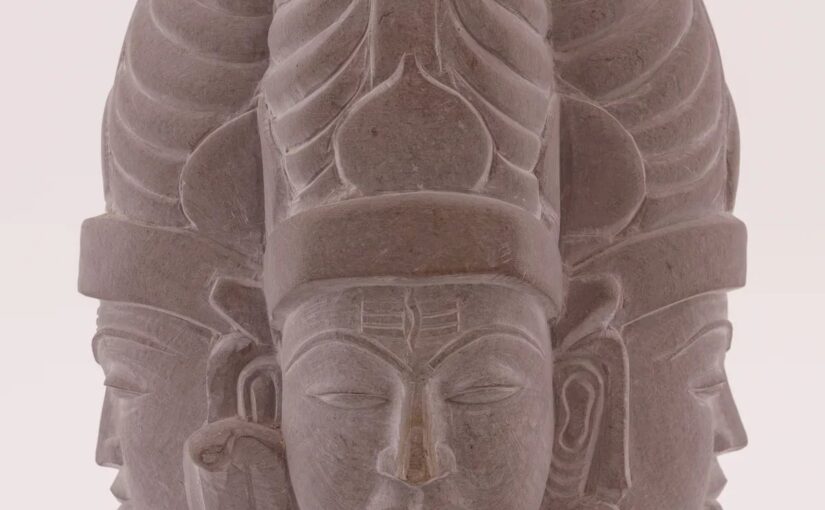
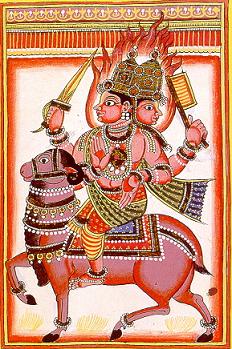
I’ve been fairly busy the past few days, mostly focused on BRAHM Collections;Ā writing about carpets, curating Trimurti sculptures, and exploring Ardhanarishvara iconography. It’s been a deep dive into the civilizational grammar of India and by extension, the porous boundary between sacred art and civil religion.

In the background, I’ve also been chipping away at longer-form reflections; trying to crack the formula for my newsletter (believe it or not the readership is neck to neck with BP but different demographics). It’s all a bit scattered, but the writing has become its own brown paper trail.


On the Commentariat (and Why I’m Stepping Back)

I still follow the commentariat but I’m slowly easing off. There’s a rhythm to it, sure, but too often it turns into exhaustion. I’ve removed all of Honey Singh’s abusive posts. Abuse is now a hard red line for me, but beyond that, I’m stepping back from constant moderation or sparring. Continue reading Threads, Carpets, and PM Modi’s 75th

The Honey Trap of the Ummah:

šŸ•Œ Reflections on Kabir, Afridi, and the Compact of Coexistence

The recent incident involving KabirĀ / Bombay Badshah / Honey Singh, and the orchestrated drama around his entrapment has, quite unexpectedly, become a catalyst for deeper discussion on Brown Pundits. While none have chosen to focus on analytics (ā€œ2,000 daily visitorsā€ā€”thank you very much:-), the real story lies in how this drama has exposed, yet again, the deep ideological fissures within South Asian identity; especially in the India-Pakistan-Muslim triad.

Let’s begin by being honest: Brown Pundits, for all its digressions into Sri Lanka, Nepal, or Bangladesh, is still primarily a blog about India and Pakistan, and more crucially, about Indian and Pakistani Muslims. This is a feature, not a bug. The origins of the blog lie in the Sepia Mutiny, a scattered band of intellectually independent thinkers questioning dogma from every direction (which started in 2004 and if we are a “daughter blog” that we means have 20+yrs of intellectual antecedents on the Brownet), and it has now matured into one of the few platforms willing to wrestle with the ideological ambiguities at the heart of the subcontinent.

šŸ§• Kabir’s Point: Brotherhood, Boundaries, and the Big Choice

Kabir made an astute, if difficult, observation: that he views Indian Muslims as ā€œbrothersā€, but does not feel the same about Pakistani non-Muslims.

This sounds contradictory until one understands the emotional exhaustion of watching Muslims oscillate between claiming ummah-hood when convenient, and weaponizing liberal values when needed. It’s a cognitive dissonance that creates what I can only call the moral coexistence trap: the idea that Muslims, especially in India, demand maximum accommodation, of their food (their nauseating right to murder Gau Mata on Bharat’s sacred soil itself), Faith, festivals, and foreign affiliations, while rarely extending the same pluralistic courtesy in return.

And then there’s that infamous Shahid Afridi clip, the one where he smashed his television after watching an Aarti, being performed. To many of us, that wasn’t just a cringe-inducing moment of bigotry; it begged a real question: Why do Indian cricketers continue to shake hands with Hinduphobes Hindu-hating men like Afridi and his ilk (the Pakistan cricket team)? At what point does tolerance become indulgence?

🚩 The Compact of Indian Minorities: Understand It or Leave It

Continue reading The Honey Trap of the Ummah:

Hinduphobia Exists, But Pakistan Was Not Born from It

I was riffling through the comments and my jaw dropped when Kabir claimed Hinduphobia doesn’t exist. It struck me as both historically and emotionally tone-deaf. I didn’t respond at the time, but I’ve been reflecting on it since.

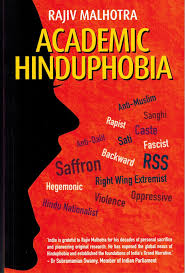
Let me say upfront: Hinduphobia does exist. It may not always manifest in overt violence or systemic persecution (at least not today, and not in most places globally), but it does appear in more insidious, ideological forms; especially in academic and diasporic discourse.

Take, for instance, the backlash against H1B visa recipients. Much of that criticism is coded; targeting upper-caste Indians, especially Hindus, who are the primary beneficiaries of this brain-drain dynamic. It’s not just about class or meritocracy; there’s an unspoken discomfort with their presence and success, often couched in progressive rhetoric.

On the intellectual front, academics like Audrey Truschke and others within the left-liberal Western consensus have regularly challenged or dismissed Hindu identity altogether; reducing it to political nationalism or caste oppression. This refusal to acknowledge Hinduism as a living, plural, and spiritual tradition creates an environment where Hindu self-articulation is delegitimized. That too is a form of Hinduphobia.

Now, is this Hinduphobia the same as the systemic anti-Muslim, anti-Black, or anti-immigrant hatred we see elsewhere? No. Hinduphobia today is more dismissive than violent, more erasure than exclusion, but it is real and it needs to be acknowledged.

Pakistan Was Not Born from Hinduphobia Continue reading Hinduphobia Exists, But Pakistan Was Not Born from It

Madhuri is stronger than the Ambanis

In the name of Pakistan, which is a beautiful poetic name, ā€œLand of the Pureā€, lies the tragedy of pathological purity. It is an addendum to the desire to stay pure. To remain untainted. But purity, when pursued absolutely, becomes brittle.

Madhuri Mahadevi

The Ambanis recently relocated Elephant Madhuri from Kolhapur’s Jain Math to the Vantara rehab centre, citing health concerns. But the move, though framed as rescue, triggered emotional protests, political pushback, and a national debate over animal welfare vs. sacred tradition.

Why did it explode? Because Madhuri wasn’t just a creature in need of savin; she was a living deity to those who loved her. Her departure wasn’t a routine animal welfare decision. It was a rupture in India’s civilizational relationship to the divine in nature. One of the most remarkable aspects of Hinduism is its seamless veneration of the natural world. The river is a mother. The cow, a guardian. The elephant, divine.

Few religions integrate reverence for nature into daily life with such tenderness and theological consistency. This story, of an elephant, a corporate empire, and a temple, speaks to a larger tension in India today: Who gets to define care? And when does ā€œrescueā€ become removal? Continue reading Madhuri is stronger than the Ambanis

Brown Pundits: Broad Church or Narrow Canon?

Brown Pundits Must Stay a Broad Church

Reading Kabir’s thoughtful post on the ā€œsoft Hindutvaā€ bias at Brown Pundits, I found myself both agreeing with parts of his argument and diverging from its framing. My own journey with BP goes back to its inception. The blog was born in Twixmas December 2010; 10 days after I had met Dr. Lalchand, whose presence has profoundly shaped my civilizational views.

I say this not as a biographical aside but because BP, at its best, is where the personal and civilizational collide. We bring who we are; our marriages, our migrations, our contradictions, into this messy, brilliant conversation.

At the time, like many Pakistanis, I held a deep-seated assumption: that Hindus were fundamentally ā€œother.ā€ It wasn’t overt hatred; just a civilizational distance, internalized from birth. But Dr. V & Brown Pundits challenged that.

A Forum With Bias? Yes. But Which One?

The heart of BP is not neutrality; it’s the willingness to host contradiction. That is its genius, and it must be protected.

Continue reading Brown Pundits: Broad Church or Narrow Canon?

Brown Pundits