Comments, Censorship, and the Cultivation of Voice

Over the past 45 days, I’ve had far less time for BP than I’d have liked. But now that I’m back in the US, I finally have space to refocus on what matters most for BP: stewarding it as a platform for intelligent, plural, and principled discourse.

Updated Commentator Guidelines

We’re evolving how we manage our comment threads. Here’s the updated approach:

1. Authors moderate their own threads.

Each Author is free to shape the conversation under their posts. If you post it, you own the thread. Also to the commentariat, if you put a picture and capitalise your handle, it makes you more “human” and memorable (without having to trade in your anonymity, thank you Indosaurus).

2. Do not delete comments; void them.

Deletion removes our memory. If a comment crosses the line, Authors may void it (ideally only the offending items but I can understand the temptation to void it all), but we preserve it as part of the archive. Cultivating a robust commentariat is a core BP value.

3. Authors may never moderate another Author’s comment.

If an Author has a concern with another Author’s comment, they should reach out to me directly. I will arbitrate. No unilateral actions between Authors.

4. Want to avoid moderation? Become an Author.

If you’re serious about your voice, join us. Monthly posting is enough. I ask only for basic human decency; plural views are welcome, and I’m always happy to edit drafts to preserve your tone and intent.

5. Respect BP for what it is.

Brown Pundits isn’t just a site. It’s a conversation space. And like any serious space, it requires some light rules; not to control, but to protect. Let’s build something lasting where people from all sides of the divide can meaningfully engage with one another.

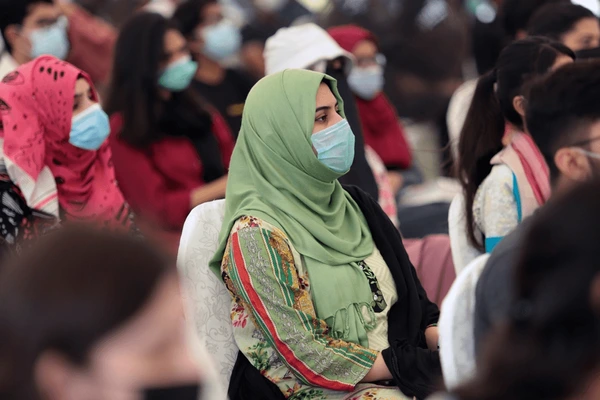
The Myth of the “Average Pakistani”

Dave’s comment:

“I have in fact met some. In person. Ran into a lovely couple while on vacay in Guatemala. Excellent conversation along a 2 hour shared shuttle ride. Shia muslims from Baltistan – he took great pains to indicate that his community is not like the average Pakistani, and that in his biradari they are proud to educate their daughters and wives, have them take the lead in public lives. Both his daughters were young med students.

The tragedy for Pakistan is that such actual liberals with modern outlooks wisely avoid taking public positions. They don’t want to get lynched. Hence the domination by the nutters and fringe on the right continues. Leading to mis-categorization of the right-wing as “the center”.”

The above praises a “liberal” Shia couple from Baltistan for educating their daughters and living modern lives, contrasting them with “the average Pakistani,” portrayed as a backward, anti-education fanatic. This framing is not just lazy; it’s offensive.

It reflects a deeply colonial hangover: the idea that modernity is rare in Pakistan, that deviation from presumed fanaticism is a revelation. But let’s be clear, Pakistanis, like people anywhere else, are ambitious, aspirational, and complex. Medical colleges are oversubscribed. Education is highly prized. And many people, devout or not, are navigating life with dignity, values, and a deep desire to move forward; not just materially, but spiritually and ethically.

Politics of Projection

Just because a population is not obsessed with hyper-capitalism doesn’t mean it is “backward.” It may simply mean it has not surrendered entirely to the logic that everything must be monetized. That’s not regression; it might be restraint. In a world where the only metric that seems to matter is money, resisting that tide is itself a kind of wisdom.

This kind of patronizing liberalism, one that exoticizes progressive Muslims as rare exceptions, isn’t harmless. It feeds into a narrative that justifies erasure: of language, culture, self-rule, and civilizational continuity. South Asians speaking in English, debating one another with colonial grammars, is not a mark of modernity, it is a symptom of displacement. The Global South doesn’t need to be saved. We need to be seen, on our own terms.

What Is Brown Pundits For?

Brown Pundits has always been an open tent—not a monolith, not a movement, and certainly not a megaphone. A forum. A space where ideas, arguments, and identities from across the Brown world are aired, examined, and sometimes clashed over—with the hope that we all leave a little sharper than we arrived. But with that openness comes tension. How do we balance quality and quantity? Principle and pluralism? Coherence and contradiction?

It’s something I’ve reflected on often in other matters of my life (like party-planning for instance). When I’m in the UK, time is tight. When I’m in the US, there’s more room for Brown Pundits. In that ebb, others—like Kabir—have stepped in, contributing with energy and range. And I’m grateful.

Some of Kabir’s posts may align politically with The Wire. That’s fine. Other Pundits lean toward a down-low Hindu Right. Also fine. This was never a place for orthodoxy. We aren’t here to gatekeep belief—we’re here to grow through encounter. The real question isn’t what side are you on? It’s why are you here?

If you’re here to dunk, to declare, to dominate—maybe this isn’t the right space. But if you’re here to engage, to learn, to argue in good faith—welcome. As authors, we don’t always agree. We shouldn’t. But how we disagree matters. To that end, I’d like to lay out four standing principles—not as commandments, but as shared norms that keep our house in order:

Brown Pundits Continue reading What Is Brown Pundits For?

Resistance, Realignment, and the Roads Not Taken

First, a brief acknowledgment: Kabir remains one of the pillars of this blog. His consistency, depth, and willingness to engage with the hardest questions are invaluable. I don’t always agree with him—but the conversation would be much poorer without his voice. The post is a series of reflections—stitched together from the comment threads.

I. Gaza: Beyond the Pale of Language

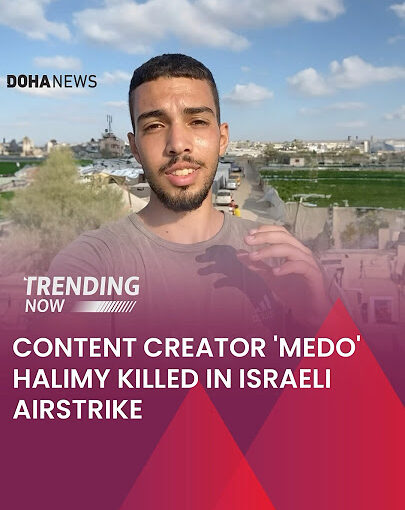
The death of a 19-year-old TikToker, Medo Halimy, in South Gaza this week caught my eye—not because it was the most horrific (foetuses are sliced in two in Gaza as Dr. Feroze Sidwa* attests). But because having seen his video, it just made the death so immediate (yes that is a cognitive bias).

At this point, to debate whether what is happening is a genocide feels grotesque. It clearly is. The scale, the intent, the targeting of civilians and children—it’s all there. The legal frame collapses under the moral weight. We are witnessing something darker than war: ethnocultural suffocation & demographic extinction, broadcast live and met with diplomatic shrugs. But the world is watching inspired by the very brave Bob Vylan duo (UK punk-rap duo opposing imperialism, recently denied US visas):

Something stirs and pricks beneath the rubble.

II. The Huma Moment: A Civilizational Reversal? Continue reading Resistance, Realignment, and the Roads Not Taken

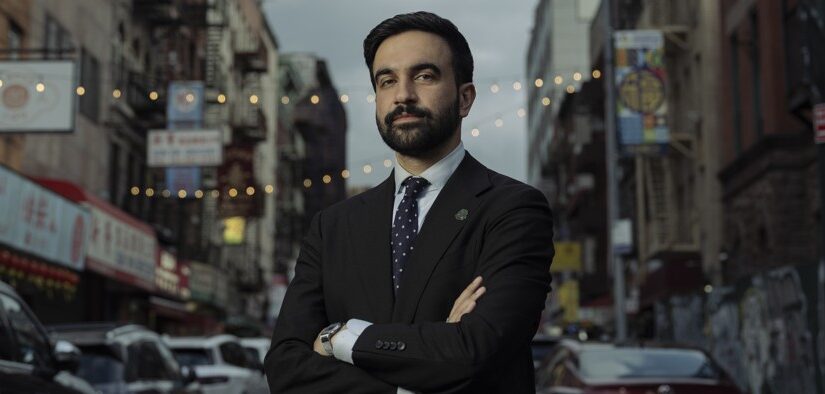
Zohran Mamdani and the Question of Civilizational Belonging

Kabir:

I would question how one defines “Indian” culture vs “Hindu” culture (this is a real question, I’m not being snarky). Zohran speaks Urdu/Hindi, wears shalwar kameez and uses Bollywood references in his campaign. So clearly, he has no issues with Indian culture. He’s not a Hindu so he doesn’t go to temples etc. I’m not sure exactly what you expect him to do?

While Zohran Mamdani expresses outward familiarity with “Indian” culture — speaking Hindi/Urdu, referencing Bollywood, wearing traditional attire — these are surface markers. They do not, on their own, constitute rootedness in Indian civilizational identity. Indian culture, especially post-Partition, is not simply a composite of languages and aesthetics. It is anchored in Dharma — a diffuse but pervasive civilisational ethos shaped over millennia by Hindu, Buddhist, Sikh and Jain worldviews.

Despite being born to a Hindu mother, Zohran’s public identity is strongly framed within a Muslim, Middle Eastern, and postcolonial activist context. His political and cultural instincts appear more aligned with pan-Islamic and Western progressive causes than with any articulation of Indian philosophical or spiritual heritage. His Syrian Muslim spouse, activist framing, and lack of visible engagement with Indic traditions contribute to this perception.

This is not a religious critique but a civilizational one. Just as Israel defines its national identity through a broadly Jewish character — irrespective of belief — India’s cultural self-understanding is inseparable from its Hindu roots. To be Indian, in this view, is not to perform cultural familiarity but to resonate with the metaphysical and historical rhythms of the civilization.

By that measure, Zohran — despite South Asian ancestry — does not code as civilizationally Indian, but rather as an American progressive of South Asian Muslim extraction. The distinction is subtle but important.

Genocide by any other name

“My nerves are shattered,” says Noura, a 26-year-old Palestinian woman, explaining that she has been “left with nothing”.

After years of IVF treatment, she became pregnant in July 2023. “I was overjoyed,” she remembers, describing the moment she saw the positive pregnancy test.

She and her husband Mohamed decided to store two more embryos at Al-Basma Fertility Centre in Gaza City, which had helped them conceive, in the hope of having more children in the future.

“I thought my dream had finally come true,” she says. “But the day the Israelis came in, something in me said it was all over.”

Israel launched a military campaign in Gaza in response to Hamas’s cross-border attack on 7 October 2023, in which about 1,200 people were killed and 251 others were taken hostage.

Since then at least 54,000 people have been killed in Gaza, according to the territory’s health ministry.

Like thousands of Gazans, Noura and Mohamed had to repeatedly flee, and were unable to get the food, vitamins and medication she needed for a healthy pregnancy.

🕯️ Saving Adam

I don’t often comment on the Israel–Palestine conflict, and I try not to be reactive. But there comes a point where neutrality becomes its own kind of indulgence.

Alaa al-Najjar, a pediatrician, lost nine of her ten children, and her husband, in an airstrike on their home in Khan Younis. Her surviving son, Adam, 11, had his hand amputated and was flown out of Gaza to Italy, where he says he hopes to live in “a beautiful place… where houses are not broken and nobody dies.”

The children killed were: Sidar (7 months), Luqman (2), Sadeen (3), Rifan (5), Raslan (7), Jubran (8), Eve (9), Rakan (10), and Yahya (12). May they rest in the Highest Heaven. Continue reading 🕯️ Saving Adam

US Economics and Theory of Collapse

A Theory of Collapse (After a US Economic Synopsis)

Note: Italicized comments are from another Brown Pundits contributor


Unless the US falls hopelessly behind in tech, they are “built” to retain a perpetual competitive edge.

I don’t think you’ve looked closely enough at the economic fundamentals. Off the top of my head:

  • National Debt: $30+ trillion
  • Interest on Debt: $1 trillion
  • Budget Deficit (2024): $1.8 trillion
  • Trade Deficit: $140.5 billion (heavy reliance on imports)
  • Defense Budget: $1 trillion

Moody’s recently downgraded US debt from Aaa to Aa1, citing worsening risk indicators. This downgrade was hard to avoid—US sovereign CDS spreads are now wider than those of China and Greece, suggesting higher default risk. Continue reading US Economics and Theory of Collapse

Request for Calm and Civility

Dear Punditeers,

A gentle reminder to take a breath and step back. Kabir is entitled to his views—there’s no obligation to counter every provocation point-by-point.

What’s troubling isn’t disagreement—it’s the sheer volume of rage replies. This doesn’t reflect the standard we aspire to. It’s neither civil nor intellectual. The only reason I’m stepping in is because, while I generally prefer light-touch moderation, the tone of these threads now reflects poorly on the broader community. It lowers the quality of both the commentariat and the platform.

We’ve seen this play out before—Sepia Mutiny is a cautionary tale. Let’s not replicate it.

So please: engage with ideas, not just identities. Let’s not derail into yet another endless Indo-Pak back-and-forth. We’re capable of better.

Warmly,

X.T.M

✉️ [Addendum]

On Nivedita’s query, I’ve finally re-created the Brown Pundits email account. It’s hosted on Gmail, but I’ve deliberately avoided posting the full address here to prevent spam harvesters. If you’d like to get in touch privately or share something offline, feel free to reach out via:

📧 brownpundits19 [@g]

🪙 What’s in a Name? Mukesh, Not Mukash.

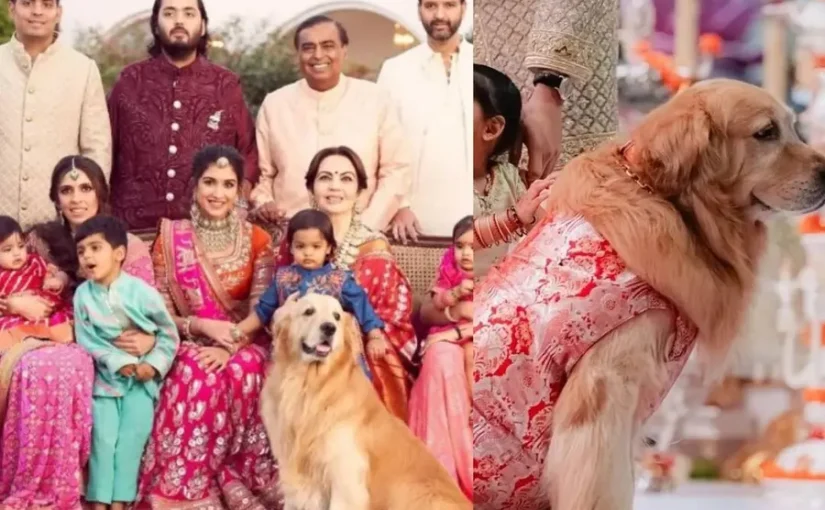
While reading Brad DeLong’s fascinating newsletter on centi-billionaires and political power (I’m going to ignore Elon’s self-imploding stunt), I noticed something that jarred me more than it should have: Mukesh Ambani’s name was misspelled as “Mukash.” A minor slip, perhaps. But it was the only error in a list that included Bernard Arnault, Warren Buffett, and Michael Bloomberg—men whose names command a certain global familiarity.

What does it say that even after spending nearly half a billion dollars on a wedding for his son, India’s wealthiest man doesn’t merit a spellcheck? It says a lot.

🧠 The Chimera of Respect via Capital Continue reading 🪙 What’s in a Name? Mukesh, Not Mukash.

Brown Pundits