💔Sana Yusuf Did Not Have to Die

The Pakistani Crisis Is Not Just Legal—It’s Civilizational

By X.T.M

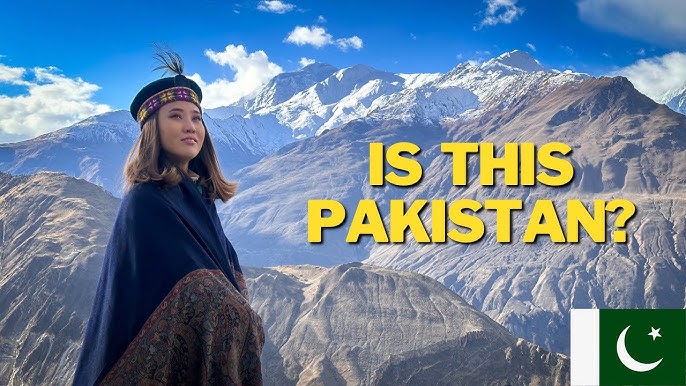
As I write this, the news of Sana Yusuf’s murder is barely 48 hours old. A 17-year-old TikTok creator with over a million followers, she was gunned down in Karachi by a 22-year-old stalker. She was a rising star—funny, expressive, beloved. And now, she is dead.

We’ve been here before. Qandeel Baloch. Noor Mukadam. Khadija Siddiqui. Now Sana.

Every few years, Pakistan reels in collective shock at the killing of yet another woman by a man convinced of his right to possess, control, or erase her. And every time, some voices insist “this is not our culture.” But what if it is?

📍Not an Anomaly—But an Outcome

Sana’s murder is not an aberration. It is the predictable consequence of a society structured around honor, control, and male entitlement. Patriarchy in Pakistan isn’t just cultural—it’s systemic, generational, and fiercely defended. Continue reading 💔Sana Yusuf Did Not Have to Die

The Elder Race and the English-Speaking Heat

As I write this from Dublin, waiting to board my connecting flight—I’d nearly missed it in Newark, too absorbed in writing to hear the gate call—I’m struck by how a Euro sign or EU flag can alter one’s sense of place. Technically, I’m still in the British Isles. But culturally—unmistakably—I’m on the Continent. A sensation I never quite feel in England.

It’s a strange feeling, this flicker of European belonging. In the early millennium, I was a passionate Brexiteer—young, angry, seeking change. By the time of the referendum, a decade later, I found myself morally conflicted. I knew the EU was not a good fit but as a Bahá’í, I knew I could never advocate for disunity, of any sort. I abstained. Ironically, Commonwealth citizens could vote, but EU nationals couldn’t—a bit of imperial gatekeeping that deeply irritated my liberal British-Irish friend. (“Why can Indians vote, but not the French?” he asked.)

Today, standing in Europe, I feel the contrast sharply. The Continent is genteel, even decadent, locked into postwar consensus. Meanwhile, the English-speaking world feels like it’s on fire—politically, culturally, psychologically. It’s not just the UK or the US. India, too, belongs to this hot zone of rhetoric and reinvention. Pakistan, by contrast, while elite-driven in English, remains emotionally and socially an Urdu republic. Continue reading The Elder Race and the English-Speaking Heat

Merit, Class, and the Ossified Dream

Dispatch from Newark Airport

By X.T.M | Acting Editor, Brown Pundits

I lost my train of thought earlier, but I’m back now, writing this from Newark Airport, awaiting a flight back to the United Kingdom—then onward, as they say, to the old, old world.

What I’d begun to reflect on was social mobility—and how drastically it’s shifted over the past few decades. In much of the Global South, the idea of a working-class avant-garde—those who rose through grit, communal aspiration, and sacrifice—still retains cultural force. But in the Global North, that current has largely dissipated. Class structures have ossified. The ladder still exists, but the rungs are brittle.

I’ve been mapping that reality onto the commentariat, especially the highly educated, striving upper-middle-class Hindus who have, for the most part, embraced the system—IITs, IIMs, Oxbridge, the Ivies. These are not just institutions; they’re rites of passage. For many, the peak came at the point of entry. Twenty years on, what remains is not expansion, but a formula—one track, one ceiling. Continue reading Merit, Class, and the Ossified Dream

Is It Indian Culture or Hindu (Brahmin) Culture that creates excellence?

On Faizan Zaki, Spelling Bees, and Civilizational Osmosis

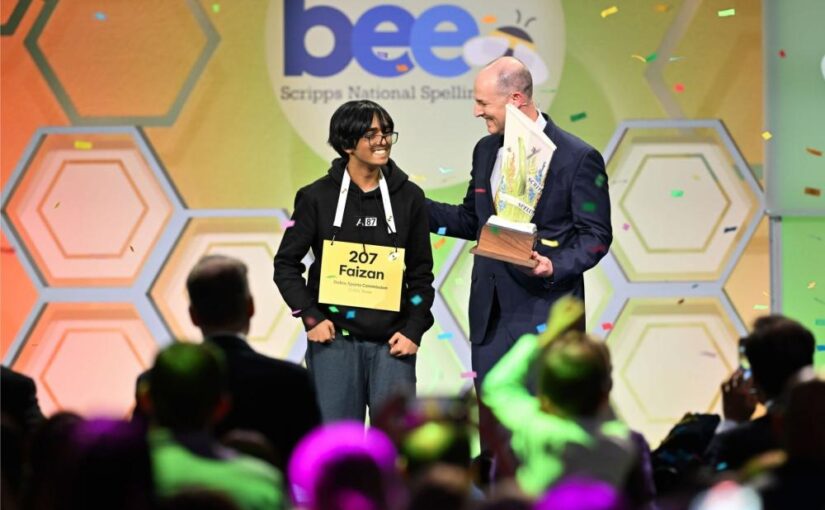
Another year, another Spelling Bee crown for an Indian American. But this one, the 100th Scripps tournament,  is different.

Faizan Zaki—young, brilliant, and by name Muslim—just became the latest in a long line of Indian-origin champions of America’s most idiosyncratic intellectual ritual. Faizan is the 32nd Indian American to win—meaning they’ve claimed 32 out of the last 40 Spelling Bees. But he is very likely the first Muslim American to do so.

Which raises an old but essential question: Continue reading Is It Indian Culture or Hindu (Brahmin) Culture that creates excellence?

Flame Thread Protocols: Honey Kabir

A Note from the Editor

Flame thread warning: Honey vs. Kabir.

Last night’s open thread surged past 50 comments—most of it orbiting the now-familiar friction between the two.

Let me be clear: I’m inclined toward Kabir. He’s often overwrought, sometimes hyperbolic, but he’s a known quantity. He’s been part of this space for nearly a decade. He is a “real person.” We know how he argues, where he lands, and the limits of his provocations.

Honey is harder to read. Multiple handles. No clear background. No track record. And a rhetorical posture that feels less like engagement, more like carpet bombing—especially when it comes to Pakistan. There’s a difference between critique and hatred, and it’s usually in the tone. “Pakistanis under-endowed”—LOL, happy to disprove that.

Moderation is evolving. I no longer think of it as refereeing an online debate. I think of it like hosting a discussion in my living room. That means: Continue reading Flame Thread Protocols: Honey Kabir

Jet Lag: India, Pakistan, and the Theatre of the Air

Since the commentariat can’t resist a good Indo-Pak exchange—especially when it involves fighter jets—here’s a fresh contribution to the theatre. Personally, I’m much more interested in Concord cafés and JD Vance’s selective memory, but one must feed the algorithmic gods. So here’s what S. Qureishi gleefully shared:

A day after Subramanian Swamy accepted 5 jets were down in a Hindi interview, Indian CDS Gen Chauhan accepts jet losses in the recent encounter to Bloomberg. What’s more he accepted that the Indian planes did not fly after May 6-7 and were grounded,

Take that as you will. Fog of war, political spin, or just belated candor—either way, the skies are louder than the silence.

As an aside, I’ve always found Pakistani commentary on India—the civilizational motherland, however estranged—to be oddly fixated. It’s like staring into a mirror with the lights off.

Anyway—comment away, and please play nice. After all, xperia2015 has author privileges and can selectively void what he likes.

“I Will Never Speak Kannada”

SBI Manager Sparks Language Flashpoint in Karnataka

A now-viral video captures a moment that feels both petty and profound: an SBI bank manager, posted in Karnataka, flatly refuses to speak Kannada to a customer. When reminded that Karnataka has its own official language — and that RBI guidelines encourage local language use — the manager responds curtly:

“I will never speak Kannada.”

She then walks off.

She has since been transferred, but not before the clip set off a digital firestorm.

This incident may seem minor — another viral tiff between state pride and bureaucratic indifference — but it exposes a deeper tension in India’s federal fabric. At its heart is a language question that never died: who accommodates whom in a multilingual republic? Full clip after the jump.

Continue reading “I Will Never Speak Kannada”

Southasia Is One Word

Reflections on Pervez Hoodbhoy at MIT

Zachary L. Zavidé | Brown Pundits | May 2025

Pervez Hoodbhoy needs no introduction. As one of Pakistan’s leading physicists and public intellectuals, he has long stood at the uneasy crossroads of science, nationalism, and conscience. He spoke this week at MIT’s Graduate Tower — the final stop on a grueling five-city U.S. tour, a new city every two days — in support of The Black Hole Initiative, a cultural and intellectual space he’s building in Pakistan. Despite its ominous name, the initiative is a wormhole, not a void: a cross-disciplinary bridge connecting physics, literature, art, and civic life.

What followed was less a lecture, more an exposition — sober, lucid, and grounded in decades of hard-won clarity.


The Logic of Annihilation

Dr. Hoodbhoy walked us through Pakistan’s nuclear doctrine: under long-standing military assumptions, if the north–south arterial route is severed, a tactical nuclear strike becomes viable. But the calculus is disturbingly abstract. Hiroshima’s 20-kiloton bomb killed 200,000. India and Pakistan each possess an estimated 200 warheads. One general once told him that, by crude arithmetic — obscene as it sounds — “only” 80 million would die in the event of a full exchange. Continue reading Southasia Is One Word

Norouz or Nowhere: The Identity Pakistan Can’t Claim

Let’s unpack Kabir’s comment. Credit where it’s due; his opinions inspire more of my posts. Perhaps it’s time he rejoined as a contributor.

“That may well be true. But you can’t deny that it is the liturgical language of Hinduism. There is zero reason for any Muslim to identify with it (unless they are specifically interested in languages). You could make a case for Pakistanis learning Persian since our high culture is Persianate. The same case cannot be made for Sanskrit.”

If Persian is truly the high culture, then why do ignore the one holiday that defines the Persianate sphere, Norouz? Afghanistan, Tajikistan, Iran, the Kurds, all speak different tongues, yet Norouz unites them. It is the civilizational cornerstone of Persian identity, the cultural “Jan. 1” across centuries of shared memory. But in Pakistan, Norouz is invisible. Not because Pakistan is un-Persian. But because Pakistan is post-colonial. The elite curate rupture, not heritage. Distance, not descent.

And let’s be honest: the erasure didn’t start with the British. Aurangzeb, still lionized by most Pakistanis (his fanaticism and Hinduphobia a plus point), abolished Nowruz as part of his Islamic “reforms,” replacing it with religious festivals. So how can one claim Persianate lineage while revering the very figure who uprooted it?

Continue reading Norouz or Nowhere: The Identity Pakistan Can’t Claim

🌇 Dispatch from Dubai: The City-State That Arrived

Author

Date: April 29, 2025 | Location: Dubai

Dear Friends,

I’ve been to Dubai countless times. I even got married here.

An Arabian Night

But this trip—technically for work—landed differently. Something in the skyline had shifted. And this time, I saw it.

The City That Clicked

Dubai isn’t a city in progress anymore. It’s a city in command. The lighting, the landscaping, the infrastructure, the energy—after decades of relentless building, it has finally snapped into harmony.

Celestial

For years, Dubai dazzled. Now, it breathes. Someone quipped to me, “Here, fuel is cheap—but water is expensive.” They weren’t wrong. I found myself driving 20km stretches without thinking twice—distances that, in the Home Counties, would take you through ten towns and two sets of speed cameras. Everything here is scaled differently: the lighting spectacular because energy is almost free, the landscaping evolving into more “natural” forms with drip irrigation discreetly running through the sand. And the traffic? Dubai has less congestion than Calgary. That says everything.

Continue reading 🌇 Dispatch from Dubai: The City-State That Arrived

Brown Pundits