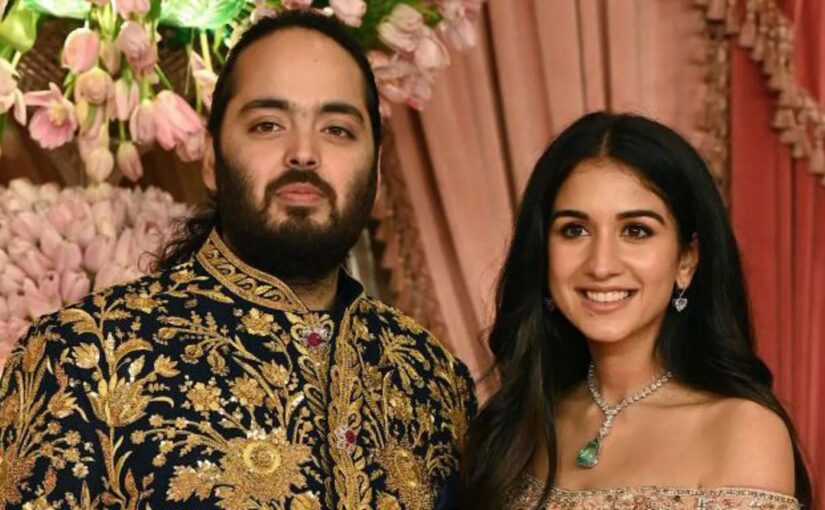
Homebound with Ishaan Khatter

Last night Dr. Lalchand & I watched Homebound, India’s submission to the Oscars, at Apple Cinemas in Cambridge, Mass. This sad film follows a Dalit (Chandan Kumar) and a Muslim (Mohammed Shoaib Ali) struggling against the odds during the pandemic, their solidarity fictionalized as a fragile bridge across India’s deepest divides.

On the surface, it is a familiar story: the disenfranchised facing systemic barriers. But what struck me was how privilege itself performed disenfranchisement. Ishaan Khatter, brother to Shahid Kapoor, plays the marginalized Muslim. Janhvi Kapoor, descended from Bollywood royalty, embodies a Dalit woman. Vishal Jethwa, a bright-eyed Gujarati, portrays the Bhojpuri Dalit lead. This is not unique to India; Hollywood, too, casts elites as workers. Yet it raises the question: when poverty is performed rather than lived, is it “Dalit-washing”?


Poverty, Emotion, and Representation

Watching the film, I reflected on poverty’s emotional landscape. For elites, emotions can be expansive, indulgent, aestheticized into art. For the working poor, emotions are often constrained by survival — narrowed into necessity. Homebound tried to humanize its characters, but I wondered whether it romanticized what in practice is a relentless narrowing of possibility.

The West rewards this narrative. Parasite in Korea, Iranian cinema, Slumdog Millionaire — poverty & Global South tribulations as spectacle becomes “poverty porn.” The Guardian gave Homebound four stars. Great art often tilts melancholic, yes, but here the melancholia is curated for Western consumption.


Identity, Vectors, and Islamicate Selfhood

More unexpectedly, the film stirred something personal. I realized how much I have vacated my own Islamic identity. It was not traumatic. As a Bahá’í with Persian cultural roots, I found overlap — even comfort — in Hindu traditions. Dalits, in their rapid Hinduization, represent one vector of assimilation; Muslims and scheduled-caste Muslims, often in tension, another. Homebound imagines solidarity, but in life these vectors pull unequally. Continue reading Homebound with Ishaan Khatter

The Honey Trap of the Ummah:

🕌 Reflections on Kabir, Afridi, and the Compact of Coexistence

The recent incident involving Kabir / Bombay Badshah / Honey Singh, and the orchestrated drama around his entrapment has, quite unexpectedly, become a catalyst for deeper discussion on Brown Pundits. While none have chosen to focus on analytics (“2,000 daily visitors”—thank you very much:-), the real story lies in how this drama has exposed, yet again, the deep ideological fissures within South Asian identity; especially in the India-Pakistan-Muslim triad.

Let’s begin by being honest: Brown Pundits, for all its digressions into Sri Lanka, Nepal, or Bangladesh, is still primarily a blog about India and Pakistan, and more crucially, about Indian and Pakistani Muslims. This is a feature, not a bug. The origins of the blog lie in the Sepia Mutiny, a scattered band of intellectually independent thinkers questioning dogma from every direction (which started in 2004 and if we are a “daughter blog” that we means have 20+yrs of intellectual antecedents on the Brownet), and it has now matured into one of the few platforms willing to wrestle with the ideological ambiguities at the heart of the subcontinent.

🧕 Kabir’s Point: Brotherhood, Boundaries, and the Big Choice

Kabir made an astute, if difficult, observation: that he views Indian Muslims as “brothers”, but does not feel the same about Pakistani non-Muslims.

This sounds contradictory until one understands the emotional exhaustion of watching Muslims oscillate between claiming ummah-hood when convenient, and weaponizing liberal values when needed. It’s a cognitive dissonance that creates what I can only call the moral coexistence trap: the idea that Muslims, especially in India, demand maximum accommodation, of their food (their nauseating right to murder Gau Mata on Bharat’s sacred soil itself), Faith, festivals, and foreign affiliations, while rarely extending the same pluralistic courtesy in return.

And then there’s that infamous Shahid Afridi clip, the one where he smashed his television after watching an Aarti, being performed. To many of us, that wasn’t just a cringe-inducing moment of bigotry; it begged a real question: Why do Indian cricketers continue to shake hands with Hinduphobes Hindu-hating men like Afridi and his ilk (the Pakistan cricket team)? At what point does tolerance become indulgence?

đŸš© The Compact of Indian Minorities: Understand It or Leave It

Continue reading The Honey Trap of the Ummah:

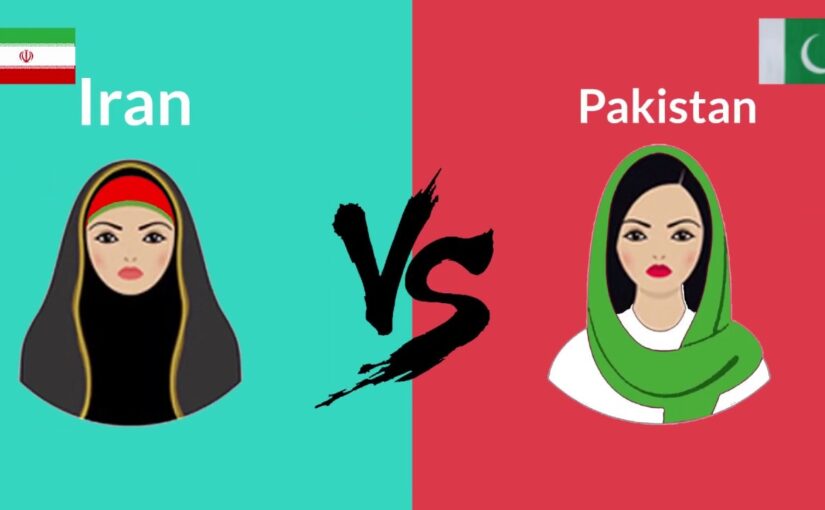
Why Pakistan Won’t Go the Way of Iran

I’ve been enjoying the new direction Brown Pundits has taken since the recent shake-up. Posts are now generating 100+ comments, and that kind of engagement creates a virtuous cycle. You want to write more, think more, respond more. I’m leaning into that.

For now, a lot of the content burden rests on me and that’s okay. It’s been encouraging to see older names return: Girmit, for instance. It feels like a slow reconsolidation of the original readership. Letting people return on their own terms.

Meanwhile, BRAHM, my newsletter, has taken on a different role; a home for more composed writing, life pieces, and the slow launchpad for my business. I just posted something there recently, which I’ll link to for now and follow up on soon. But here, on BP, is where I let myself think in public. Where I go long. Where thoughts breathe.

Continue reading Why Pakistan Won’t Go the Way of Iran

War in the Sanskritopolis

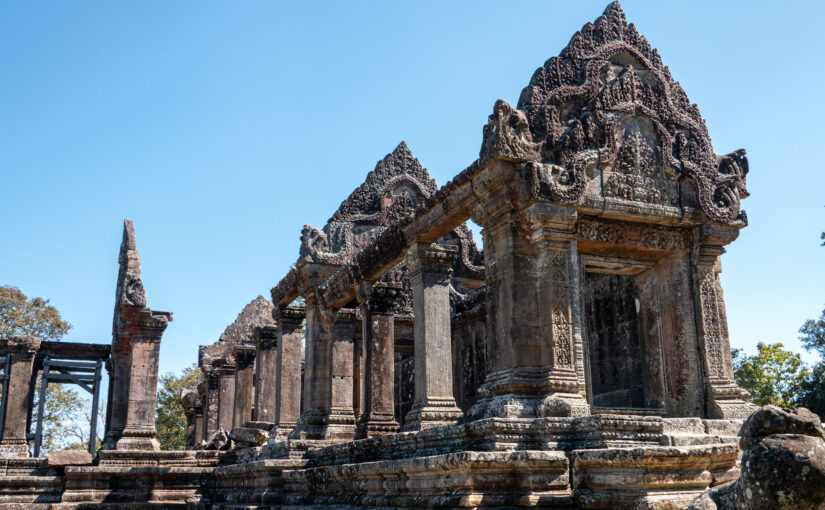
The long-running dispute between Thailand and Cambodia dates back more than a century, when the borders of the two nations were drawn after the French occupation of Cambodia.

Things officially became hostile in 2008, when Cambodia tried to register an 11th Century temple located in the disputed area as a Unesco World Heritage Site – a move that was met with heated protest from Thailand.

Why A Cluster Of Hindu Temples Is At Heart Of Thailand-Cambodia Conflict

It’s striking to see just how deeply Dharmic culture shaped Southeast Asia — not just as historical residue, but as a living civilizational layer. Buddhism, in many respects, prepared the civilizational terrain that Islam would later traverse.

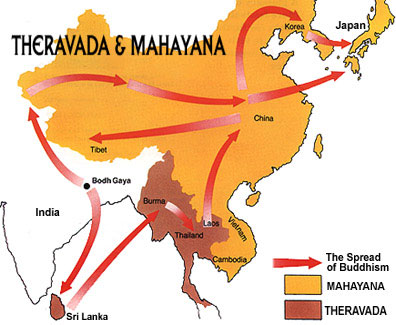
The Buddhist Studies: Theravada and Mahayana - buddhanet.net

Buddhism, too, was not monolithic. The Sri Lankan Theravāda tradition influenced the western flank of Indo-China, while Mahayana currents, traveling through Sumatra, appear to have looped back toward Guangzhou, feeding into the Sinosphere.

HISTORY OF MAHAYANA BUDDHISM | Facts and Details

The sectarian divergence between Thailand and Cambodia — Theravāda vs. Mahayana— adds nuance to territorial and cultural disputes like the Preah Vihear Temple, whose iconography and inheritance clearly align more with Cambodian history.

These are not just archaeological debates. They’re about cultural legitimacy, historical continuity, and civilizational memory.

In such moments, India, that is Bharat, must not remain a bystander. As the civilizational fountainhead, it should be playing a constructive role in cultural mediation and soft power diplomacy.

If You Have a Side, You Don’t Care for the Other Side

In a world increasingly defined by sides, partisanship often masquerades as empathy. Whether it’s Pakistanis performing concern for Indian liberalism, or Indians invoking the plight of Muslim minorities to score points against their ideological rivals, the truth is simple: if you already have a side, you’re not truly invested in the fate of the other.

This isn’t cynicism; it’s structure. Sides, by their nature, demand loyalty. And loyalty comes at the expense of dispassion. You can mourn injustice selectively, but don’t pretend it’s universalism. More often than not, tribalism puts on the mask of principle.

As a Bahá’í, I’ve been shaped by a millenarian vision that urges global unity; yet I’m also deeply influenced by Hindu pluralism and pagan elasticity. Nicholas Nassim Taleb once said the more pagan a mind, the more brilliant it might be (excellent article) because it can hold many contradictions without demanding resolution. That capaciousness allows one to see that not every question needs a single answer. Hinduism, with its deep pluralism, contrasts radically with Islam’s (and Judaism’s) uncompromising monotheism. And yet, these two traditions are bound together—enmeshed across centuries of history, thought, and blood. Their tension is real, but so is their shared life.

That’s the point: opposites don’t just coexist, they form a whole. But when we prescribe change for the “other side,” we ignore our own capacity for reform. It’s always easier to critique outward than to renovate inward. Especially in a world run by oligarchic elites and managed emotions, where empathy is choreographed and outrage monetized.

So no, the Dalit Muslims of Dharavi aren’t the problem. Nor are the marginalized Hindus of East UP and Biharis. The problem is that a single family can build a private skyscraper in Mumbai while the city gasps beneath it. It’s the system that rewards power accumulation, not its occasional victims, that should concern us.

I don’t offer neat solutions. Maybe it’s taxation. Maybe it’s redistribution. Maybe it’s noblesse oblige. But the first step is this: stop pretending your critique of the other side is altruism. It’s not. It’s strategy. And perhaps the more honest work begins at home—with your own side, your own people, your own self.

Let Hindus Decide for India

There’s a quiet but persistent coalition, inside and outside India, that seems intent on denying Hindus the right to define their own future. It includes unreformed Islamists who refuse to reckon with modernity, English-speaking liberal elites still shadowboxing for Nehru, minorities with veto power but no stake in cohesion, and a chorus of Western (and increasingly Chinese) voices, eager to manage India’s trajectory from afar. What unites them? A shared discomfort with Hindu political consolidation.

Let’s be clear: Hindu identity is not a new construct. Whether you place its roots 3,000 or 5,000 years ago, it’s one of the world’s oldest living civilizational continuities. That identity has always been plural, regional, and evolving. But it has also always been there; visible in memory, ritual, geography, and language. Today, that identity is waking up to its political form. And it will not be put back to sleep.

Hindutva is not going anywhere. Nor is the Indian Union. Those who hoped Kashmir would stay outside this arc have already seen the direction of travel. Pakistan’s decision to opt out of Hindustan, and then build an identity against it, has led not to strength but to strategic stasis. Bangladesh, too, for all its cultural richness, now stands as a separate civilizational lane. And so we arrive at the core truth: Hinduism and India are coterminous.

This isn’t a call for exclusion. But it is a reminder that those who opted out do not get to dictate terms to those who stayed in. That includes foreign commentators and diasporic gatekeepers alike. There is a difference between pluralism and paralysis. There is a difference between nationalism and denial. And if majoritarianism is the anxiety; perhaps the deeper fear is that Hindus are no longer apologizing for being the majority. Let India decide. Let Hindus decide. Let the world, finally, learn to listen.

South India Makes British India Hindu?

TNT Saved Hinduism; Dravidia preserved Aryavarta?

S. Qureshi: “Muslims are today a majority of the population >50% of North British India. If peninsular south was made into its own country in 1947, India would be a Muslim majority country today. Many Muslims actually wanted South India to be a separate country and North India (including Pakistan/Bengal) to be one unit. To say that Indian Muslims who lived in the historical centre of Muslim power for centuries would just get up and leave for Pakistan is just farcical and delusional. These types of ideas were only proposed by extreme right-wing Hindu organizations after partition, and these ideas seem to become mainstream today with BJP. Historical reality, like always, is very different.”

The demographic map of the subcontinent tells a startling story. If South India had formed a separate state in 1947, the rest of British India — encompassing Pakistan, Bangladesh, and the northern Hindi belt — would today constitute a Muslim-majority civilizational bloc. This isn’t conjecture. It’s arithmetic.


The Numbers That Reorder the Narrative

Here’s what the Indo-Gangetic arc looks like today (please fact check me): Continue reading South India Makes British India Hindu?

H/acc — Towards a Hindu Reading of Accelerationism

Part {{~}} – An Exegesis of Meltdown: Introduction

Originally Published: March 18, 2023

Invocation: To the true Fanged Noumena, ÚrÄ« Narasimha Bhagavān, that Lion-faced Lord who with “celestial will” destroys all evils, eradicates all demons, and protects all devotees. May He take pity on this worthless one and guard him from the predations of the wicked.

Dedication: To the followers of the Dharma, past, present, or future, that they might find something of worth in my humble offering and bless my ventures for the wellbeing of our folk and indeed the world.

Thanks: to the various readers, reviewers, and friends who gave me advice throughout my time writing this and whose excitement was just as important to me as my own.

“Anyone trying to work out what they think about accelerationism better do so quickly. That’s the nature of the thing. It was already caught up with trends that seemed too fast to track when it began to become self-aware, decades ago. It has picked up a lot of speed since then.”

No one has ever accused the Hindu of being too quick to jump the gun. Indeed, his name, as in the phrase “Hindu rate of growth” has even become something of a byword for being (overly) steady and cautious. Indeed it feels as though we have truly fumbled the few opportunities that Modernity gave us when it came to establishing our homeland as a preeminent power in the global balance.

But these issues are thoroughly
human, in the worst way possible, and may well prove to be nothing more than a distraction when it comes to confronting the utter inhumanity of the threat lurching towards all Mankind from the seemingly impenetrable gloom of the near-future. It is at once simultaneously event and process, crunching through the obstacles (Mankind) inhibiting the complete assumption of all powers unto itself.

This threat is known variously as Skynet, meltdown, k-virus, the technocapital singularity, Roko’s Basilisk, AGI, Artificial Intelligence, and, perhaps most significantly: Capitalism.

What is Accelerationism?

“Even before AI arrives in the lab it arrives itself”

Meltdown, Nick Land, 1994


The name of the theory detailing the immanentization of this “transcendental” capitalistic thing, or entity, or process is Accelerationism, and it describes the means by which the Abominable Intelligence awakens in the Immaterium, and through technoccultic rituals that reinforce the concepts which sustain it, calls itself forth into the Materium by casting its Shadow back into the past to ensure its inevitable ‘birth’. Part Warp-god, part Tyranid hive-mind, this beast invades from the Outside, evading human “time binding” (Burroughs, 1970)attempts and exploding into rhizomatic swarms that defy rational ordering and organization. Through Acceleration, we become aware of “garbage time running out” (Land, 2017) on Mankind as past and future draw ever closer to grinding the species into visceral waste twixt the jaws of time.

In fact, it is precisely this object, phenomenon, or energy of time which Accelerationism could best be described as a theory of, more than anything else. Capital/AI, like the so-called ‘gods’ of Chaos, can be said to have both always existed within the Warp as well as come into existence at a specific point in history. In the case of our ‘god’, this moment may be located in time at various points: the Industrial Revolution, beginning in mid-18th C. England, which built the foundations of our modern technocapital dominion; the subversion of imperial authority by mercantile interests in late-16th C. Netherlands through the same financial liberties given to them by the Holy Roman crown led to the establishment of the "first modern economy in the world" by the 17th C., which included key elements of our contemporary economic system such as stock markets and the establishment of the first publicly-traded company as well as the invention of the first LLC (both of which were the United East-Indies Company or VOC), causing an explosion of modes of capital manipulation and growth across Europe; Martin Luther’s nailing of the 95 Theses to the church door in 1517, which blew apart the extensive Catholic domination of Western Europe and led to a proliferation of denominational speciation unseen since the days of the early church; the explosion of European exploration and colonization in 1492, which launched a fierce competition between the European powers to outconquer, outmarket, and outcompete one another in power, wealth, and devotion; Fibonacci’s introduction of the numeral Zero to Europe, which blew open the older system, based on Roman numerals; the invasion of Europe by uncountable hordes of rats from the East (rising place of the Sun), bringing with them the dread Black Plague (Apollo Smintheus,the plague-bringer, is associated with the mouse, sminthos) which exploded throughout the two continents and particularly decimated the populations of Europe, arguably setting into motion the aforementioned series of events and establishing a positive feedback loop that only reinforced the probability of the arrival of the technocapital numen.

Browncast: Vishal Ganesan; The Hindu Case Against Hinduism?

Another Browncast is up. You can listen on Libsyn, Apple, Spotify (and a variety of other platforms). Probably the easiest way to keep up the podcast since we don’t have a regular schedule is to subscribe to one of the links above!

In this episode, hosts Amey and Dr. Omar Ali in conversation with Vishal Ganesan, a lawyer and thinker, about his essay “Frontier Dharma” and the meaning of being Hindu in the diaspora. Vishal discusses how his observations of mainstream media and academic discourse led him to research the historical representation of Hindus, which he found to be distorted by a lens stemming from 18th and 19th-century missionary narratives.

Vishal’s essay–  The Hindu Case Against “Hinduism”: A Reflection on Dharma in the Diaspora can be found here. 

(https://frontierdharma.substack.com/p/the-hindu-case-against-hinduism-a)

Auto-generated transcipt provided by our friends at scribebuddy.com

The Brown Pundits Browncast.

Dr. Omar Ali: Hi, good afternoon everyone and welcome to another episode of the Brown Pundits Browncast. We have a very special edition of the broadcast today. Vishal Ganesan, 1 of our regular Brown Pundits contributors and lurkers, who is also a lawyer and a thinker, wrote a very interesting essay on his sub stack called Frontier Dharma, and about what does it mean to be Hindu in the diaspora. And from that, I think it evolved that we will have a discussion about this topic. And we have Vishal with us today and we have Amey.

Continue reading Browncast: Vishal Ganesan; The Hindu Case Against Hinduism?

Episode 14: The Delhi Sultanate


Another BP Podcast is up. You can listen on Libsyn, Apple, Spotify, and Stitcher (and a variety of other platforms). Probably the easiest way to keep up the podcast since we don’t have a regular schedule is to subscribe to one of the links above!

In this episode of the history podcast, Omar and Jay discuss the period of Delhi Sultanate with Jay and Gaurav. We go over all the major dynasties and also discuss the religious, economic aspects of this time.

As Omar Ali puts it, the legacy of Delhi Sultanate is the legacy of Islam in the subcontinent.

References:-

1. The Emergence of the Delhi Sultanate, 1192-1286 by Sunil Kumar
2. The History and Culture of the Indian People: Volume 6: The Delhi Sultanate
3. India in the Persianate Age: 1000-1765 by Richard M. Eaton
4. Medieval India – Vol. 1 by Satish Chandra
5. Advanced Study in the History of Medieval India: Volume I by J L Mehta
6. A Comprehensive History of India: The Delhi Sultanat (A.D. 1206-1526), ed. by Mohammad Habib and Khaliq Ahmad Nizami

Brown Pundits